On the eve of the 'I Am Human, I Oppose Drugs Taiwan' rally on Ketagalan Boulevard, Wei Chun-yu, editor of 'Lair School Principal' and former head of the KMT's New Media Department, used AI deepfake technology to mimic President Lai Qing-te's voice and produced a promotional video titled 'You Bu De Ni' for the anti-toxic oil rally. The Taipei District Prosecutors Office opened an investigation under case number Ta, sparking criticism from opposition parties accusing the Lai administration of 'water meter inspection' and suppressing freedom of speech.
KMT legislator Hsu Chiao-hsin posted on Facebook, stating that police first asked whether the video would be taken down before searching for legal grounds—'If this isn't water meter inspection, then what is it?'
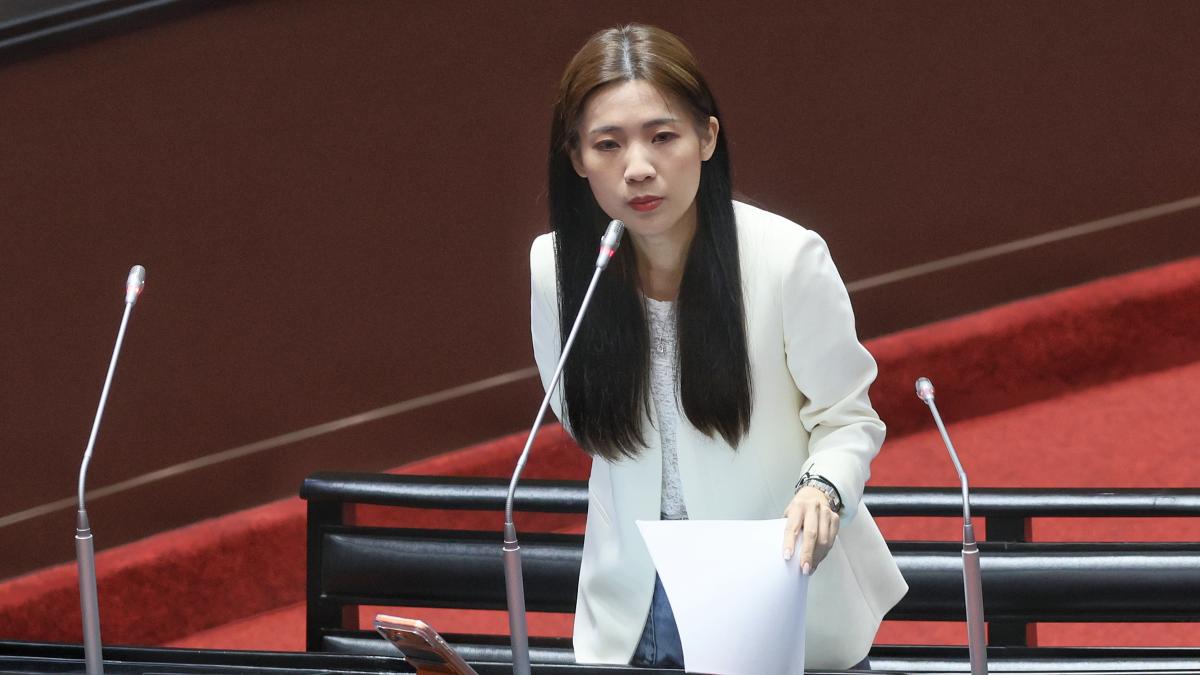
Hsu pointed out that Wei Chun-yu, a KMT editor, created the 'You Bu De Ni' video, allegedly using AI to synthesize President Lai's voice. Police directly visited his home and inquired whether he would voluntarily take down the video. On the 29th, a special report was held at the Legislative Yuan's Interior Committee, but key questions remained unanswered.
Who gave the order?
Hsu questioned: 'First, if both the minister and the director-general claim ignorance, then who gave the order?' Interior Minister Liu Shih-fang said she didn't know, and National Police Agency Director-General Chang Jung-hsing also claimed no knowledge. Only the statement 'Criminal Investigation Bureau initiated the probe independently' remained. Who exactly in the chain of command decided to send officers? Based on what intelligence? Under which legal provision? And which level of approval was obtained?
Hsu argued that if the CIB acted independently, it indicates a breakdown in police command, supervision, and procedural oversight. If there was a hidden directive, the person who issued it must be publicly identified. After the incident escalated, it's unacceptable for both the minister and director-general to claim ignorance and shift all responsibility to 'independent investigation'.
Second, asking for takedown before identifying charges—Isn't this water meter inspection?
Hsu noted that when police arrived, they couldn't clearly state which law was violated. Only after public backlash did the Interior Ministry cite forgery, defamation, and the Personal Data Protection Act—clearly 'shooting the arrow first, then drawing the target.' Moreover, defamation is a 'telling offense,' requiring a specific victim to file a complaint. So who is the victim here? Whose reputation was actually harmed? What concrete damage occurred?
Hsu asked: 'Has President Lai filed a complaint?'
If the alleged victim is President Lai, has he filed a lawsuit? Without a victim, without a formal complaint, and without identifiable harm, how can police enter a citizen's home and later use defamation as a justification? Without clear suspicion or solid legal basis—and without even identifying the victim or the damage—police still visited first to ask about takedown. Isn't this creating a chilling effect on free speech?
Third, AI must not be used for crime, nor by the government to suppress speech.
During discussions in 2023 on amendments to Article 315-1 and 315-2 of the Criminal Code, the Judicial Yuan clearly stated that political satire, parody, and commentary are generally protected under constitutional free speech. AI must not be used for fraud, identity impersonation, or creating fake obscene content. However, political satire, parody, and social commentary are protected forms of expression.
Hsu emphasized that 'You Bu De Ni' addresses carcinogenic cooking oils, government response, and food safety—essentially food safety education and political satire. The DPP cannot deliberately conflate 'using AI for crime' with 'using AI for commentary' for political gain. Otherwise, cracking down on deepfakes is just a pretext—the real goal is suppressing dissent.
Fourth, even Shen Po-yang says there's no forgery issue.
Hsu pointed out that even Shen Po-yang, DPP Taipei mayoral candidate, believes there's no forgery issue. 'Will the Blue Birds (DPP supporters) never get off?' Shen explained that forgery requires not only impersonation but also the ability to mislead and cause actual harm. 'You Bu De Ni' neither impersonates the president issuing official orders nor involves presidential authority. By Shen's own standard, it clearly doesn't constitute forgery.
Hsu criticized that even Shen, who constantly warns about cognitive warfare and deepfake threats, acknowledges no forgery occurred—yet Blue Birds rush to convict faster than prosecutors, simply because the satire targets President Lai. 'They drag their feet investigating toxic oil, but move swiftly against critics of the government.'
Hsu condemned that throughout this incident, the minister doesn't know, the director-general doesn't know, and police can't even specify which law was broken—yet they still send officers to ask for takedown before constructing legal justifications afterward. Who is the victim? What harm occurred? Which crime was committed? If even basic elements of a crime can't be answered, how can police show up uninvited? When no criminal facts are found, yet swift action is taken against government critics, this isn't law enforcement—it's using state power to create a chilling effect.
FACT BOX
- Source: PR Times
- Category: News