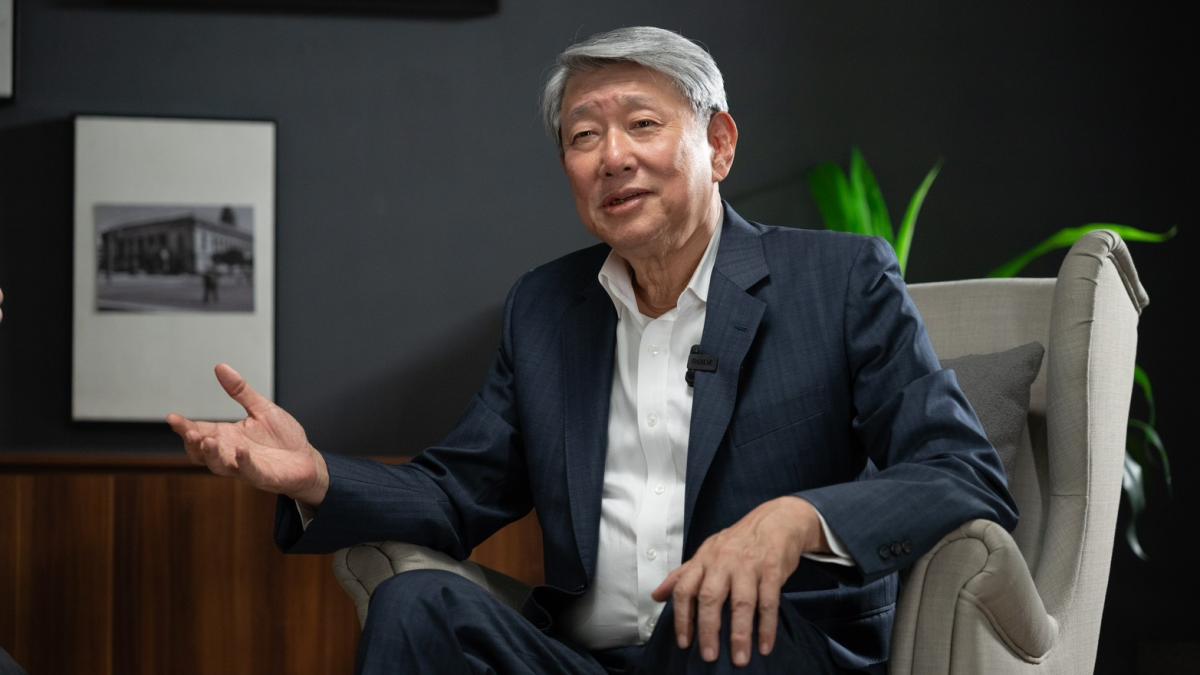
A single championship game can unite a generation’s shared memory; only a mature system can sustain a nation’s presence on the global stage. Former Minister of Economic Affairs Kuo Chih-hui recently gave an exclusive interview affirming Baseball Federation of Taiwan President Ku Cheng-tsai’s long-standing commitment to grassroots development, international competitions, and baseball diplomacy, which has significantly advanced Taiwan baseball’s achievements and global visibility. Kuo stated that Taiwan baseball’s continued progress hinges not on restarting with each organizational election, but on establishing a governance structure capable of transcending leadership terms, sustaining policies, and accumulating resources. If given the opportunity to assume responsibilities within the baseball federation, he will uphold the spirit of carrying forward past achievements while paving the way for the future—continuing existing policies and international networks while strengthening university-level, amateur, sports science, athlete care, and career development systems, transforming Taiwan baseball from isolated breakthroughs into a comprehensive, integrated system. Continuing Ku Cheng-tsai’s International Strategy: Ensuring Baseball Assets Outlast Leadership Terms Kuo highlighted that during Ku’s tenure, beyond focusing on national team performance, consistent investments have been made in youth baseball systems—including little league, junior league, and senior league—while actively participating in international affairs through bodies such as the Asian Baseball Confederation and the World Baseball Softball Confederation, expanding Taiwan’s space for international cooperation. He emphasized that trust, influence, and collaborative relationships within international sports organizations cannot be built overnight; they require long-term cultivation and generational accumulation. These intangible assets must not be disrupted by personnel changes, nor reset to zero with every leadership transition. Kuo stated that mature governance does not mean rejecting the past, but rather identifying which achievements deserve continuation and which systems require reinforcement. The responsibility of the baseball federation president extends beyond managing affairs during one’s term—it must include leaving behind operational systems for future leaders and the next generation of players. Bridging Talent Gaps: Building a Complete Baseball Supply Chain in Taiwan Kuo has been involved in baseball for over a decade. In 2011, he founded the Toppa Technology Baseball Team, now known as the Quan Yue Sports Baseball Team, and has long participated in amateur baseball development, coordinating support from state-owned enterprises and private companies for university and amateur baseball. He observed that amateur teams are not merely fallback options outside professional baseball, but crucial hubs in Taiwan’s baseball talent supply chain. From high school to university, amateur baseball, and professional clubs, each stage must have sufficient teams, coaches, and competitive platforms to provide athletes with continuous growth opportunities. For young, still-developing players, the amateur system offers extended development space; for those leaving professional fields, it serves as a transitional platform to extend athletic careers or transition into coaching or industry roles. Kuo believes Taiwan does not lack talented players—the real challenge lies in preventing talent loss during educational transitions, employment, and career shifts. Moving forward, Taiwan must bridge the gaps between youth and professional baseball, ensuring players of all development paces can find their place within the system. Democratizing Sports Science: Upgrading Athlete Care into National Infrastructure Kuo also advocates that sports science should not remain an exclusive resource for national teams or professional clubs, but should gradually extend to grassroots, university, and amateur teams. He stated that in the future, government, enterprises, schools, medical institutions, and research units should be integrated to establish a support system covering training load management, injury prevention, physical recovery, nutrition management, and data analytics. This system would assist coaches in making more precise decisions and ensure athletes receive comprehensive physical care while pursuing performance excellence. From an industry development perspective, sports science is not merely a tool for improving win rates, but a national-level human capital infrastructure. When scientific training, medical care, and data management become institutionalized, Taiwan baseball will have the opportunity to reduce injury risks, extend athletes’ careers, and accumulate transferable training knowledge. From Championship Moments to a Championship System: Transforming Victory into National Capability Kuo pointed out that winning the World Baseball Classic demonstrates Taiwan’s ability to stand on the world’s highest stage. However, Taiwan baseball must not remain confined to the emotional high of a single victory. The more critical challenge in the next phase is transforming championship experiences into replicable, accumulative, and inheritable systems—bringing national team success back into grassroots training, talent development, coach education, and international exchanges to create a virtuous cycle. He emphasized that Taiwan baseball’s next goal is not merely to win another championship, but to establish a national system capable of continuously cultivating champions, caring for athletes, accumulating knowledge, and transcending generations. Only by continuing the international achievements accumulated under Ku Cheng-tsai’s leadership, while simultaneously strengthening amateur linkages, sports science integration, and career support systems, can Taiwan baseball transition from event-based success to systemic success—transforming the nation’s beloved national pastime into a long-term competitive national brand.
FACT BOX
- Source: PR Times
- Category: News