The Kuomintang (KMT) recently held its Central Evaluation and Disciplinary Committee meeting, during which a committee member proposed that the party headquarters should consider formulating a stance on unification. The party leadership decided to refer the matter to its think tank for further study. In response, Mainland Affairs Council (MAC) Chairperson Qiu Chui-Cheng stated that public support for unification in Taiwan remains low—under 10%—and emphasized that the Cross-Strait Relations Act sets high legal thresholds for political negotiations. Specifically, the Act prohibits any political discussion that would compromise national sovereignty or alter Taiwan's free democratic constitutional order.
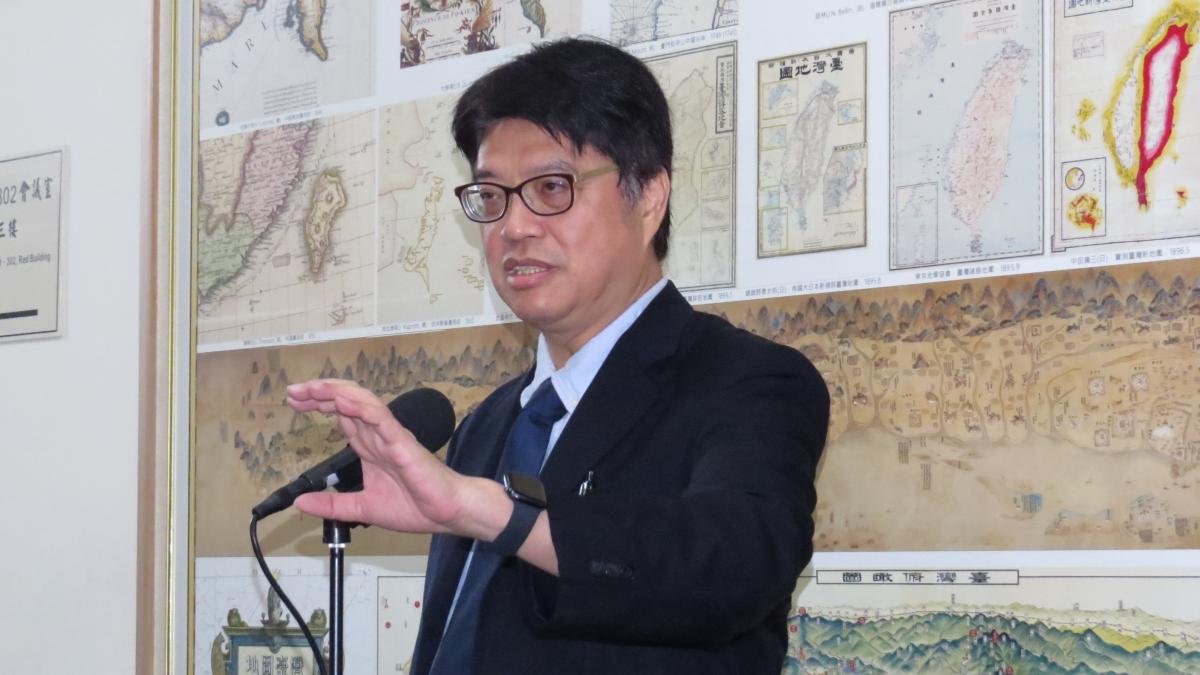
On July 29, Qiu attended a special report session at the Legislative Yuan and spoke to the press beforehand. When asked whether the KMT committee member's suggestion to study peaceful unification lends legitimacy to Chinese leader Xi Jinping's unification proposal, Qiu responded: "They haven't clarified their position clearly yet. Their current narrative still largely follows that of the Chinese Communist Party. We all have ideals about peace, but we don't have illusions. Peace must be built on strength. With strong capabilities, firm determination, and thorough preparation, we can achieve lasting peace. We will continue to implement President Lai Ching-te's Four Pillars of Peace action plan."
Regarding unification proposals, Qiu noted that domestic public support is extremely low. "In our regular public opinion surveys conducted under the MAC's name, support for unification—whether immediate or in the future under a 'maintain status quo first' framework—consistently remains below 10%."
He further questioned how Taiwan's free democratic constitutional system could be integrated with the authoritarian, centralized system of the Chinese Communist Party. Article 5-3 of the Cross-Strait Relations Act sets a high threshold for any political agreement, and Paragraph 9 explicitly prohibits any political议题 (topics) that involve the abolition or alteration of national sovereignty or the free democratic constitutional order.
"The law provides clear regulations. We respect freedom of speech, but those making such proposals must understand Taiwan's institutional framework, public opinion, and the high legal barriers set by the Cross-Strait Relations Act regarding potential future political negotiations between the two sides," Qiu concluded.
FACT BOX
- Source: PR Times
- Category: News