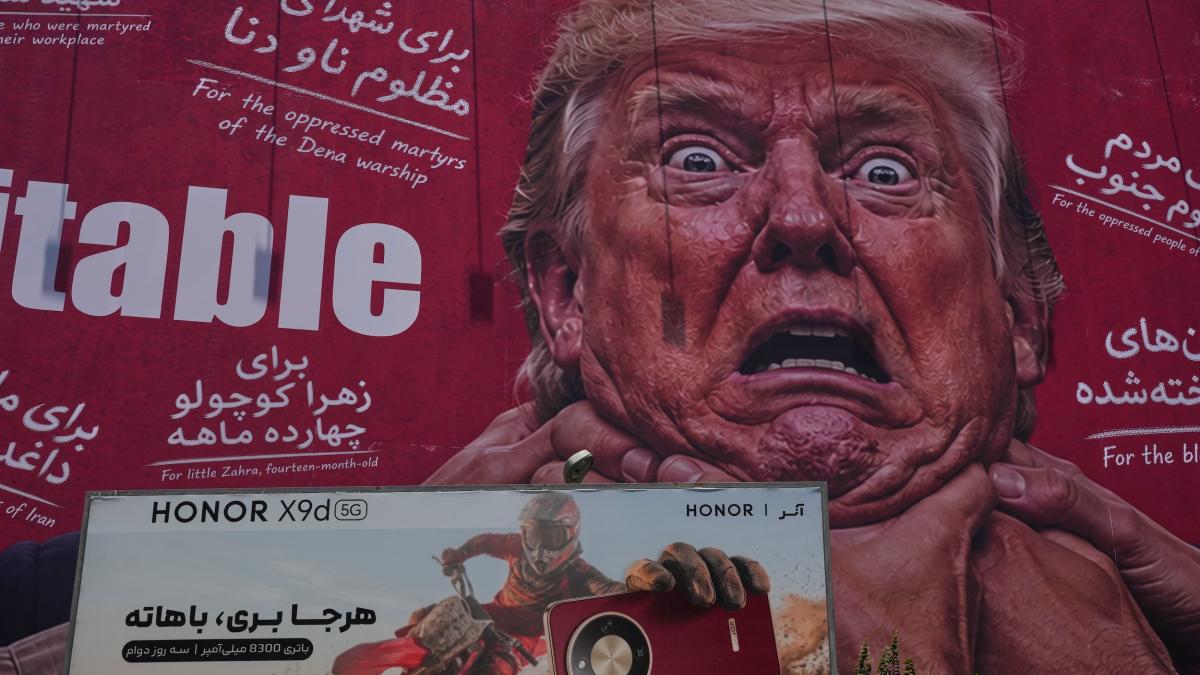
The US and Iran signed a temporary ceasefire memorandum in mid-June, but tensions have reignited over the issue of passage through the Strait of Hormuz. The US military launched a large-scale airstrike on the night of the 29th, targeting the military command center, missile, and drone facilities of Iran's Revolutionary Guard Corps (IRGC). The conflict has shown several dangerous shifts compared to the first phase of airstrikes in late February, including the first public involvement of Arab allies, the spread of fighting to the Mediterranean coast of Egypt, pressure on US anti-missile ammunition supplies, and the US military's plan to confiscate smartphones from frontline soldiers, indicating the possibility of further escalation in the conflict surrounding the Persian Gulf. According to reports from Reuters and the Associated Press, the Saudi Arabian military has publicly joined US operations, striking bases of the Iran-backed Popular Mobilisation Forces (PMF) in Iraq. This is the first time the Riyadh authorities have publicly sided with Washington to strike Iranian proxies in this conflict. Sources revealed that Saudi Defense Minister Prince Khalid bin Salman conveyed the stance of Crown Prince Mohammed bin Salman during a meeting with US Vice President JD Vance and President Donald Trump at the White House on the 29th, emphasizing that Saudi Arabia could not tolerate attacks by Iran and its proxies on Saudi oil facilities, but also warned Washington that further escalation of the conflict to Yemen's Houthi militants or Iraqi militias would open up 'huge unknown risks.' As the Middle East front expands, concerns are also growing about US logistics supplies. The latest assessment by the Washington-based think tank Center for Strategic and International Studies (CSIS) points out that the current inventory of key equipment in the US military's air defense system—the Patriot intercepting missiles—is less than 1,000, and the inventory of the THAAD air defense system's intercepting missiles is less than 250. The Associated Press quoted officials as saying that Chairman of the US Joint Chiefs of Staff Gen. Dan Caine has warned Trump that the inventory of anti-missile ammunition will directly affect the US military's military options. Notably, the boundaries of this round of US-Iran exchanges are rapidly expanding outward. The British maritime security company Ambrey and the Associated Press pointed out that a US-owned liquefied natural gas (LNG) storage ship docked at the Egyptian Mediterranean port of Damietta was hit and caught fire by a drone. The Egyptian Ministry of Petroleum confirmed that there was a fire at the port but did not mention the drone. Egypt has always been an important ally of the US and a mediator in the Middle East, and has not been directly affected by military operations before. If it is confirmed to be the work of Iran or its allies, it means that the conflict has significantly expanded. In Jordan, the Jordanian military claimed that its air defense system shot down five Iranian ballistic missiles fired at the US Muwaffaq Salti Air Base in Jordan. The US base in Jordan has had three US military personnel killed this month, the worst month for casualties since the war began. In addition, the joint airstrikes by the US and Saudi Arabia have resulted in at least 20 deaths and 32 injuries among the Iraqi Popular Mobilisation Forces. Iraqi Prime Minister Ali al-Zaidi, who has been in office for two months, quickly called on all parties to exercise restraint, while the Iraqi Presidency strongly condemned the airstrikes as 'a blatant violation of Iraqi sovereignty.' As the fighting stalemates, Washington is desperately trying to plug information leaks brought about by social media. Reuters exclusively reported that the top US military commander in the Middle East, Central Command Commander Admiral Brad Cooper, directly pointed out in an internal letter that Iran is using news reports and photos and videos casually uploaded by US military personnel to social media to immediately assess the effectiveness of missile strikes. Two informed sources revealed that, for operational security considerations, some US military personnel stationed at frontline bases such as Jordan have been informed that their smartphones will be confiscated in the coming days. US Central Command spokesman Captain Timothy Hawkins confirmed the matter and emphasized that this is a routine control and reminder to maintain operational security. Facing continuous precision strikes by the US and Israel on its large-scale air defense facilities over the past few months, Iran is accelerating the reconstruction of its short-range air defense network. Three informed sources told Reuters that Tehran has signed a contract worth 60-70 million US dollars with a Hong Kong intermediary, planning to receive 300-400 sets of Chinese-made man-portable air defense missiles (MANPADS) within a few weeks, including the QW-12 and FN-16 models. Informed sources pointed out that the current planned transportation route is from Urumqi in China to Pakistan by air, and then transferred to Iran. In response, the Inter-Services Public Relations (ISPR) of the Pakistani military issued a statement denying the allegation, calling the claim that the country was involved in arms trafficking 'completely fabricated and false'; the Chinese Foreign Ministry also responded that the report was 'completely unfounded,' emphasizing that China has always been committed to promoting peace talks. European and Middle Eastern security experts analyzed that although the QW-12 is not China's latest model, the man-portable missile has the characteristics of high mobility and can be quickly moved by a small team, which can effectively make up for the defensive vacuum after Iran's large fixed positions are destroyed. Due to the stalemate in US-Iran diplomatic negotiations, Iran has more explicitly rejected Oman's 'joint management plan for the Strait of Hormuz,' causing global energy and financial markets to plunge again. The international benchmark Brent crude oil futures price once surged nearly 8%, and then pulled back slightly to $89.45 per barrel during the Asian session; West Texas Intermediate (WTI) crude oil closed at $83.90 per barrel. On Wall Street, the three major US stock indexes all closed lower, with the Dow Jones Industrial Average plummeting 1153.18 points (a drop of 2.2%), closing at 51594.14 points; the S&P 500 Index fell 1.5%; and the Nasdaq Composite Index fell 1.7%. Ali Vaez, the Iran project director of the International Crisis Group, pointed out that mutual trust between the US and Iran has completely broken down: 'After the collapse of the memorandum of understanding signed in June, Tehran no longer believes that Trump is a credible negotiating partner, and Trump also holds the same view of Iran.' In the absence of a diplomatic exit mechanism, the Middle East conflict is likely to be difficult to contain in the short term.
FACT BOX
- Source: PR Times
- Category: News