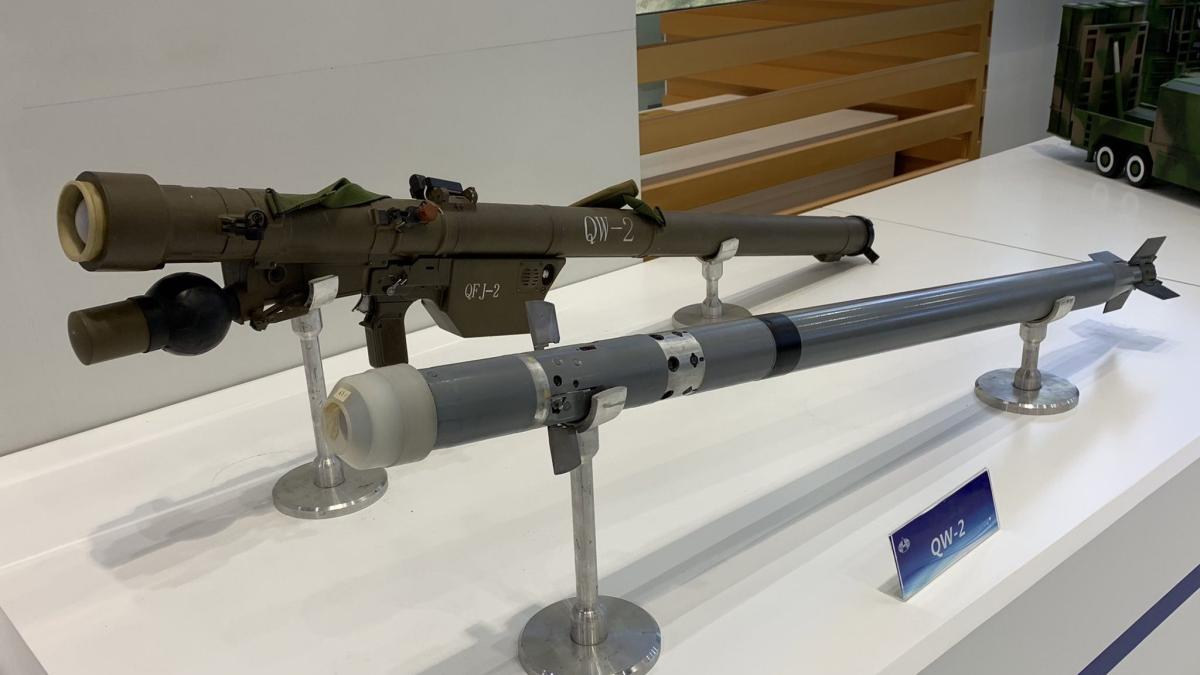
On July 29, Reuters cited three sources familiar with the matter—speaking on condition of anonymity due to the sensitivity of the issue—who said Iran is expected to receive the first batch of Chinese-made shoulder-fired anti-aircraft missiles within weeks. The deal, worth over $60 million, was facilitated by a Hong Kong-based intermediary company connecting Beijing and Tehran.
The sources stated that the Hong Kong firm 'Zhongqingbao Commercial International Investment' acted as a middleman between China and Iran, enabling the missile shipments. The transaction is believed to be aimed at strengthening Iran's air defense capabilities, which were exposed during the 'Operation Epic Fury' amid U.S.-Israeli airstrikes.
The missiles are reportedly being shipped from Urumqi, a city in western China, to Iran. Iran is expected to acquire approximately 300 to 400 units of man-portable air-defense systems (MANPADS), including the advanced Qilin-12 (QW-12), which features extended range and resistance to infrared jamming. The deal also includes the Chinese fourth-generation high-performance air defense missile, Feinu-6 (FN-16), designed specifically to intercept low-flying targets. It is believed to be highly resistant to electronic countermeasures and capable of attacking aircraft from nearly any angle. Some variants can even be mounted on helicopters for use as air-to-air missiles.
According to sources, the QW-12 is primarily intended for slower targets such as helicopters and transport aircraft, while the FN-16 can rapidly engage low-altitude, high-speed fighter jets and drones. If Iran can quickly acquire and widely deploy these weapons, it may force U.S. pilots to adjust their attack patterns, opting for longer-range and higher-altitude flight paths.
Reuters reported that Iran urgently needs off-the-shelf weapons that can be delivered quickly. Chinese authorities have arranged a secret transport route from Urumqi, through Pakistan, to Iran. Sources did not confirm whether the missiles are being transported by air or land during each leg of the journey.
The report has been corroborated by European and Middle Eastern security officials. Officials said Iran has long sought to purchase Chinese-made MANPADS and has also expressed interest in Chinese anti-ship cruise missiles. Reuters first confirmed on July 19 that the deal had been finalized and that the products were already in transit.
China and Pakistan have strongly denied the reports. China called the claims 'completely baseless,' while Pakistan stated that details implicating its involvement are 'absolutely fabricated and false.'
China is Iran's largest trading partner, purchasing over 85% of its oil exports. In 2021, the two countries signed a 25-year 'Comprehensive Strategic Partnership Agreement,' which includes defense cooperation. Some intelligence analysts believe China may have secretly allowed Iran to use its BeiDou satellite navigation system, enhancing the precision of Iranian drones and missile strikes.
Reuters also reported that Yemen's Houthi armed group plans to demand ransoms from ships passing through the Bab-el-Mandeb Strait from the Red Sea into the Gulf of Aden—similar to Iran's practices regarding international shipping in the Strait of Hormuz. China has engaged in 'direct dialogue' with the Houthis to ensure its vessels are not attacked or forced to pay high 'tolls.'
Editor: Hsu Yung-hsiang
More Wind Media exclusive news: · U.S.-Saudi coalition airstrikes on Iranian proxies in Iraq kill 6 Iranian advisors; oil prices surge 7.3% · Trump explains why he called for another ceasefire with Iran: 'No loss, no extra cost if talks fail immediately' · Netanyahu discusses Iran at the White House; Trump: 'U.S. military doesn’t need Israeli intelligence'
FACT BOX
- Source: PR Times
- Category: News