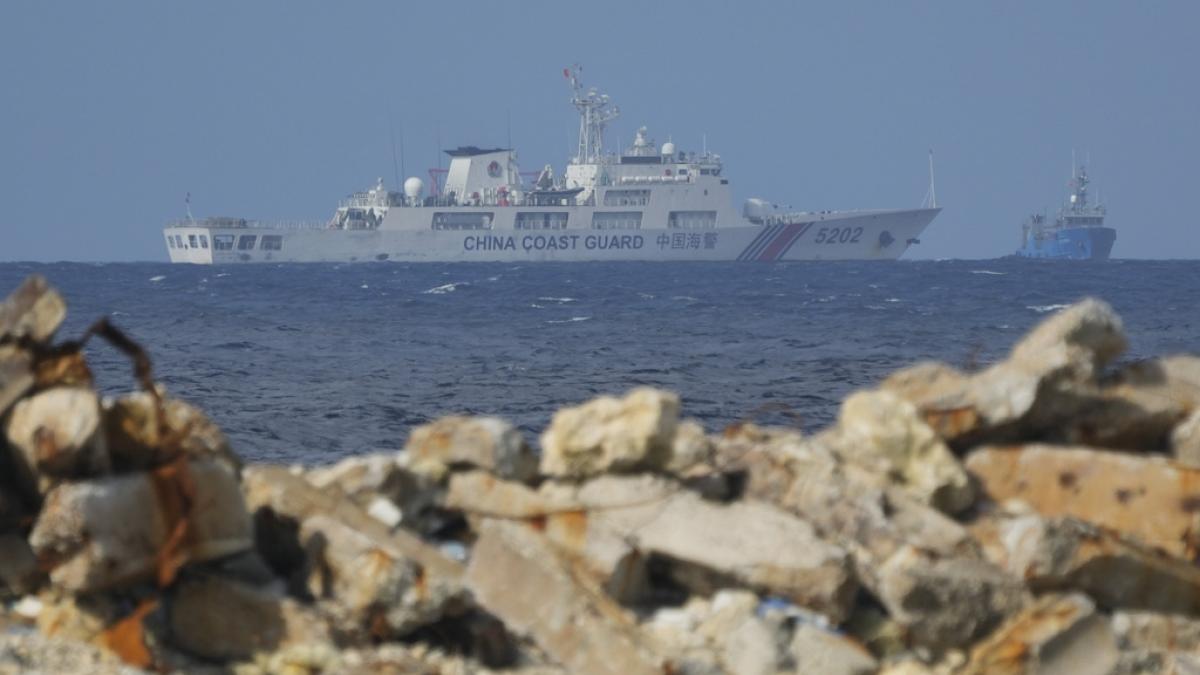
Over the past decade, the China Coast Guard (CCG) has rapidly evolved into one of the world’s largest maritime law enforcement agencies, commanding a massive fleet of 680 vessels. While the CCG’s stated mission focuses on traditional law enforcement tasks such as maritime search and rescue, anti-smuggling operations, and fisheries regulation, neighboring countries view this large maritime force as a key instrument for Beijing to advance territorial claims and expand maritime influence.
From deploying 10,000-ton-class patrol ships in the South China Sea, firing military-grade lasers and high-pressure water cannons, to routinely patrolling the eastern waters off Taiwan, the CCG’s 'gray-zone tactics' are steadily reshaping the maritime security landscape in East Asia.
Established in 2013 by consolidating multiple maritime law enforcement agencies, the CCG underwent a significant transformation in 2018 when it was formally placed under the command of the People’s Armed Police and directly supervised by the Central Military Commission (CMC) of the Chinese Communist Party. This reorganization strengthened institutional ties with the People’s Liberation Army Navy (PLAN).
Furthermore, China’s 2021 Coast Guard Law authorizes the CCG to 'take all necessary measures, including the use of weapons,' to safeguard sovereignty. The CCG now operates massive patrol vessels over 165 meters long with displacements exceeding 12,000 tons, equipped with heavy artillery and helicopter decks—capabilities rivaling the main combat vessels of neighboring navies.
On July 14, 2025, four Chinese coast guard vessels intruded into the waters near Kinmen. In response, Taiwan’s Coast Guard Administration (CGA) patrol boats conducted one-on-one parallel monitoring, continuously collected evidence, and broadcast radio warnings in both Mandarin and English, demanding the vessels immediately leave the area. (Photo provided by the Kinmen-Matsu-Penghu Branch of the Ocean Affairs Council’s Coast Guard Administration; photo transmitted by Central News Agency reporter Wu Wen-rong)
In disputed waters of the South China Sea, the intensity of CCG operations has sharply increased, with actions becoming more frequent. At Scarborough Shoal (Huangyan Island), a site of sovereignty disputes between China and the Philippines, Chinese coast guard vessels appeared 933 times in the first six months of 2026—nearly matching the 1,099 appearances recorded for the entire year of 2025.
By mid-July, Chinese coast guard ships had used high-pressure water cannons three times within one week to attack Philippine government vessels inside the Philippines’ Exclusive Economic Zone (EEZ). In response, Manila has accelerated efforts to expand its own coast guard capabilities, investing heavily to add 56 new patrol vessels by 2031 to strengthen law enforcement patrols in the West Philippine Sea. Additionally, the Philippines has begun deepening cooperation with neighboring countries and pushing for the full implementation of the U.S.-Philippines mutual defense commitment.
Not only the Philippines but also Taiwan has increasingly felt the pressure from CCG incursions. For Taiwan, the China Coast Guard has become one of the most frequent elements in Beijing’s military pressure strategy. Beyond participating in PLA military drills around Taiwan—simulating blockades and boarding operations—CCG vessels have also made routine patrols off Taiwan’s eastern coast near Hualien.
Defense experts and national security officials assess that if Beijing were to launch a 'maritime blockade' or comprehensive maritime quarantine against Taiwan in the future, CCG vessels would play a critical frontline role—enforcing no-sail zones, intercepting and seizing international merchant ships heading to Taiwanese ports, and thereby cutting off critical energy imports such as liquefied natural gas.
In response, Taiwan’s Ministry of National Defense and Coast Guard Administration have planned live drills simulating 'escort operations for merchant vessels' to strengthen the resilience of national security supply chains and ensure uninterrupted operations under extreme scenarios.
FACT BOX
- Source: PR Times
- Category: News