According to the latest report by Bulgarian National Television (BNT), the delivery schedule for Bulgaria's second batch of F-16V Block 70 fighter jets ordered from the United States will be delayed. To avoid a capability gap in its air force, Bulgaria's Ministry of Defense is now assessing the feasibility of purchasing 'used fighter jets' from neighboring countries. However, the inclusion of Poland's outdated MiG-29 fighter jets (MiG-29) in the list of potential options has prompted strong protests from opposition parties, who publicly warn the government not to turn Bulgaria into a 'junkyard for obsolete Soviet (USSR) equipment.'
In response to inquiries, the Bulgarian Ministry of Defense emphasized that it is currently evaluating all possible options, primarily to ensure that the air force can maintain its existing defense capabilities and continue to carry out NATO's routine air policing missions before the new F-16V fleet achieves full operational capability (FOC).
Second Batch of F-16s Delayed
Bulgaria, which has ordered two batches totaling 16 brand-new F-16V fighter jets from the U.S., has already received the first batch of eight aircraft. However, after evaluation, the Bulgarian Air Force believes that this new F-16 fleet may not be officially commissioned and ready for frontline combat missions until 2028.
Bulgarian Air Force's active MiG-29 fighter jets. (Source: U.S. military DVIDS system)
Upon learning that the delivery of the second batch of eight jets would be delayed beyond the original schedule, the Bulgarian Air Force began expressing concerns about the combat capability of its aging Soviet-made MiG-29 fleet, particularly due to difficulties in maintenance and a shortage of spare parts. To prevent a capability gap, Bulgaria has already reached out to neighboring countries such as Poland and Hungary to inquire about the availability of transferable fighter jets or spare parts inventories. At the same time, it has also approached the United States and Sweden to explore the possibility of purchasing used F-16s or Gripen fighter jets.
However, Bulgaria has not yet initiated formal commercial negotiations with any country, nor has it made a final decision on the aircraft type.
Defense Minister Dimitar Stoyanov pointed out that the MiG-29 fleet stationed at the Graf Ignatievo Air Base urgently requires additional spare parts to maintain normal operations. The government is doing everything possible to ensure that Bulgaria can continue its NATO air policing mission, a responsibility it has held since 1952.
Heavy Investment in Purchasing F-16V Fighter Jets
After joining NATO in 2004, Bulgaria began seeking Western-standard fighter jets compatible with NATO standards. Over the past decade, it considered upgrading its MiG-29s and even discussed modernization programs with Israel, but ultimately, due to financial constraints, decided to opt for the widely recognized and relatively low-maintenance-cost U.S.-made F-16 fighter jets.
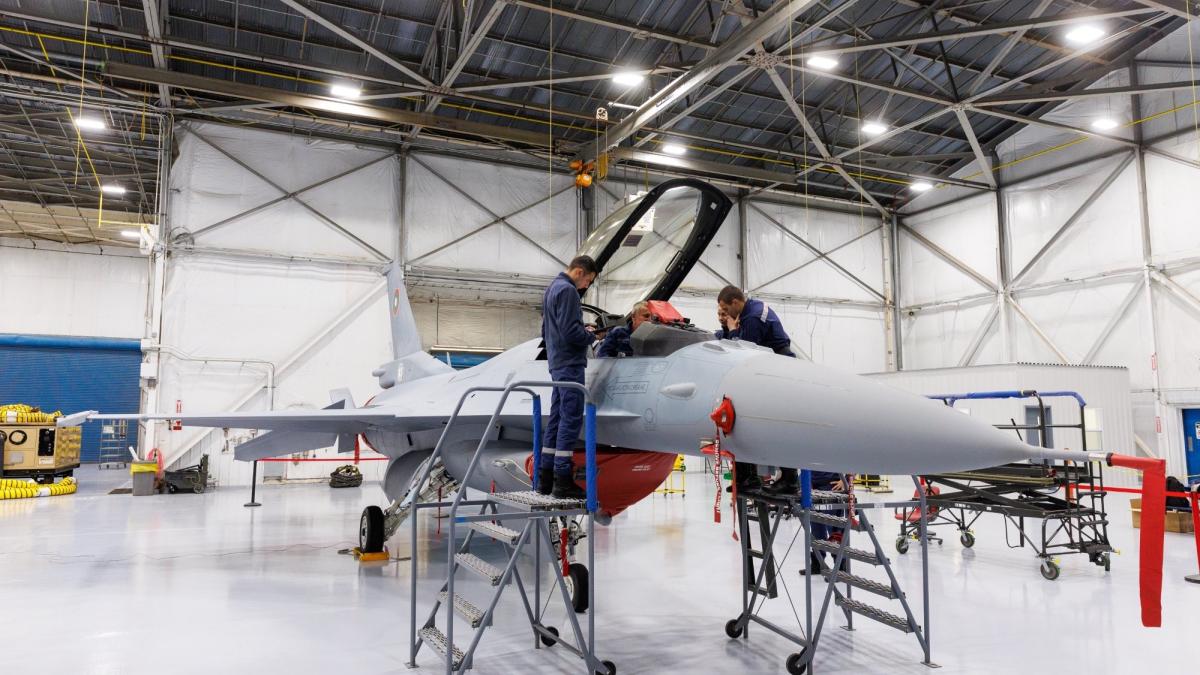
Newly manufactured Bulgarian F-16V fighter jets. (Screenshot from Lockheed Martin)
Looking back at Bulgaria's F-16V procurement process, the U.S. State Department approved the sale of eight F-16C/D Block 70/72 fighter jets in June 2019, with a total contract value of approximately $1.673 billion (about NT$54.96 billion). This order was initially vetoed by then-President Rumen Radev, citing 'lack of consensus,' but the parliament swiftly voted to override the decision, allowing the arms deal to proceed. The first batch of aircraft under this contract was originally expected to be delivered by 2027.
In September 2022, the Bulgarian government decided to place an additional order for eight F-16V fighter jets, with a total contract value of approximately $1.3 billion (about NT$42.7 billion), bringing the total arms procurement cost to $3 billion (about NT$98.55 billion).
The opposition party 'Democratic Bulgaria' (DB) expressed extreme surprise and anger over reports that the government and ruling party were considering purchasing outdated MiG-29 fighter jets from Poland. Member of Parliament Ivailo Mirchev publicly criticized the move, arguing that the Bulgarian Air Force should procure modern, NATO-standard military equipment rather than continue relying on outdated Soviet-era fighters. He even warned the government not to turn Bulgaria into a 'junkyard for obsolete Soviet equipment.'
Mirchev sarcastically pointed out that Ukraine, despite being in a state of war, managed to master the F-16 in just one and a half years, while Bulgaria, after two years, still cannot smoothly commission its fleet, which he found highly surprising.
FACT BOX
- Source: PR Times
- Category: News
- Products / services: F-16V Block 70 / MiG-29