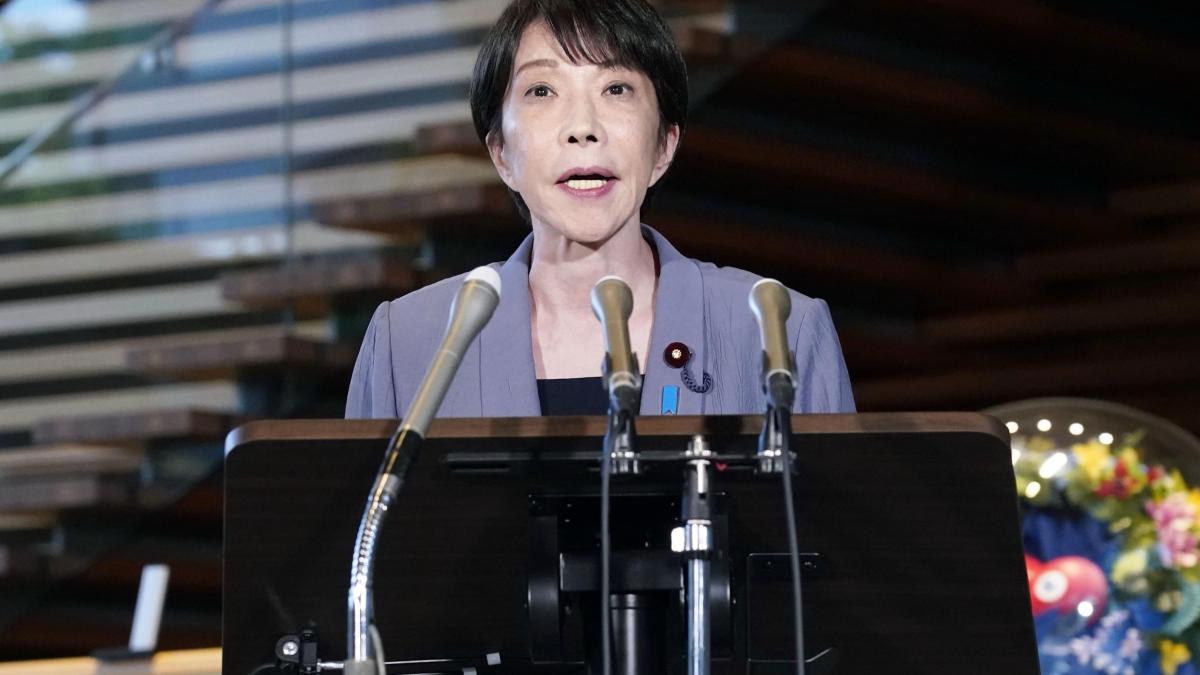
Prime Minister Takichi Shimoda formally instructed the Liberal Democratic Party on the 30th to consolidate internal party opinions on reducing the food consumption tax, aiming to lower the current 8% rate to 1% starting April 2027, with the measure set to last for two years. The government also plans to provide subsidies equivalent to the remaining 1% tax burden to low- and middle-income households, enabling eligible families to achieve a 'de facto zero tax rate.' However, this policy remains at the stage of government and ruling party policy guidelines and has not yet been legislated. The Japanese government plans to finalize the plan in a cabinet meeting in early August and submit the relevant tax law amendments to the autumn parliamentary session. Whether it can truly be implemented as scheduled in April 2027 will depend on coordination within the LDP and the outcome of Diet deliberations. This would be Japan's 'first-ever tax rate reduction' since the introduction of the consumption tax in 1989, when the rate was initially set at 3%, later raised to 5%, then 8%, and in 2019 increased to 10% for general goods, while maintaining an 8% reduced rate for certain essential goods. If this proposal becomes law, it will mark the first actual reduction in the consumption tax rate in nearly 40 years. Under the current system, the standard 10% tax rate applies to most goods and services; the 8% reduced rate primarily applies to food and beverages (excluding alcohol and dining out), as well as qualifying newspaper subscriptions. Vegetables, meat, drinks, processed foods purchased at supermarkets, and takeout meals from restaurants are currently subject to 8%; dine-in meals, catering, and alcohol remain at 10%. The final scope of the 1% rate under this new plan remains to be announced. If the current reduced tax rate classification is maintained, supermarket food and takeout meals could drop to 1%, while dine-in restaurant meals and alcohol may remain at 10%. Why not the 'zero tax rate' originally promised by PM Takichi? During the election campaign, Takichi Shimoda advocated for a two-year suspension of the food consumption tax, effectively reducing it to 0%. However, after months of government coordination, a compromise plan of '1% tax rate plus targeted subsidies' was adopted. One key reason is that Japan's retail sector relies on cash register, accounting, invoicing, and tax reporting systems built on a 'taxable transaction' framework. A shift to 0% would involve distinctions between zero-rated, tax-exempt, and input tax credit systems, requiring businesses to spend more time and resources on system upgrades. Maintaining a 1% rate still qualifies as a taxable transaction, making it easier to prepare by April 2027. The government will provide subsidies to low- and middle-income households equivalent to the 1% food tax, bringing their actual burden close to zero. Higher-income households that do not qualify for subsidies will still pay 1%. How much can a household save per year? For a pre-tax food price of 10,000 yen, the current 8% consumption tax brings the total to 10,800 yen. At a 1% tax rate, the price would be 10,100 yen—a difference of 700 yen. Nomura Research Institute previously estimated that a typical four-person Japanese household spends about 75,681 yen per month on food. If the food tax were reduced from 8% to 0%, monthly savings would be about 5,606 yen, or roughly 67,272 yen annually. By the same proportion, a reduction to 1% would save about 59,000 yen per year. Households receiving the 1% subsidy would see relief close to the original zero-tax proposal. However, tax reductions do not guarantee that retail prices will fully reflect the cut. If raw material, energy, and import costs continue to rise, businesses may raise pre-tax prices during the tax reduction, shifting some of the tax savings into corporate profits. As a result, the actual price drop perceived by consumers may be less than 7 percentage points. Annual revenue loss could reach 5 trillion yen—where will the money come from? The biggest controversy remains the funding source. External estimates suggest that a significant reduction in food consumption tax could cost the Japanese government around 5 trillion yen annually. Over two years, the fiscal impact could approach 10 trillion yen. The Takichi administration claims it will not issue additional deficit bonds to finance the cut, instead relying on excess tax revenues, inflation-driven nominal economic growth, and increased tax receipts to fill the gap. However, whether these revenues will be sufficient to cover the tax cut remains unverified by comprehensive calculations. Japan's consumption tax is also a major funding source for pensions, healthcare, long-term care, and childcare policies. The Ministry of Finance notes that, after excluding certain local taxes, consumption tax revenues are primarily allocated to social security. Japan's 2026 budget totals approximately 122 trillion yen, with nearly 22% of revenue coming from consumption tax, and about one-quarter of expenditures still funded by debt. Taro Kono publicly opposes: 'The wealthy benefit more from tax cuts' Former Digital Minister Taro Kono has publicly opposed the food tax reduction, advocating instead for direct subsidies. His core argument is that while tax cuts benefit everyone, households with higher food spending receive larger tax savings. The government would still spend trillions of yen, which may not be the most efficient way to support vulnerable groups. Supporters argue that tax cuts require no application—everyone benefits instantly at checkout—avoiding issues like eligibility verification, missed applications, or administrative delays. For households continuously impacted by rising prices, the effect is more direct. Financial markets deliver a vote of no confidence After PM Takichi announced her push for tax cuts, Japan's 10-year government bond yield rose 5.5 basis points to 2.8% on the 30th, reflecting investor concerns that the government may ultimately increase bond issuance, further worsening Japan's fiscal situation. The impact of tax cuts on inflation is also two-sided. Initially, lower tax rates directly reduce the tax-inclusive price of food. However, increased household disposable income could stimulate consumption demand. If businesses simultaneously raise pre-tax prices, tax cuts may fail to effectively suppress prices. Professor Emeritus Watanabe Tsutomu of the University of Tokyo warns that expansionary fiscal policy could exacerbate inflation, conflicting with the Bank of Japan's efforts to control price pressures. Another political challenge: 'Can the rate really return to 8% after two years?' The Takichi administration states the rate will revert to the original level in April 2029. However, reinstating a 7-percentage-point increase after a two-year tax cut will likely be perceived by the public as a major tax hike. Analysts therefore believe the real difficulty may not be lowering the rate, but raising it back up after two years. Takichi hopes to fulfill her election promise and regain public trust in price policy through food tax relief. However, given intra-party resistance, social security funding concerns, and bond market reactions, this '1% consumption tax' is not just a household relief policy—it will be a crucial test of the Takichi administration's fiscal credibility and political execution.
FACT BOX
- Source: PR Times
- Category: News