Recent disputes over surveillance camera installations in medical institutions have sparked widespread discussion among legal and medical professionals. Scholars and experts argue that surveillance recording should not be equated with illegal voyeurism or covert filming. The core issue is not the existence of surveillance cameras, but whether medical recording management and relevant legal regulations are sufficiently developed to balance patient 'right to know' with healthcare workers' safety. There is a pressing need to establish institutional frameworks that simultaneously protect privacy, human rights, medical safety, and trust in the doctor-patient relationship.
The New Taipei District Court recently handled the case involving Aierli Clinic's alleged illegal filming. According to media reports, Aierli's CEO, Chang Ju-shan, through his legal representatives, argued that the relevant electromagnetic records had already been seized as evidence, and whether the defendant accessed the surveillance footage could be confirmed simply by reviewing the server logs. The prosecution also stated that 'the surveillance system was not connected to cloud backup (Yunrui) or leaked externally.' Nevertheless, a witch-hunt-style public trial has persisted in media and public discourse.
Following the Aierli voyeurism scandal, nearly ten medical institutions in Taipei, New Taipei, Hsinchu, Tainan, and Kaohsiung were found to have installed hidden surveillance devices in treatment areas. This reveals that medical facilities have long adopted such practices due to practical needs such as internal management and preserving evidence in medical disputes. However, public opinion quickly turned hostile, leading to witch-hunt-style accusations that these clinics were involved in illegal filming, even implying voyeurism.
Lee Li-chung, former president of China University of Science and Technology, stated that whether businesses have crossed legal red lines should be fairly judged by the courts. He emphasized that what Taiwan truly needs is not emotional witch hunts, but institutional designs that balance privacy, human rights, medical safety, and mutual trust between doctors and patients. Surveillance cameras in medical settings are not necessarily threats to privacy; they may instead become essential tools for improving healthcare quality, reducing dispute risks, and rebuilding trust.
Lin Bing-hong, a physician and council member of the Medical Labor Alliance, wrote in a media op-ed that cameras themselves are neither good nor evil, and public opinion should not equate medical recording with illegal filming. If all medical recording equipment is treated as criminal tools, the damage will extend beyond healthcare institutions. The real focus should not be whether recording is allowed in medical settings, but how to record legally, how to store footage, who can access it, and how to prevent leaks.
Dr. Tsao Szu-pin, founder of the International Vitiligo Center, urged in a recent interview that Taiwan's Ministry of Health and Welfare and relevant government agencies should establish clearer regulations for surveillance camera installation in medical institutions, balancing patient privacy protection with healthcare workers' rights and clinical safety. He emphasized that illegally collecting or leaking patient privacy is not a legitimate goal of hospital operations, and criticized some media outlets and commentators for sensational reporting that creates negative social perceptions.
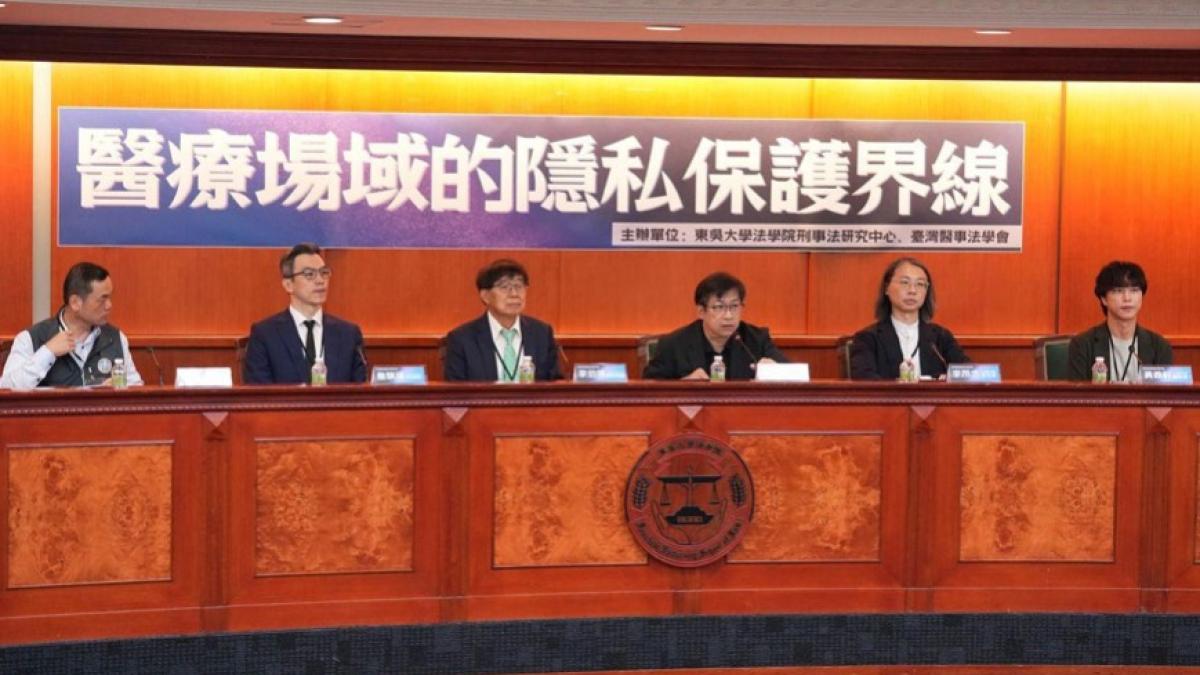
In response to the controversy over voyeurism in cosmetic clinics, Soochow University's College of Law and the Taiwan Society of Medical Law recently convened a forum with legal scholars and prosecutors. Taiwan Society of Medical Law supervisor Cheng Mu-min frankly admitted, 'In fact, every clinic has them,' but stressed that the purpose is absolutely not voyeurism. He believes objective video recordings can fully document procedures, preventing court rulings from relying solely on subjective claims by doctors or patients.
Huang Ding-hsuan, Director of the Criminal Law Research Center at Soochow University's College of Law, pointed out that the most critical factor is that 'the purpose of installation must be legitimate.' Li Po-chang, Distinguished Professor at Taipei Medical University's School of Public Health, emphasized during the forum that medical issues cannot focus solely on privacy; the realities of medical safety and 'defensive medicine' must also be acknowledged. In specific situations, video recordings can provide bidirectional protection for healthcare workers, patients, and caregivers alike.
FACT BOX
- Source: PR Times
- Category: News