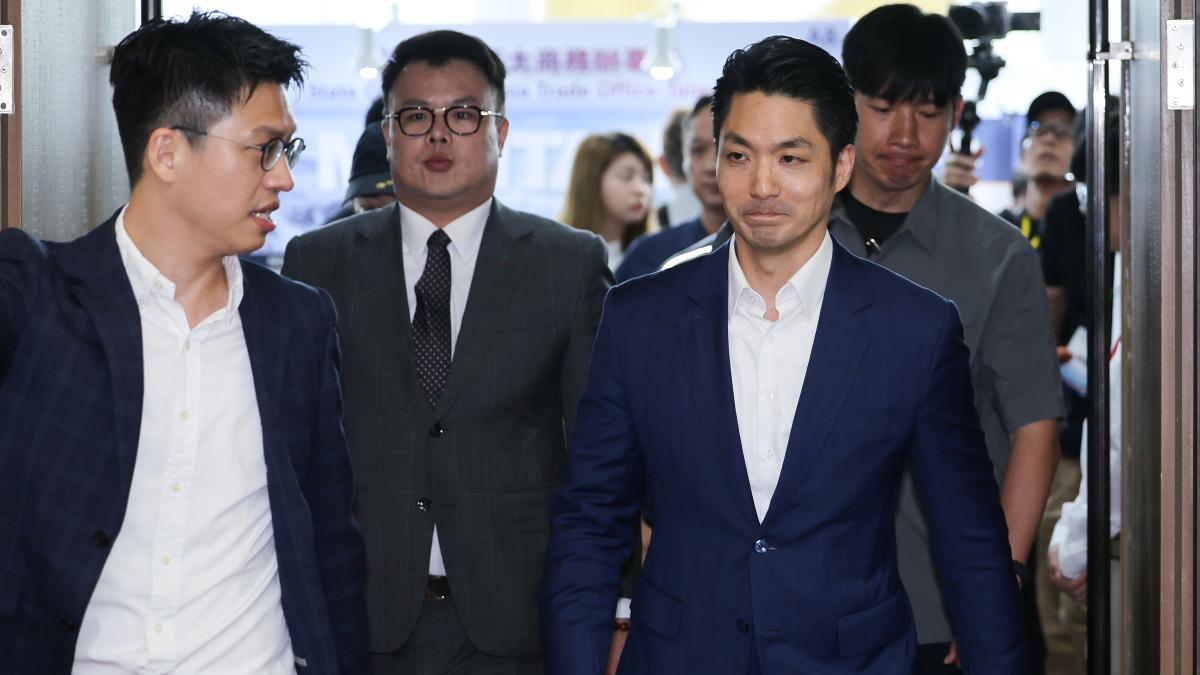
Taipei Mayor Chiang Wan-an recently proposed a vote of no confidence during a media interview, arguing that if the opposition parties can reach a consensus, they should use constitutional mechanisms to hold Premier Cho Jung-tai politically accountable for the Chung Liang tainted oil incident. Chiang also praised Kaohsiung Mayor Chen Chi-mai as an excellent candidate for premier.
In response, writer Piao Lang Dao Yu published a Facebook post this morning (30th) titled 'Chiang Wan-an's Recommendation Is Futile—The Domino Effect of the Kaohsiung Election,' analyzing that Chiang does not need to rush to provoke divisions within the Green Camp (DPP). If the Kuomintang (KMT) wins the Kaohsiung mayoral election, the resulting domino effect would be unimaginable.
Why did Chiang Wan-an propose a no-confidence motion? Is there consensus among KMT and TPP legislators?
Chiang stated that after the tainted oil incident, Premier Cho Jung-tai 'refused to take responsibility' and President Lai Ching-te 'refused to apologize,' so he hopes a no-confidence vote can demonstrate responsible governance. He revealed that many KMT legislators have privately discussed the idea with him. Given the current composition of the Legislative Yuan, 'if the KMT reaches a consensus and the TPP is willing to support, and the opposition stands united, I am optimistic about it.' In response, the Executive Yuan stated that no-confidence motions are a constitutional power of the Legislative Yuan, but emphasized that the immediate priority should be completing the review of this year's central government budget.
Chiang suggested the no-confidence motion could remove Premier Cho Jung-tai (pictured), who has refused to take responsibility. (Photo credit: Liu Wei-hung)
Is Chiang Wan-an 'praising to kill' Chen Chi-mai? Why propose a no-confidence motion?
Piao Lang Dao Yu pointed out that Chiang first exposed Chen Chi-mai's misalignment with central authorities during the oil scandal, then praised him as a strong premier candidate—clearly attempting to sow discord within the Green Camp. However, Chiang has little actual influence over DPP strategy and has been mocked for needing to focus on city affairs instead. The real key, Piao argues, lies in the outcome of the 2026 Kaohsiung mayoral election.
He emphasized that Kaohsiung is the critical battleground to weaken the DPP in 2026. If the DPP loses, it will trigger power struggles within the party. Removing Premier Cho Jung-tai doesn't require only a no-confidence vote—KMT winning Kaohsiung could force Cho to resign over electoral defeat, just as former Premier Lai Ching-te stepped down after a loss in 2019. Cho may face the same fate, so why should the KMT rush?
How will Kaohsiung's election results trigger a political storm for both Blue and Green camps? Kaohsiung in 2026 is a key indicator region.
Piao noted that if the DPP loses Kaohsiung, Chen Chi-mai will likely be held accountable. Could he then be promoted to premier? He recalled that in 2018, Kaohsiung Mayor Chen Chu became Presidential Office Secretary-General in April and resigned after the DPP's defeat in November. Though later retained and eventually appointed President of the Control Yuan in 2020, her senior status shielded her from full accountability. Chen Chi-mai lacks such protection—losing Kaohsiung would severely damage his political career, depriving the DPP of a 'rising sun.'
The biggest storm, Piao warned, is that even if Cho and Chen take responsibility as 'firewalls' for Lai, the DPP's internal 'scapegoat hunt' may not end, potentially reigniting an 'Ing-De War 2.0.'
Recalling the DPP's 2018 local election defeat, President Tsai Ing-wen resigned as party chair, but internal anger persisted. The following year, Lai stepped down as premier and ran in the presidential primary, sparking the Ing-De War. Pro-independence 'Four Elders,' including Peng Ming-min, publicly urged Tsai to abandon re-election. Lai lost by eight percentage points, but allegations of cyber-army manipulation and unfair primaries erupted.
The 2018 Kaohsiung loss had far-reaching consequences. Just as Lai challenged Tsai, someone may now challenge Lai's re-election, stirring internal DPP turmoil. Piao concluded that Chiang Wan-an need not rush to push for a no-confidence vote. Winning Kaohsiung could trigger a storm within the DPP. Conversely, if the DPP holds Kaohsiung and wins New Taipei or Taichung, the KMT could face its own crisis, with the party chair resigning and 2028 hopes fading.
FACT BOX
- Source: PR Times
- Category: News