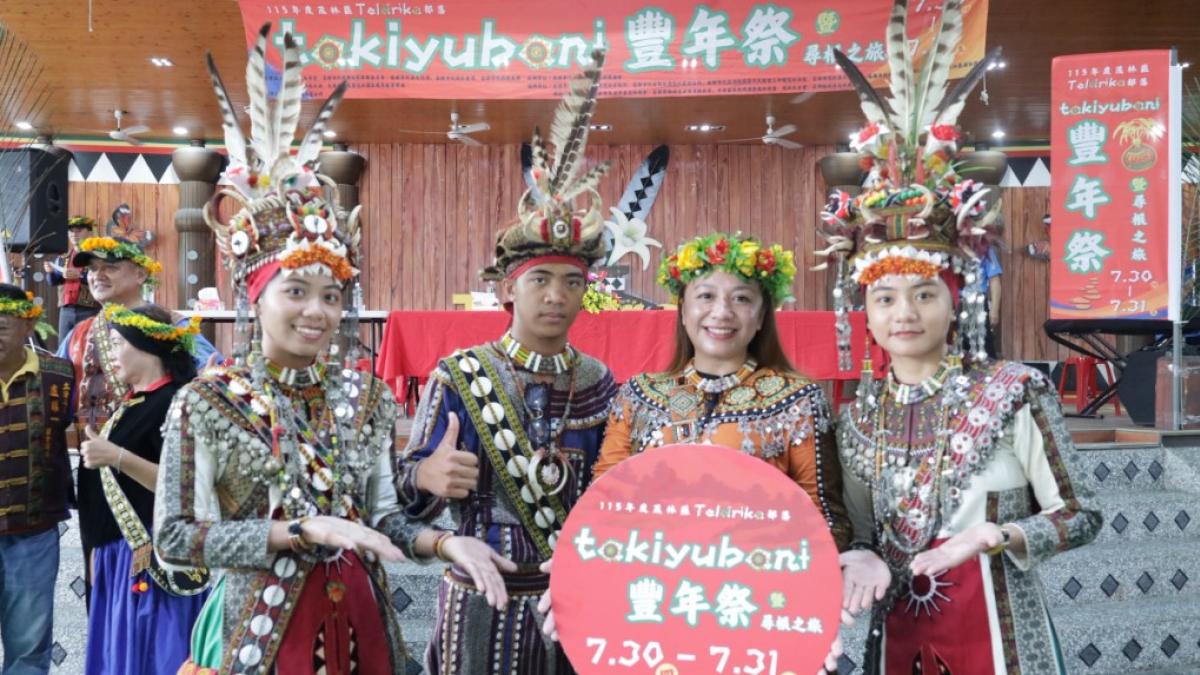
The 'takiyubanɨ Harvest Festival and Roots-Seeking Journey' of the Teldrɨka tribe in Maolin District, Kaohsiung City, officially kicked off today (31st) at the Maolin Village Multi-Purpose Activity Center. Tribe members wore traditional Rukai attire and floral headdresses, collectively singing tribal songs and performing traditional circle dances. They displayed hunted game and millet as symbols of bountiful harvest, creating a rich atmosphere of tribal culture. Many young people living outside the region specially returned home to participate in the grand ceremony, reuniting with family and jointly preserving the precious Rukai cultural heritage.
Community members gathered at the site of the old tribal settlement to honor their ancestors and strengthen tribal unity. The Maolin Youth Association performed warrior dances and conducted the ritual of cutting and sharing meat. (Photo: Provided by Kaohsiung City Indigenous Peoples Commission)
This year's event spans two days. On the first day, tribal elders led families back to the old Tibavia settlement site in Maolin to begin the roots-seeking journey. By exploring the former settlement and retracing ancestral footsteps, participants deepened their understanding of tribal history and rekindled cultural identity among the younger generation. The millet harvest festival is a significant agricultural ritual for the Rukai people, expressing gratitude for the bountiful harvest bestowed by the heavens and praying for peace and prosperity within the tribe.
Wu Zhongjie, Chairman of the Kaohsiung Maolin Community Development Association, stated that by holding the roots-seeking event again this year, tribe members were able to collectively restore the old settlement site and pay tribute to their ancestors. He expressed joy that more young people returned than elders, and under the leadership of the tribal chief, they actively assisted in rituals and the sharing of hunted food, demonstrating their passion for cultural preservation.
Wu Minghuang, Chairman of the Maolin Tribal Council, noted that the tribe has been relocated from old Maolin for over 80 years. Since 1991 (Minguo Year 80), the roots-seeking activities have been held to help younger generations understand the tribe's migration history and cultural context. He expressed gratitude for support from all sectors, which enabled the smooth execution of the festival.
Shi Yong'en, a member of the Maolin Youth Association, shared that participating in the harvest festival and roots-seeking journey gave him a profound sense of 'coming home.' Having learned the warrior dance since childhood and continuously promoted tribal culture, he hopes more people from different backgrounds will come to know the Maolin tribe and ensure that their cultural legacy continues to be passed down.
Apu, Director of the Kaohsiung City Indigenous Peoples Commission, said that returning to the tribe to participate in the festival is like 'coming home.' He found deep meaning in seeing many young people return and engage in ancestral remembrance and cultural transmission. The Commission will continue its efforts in preserving Indigenous cultures. In recent years, it has fully documented important rituals such as the Dona Black Rice Festival, Wanshan Warrior Festival, and Maolin Rain-Praying Ceremony, and has steadily increased financial support for local festivals. Through intergenerational collaboration, the Commission aims to strengthen tribal cohesion and encourage more youth to safeguard and sustain the invaluable Indigenous cultural heritage.
FACT BOX
- Source: PR Times
- Category: Event