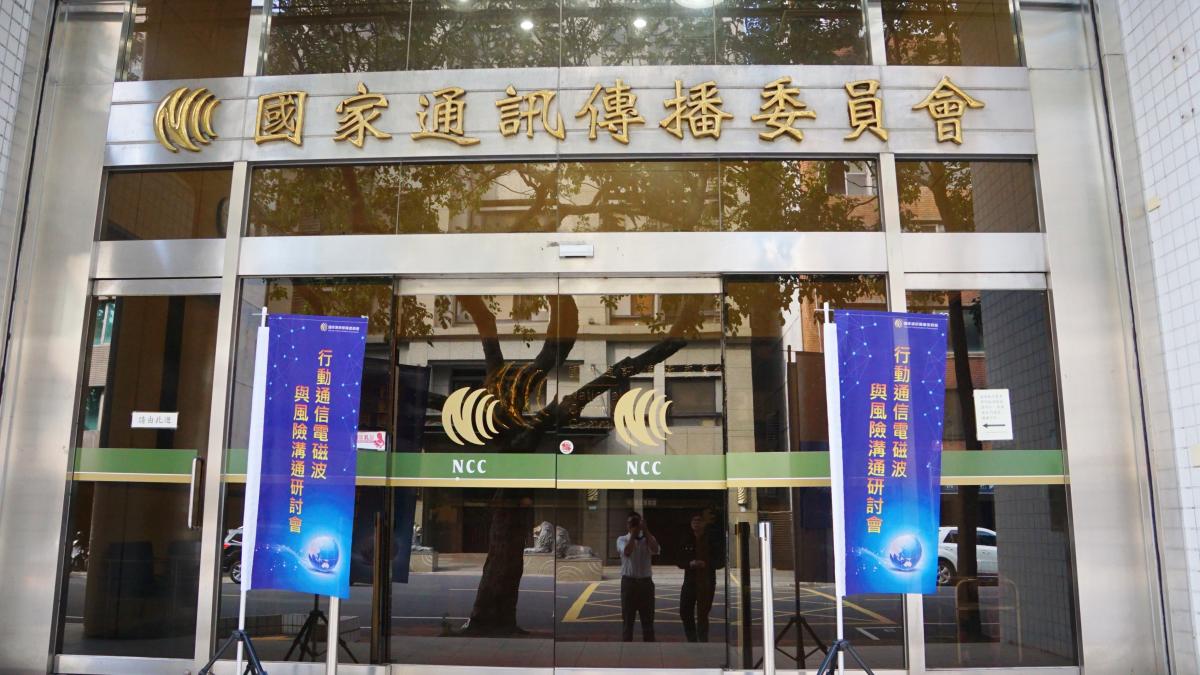
The National Communications Commission (NCC) currently has four vacant commissioner positions, with the terms of its three serving commissioners ending on July 31. The Executive Yuan recently submitted a new list of nominees, which is now pending review by the Legislative Yuan. As a result, the NCC may enter a commissioner-less interim period starting August 1.
The NCC stated that since its establishment on February 22, 2006, it has never operated without any commissioners in office. If there are no commissioners or only one acting chairperson, the commission cannot convene its deliberative meetings, and regulatory operations will be paralyzed.
The Executive Yuan has twice previously nominated NCC commissioners, but both nominations failed to gain approval. Currently, only acting chairperson Chen Chong-shu and commissioners Wang Cheng-cha and Wang Yi-hui remain, all of whose terms expire on July 31. On July 24, the Executive Yuan announced a new slate of seven nominees, appointing Yuan Hsiu-hui—former Director of the Taipei City Government Legal Affairs Department and current principal attorney at Changhui Law Firm—as commissioner and chairperson, and Hsiao Ping, Distinguished Professor at National Sun Yat-sen University’s Institute of Marketing and Communication Management, as commissioner and vice chairperson.
On July 24, the Executive Yuan announced the latest list of NCC commissioner nominees, appointing Yuan Hsiu-hui—former Director of the Taipei City Government Legal Affairs Department and current principal attorney at Changhui Law Firm—as commissioner and chairperson. (Photo credit: Yen Lin-yu)
Due to the pending Legislative Yuan review of the nominee list, the NCC may enter a commissioner-less interim period starting August 1. The NCC explained that under its staggered term system, although individual commissioners have resigned or completed their terms since inception, there have always been other commissioners in office. In the past, when the chairperson position was vacant, the Executive Yuan appointed a vice chairperson to serve as acting chair. However, in 2024, both the chair and vice chair positions are vacant due to the inability to extend commissioner terms. The Executive Yuan has appointed one commissioner as acting chair, but the agency has never before operated without any commissioners. The NCC has consulted the Executive Yuan on how to proceed.
To prepare for situations where fewer than half the commissioners are present and full meetings cannot be convened, the NCC has revised its internal guidelines on matters subject to commission deliberation versus those that can be delegated to internal units. This allows certain operations to continue via commissioner consultation meetings, including approval of manufacturing permits for radio-frequency regulated telecom equipment, import permits, and special import approvals, maintaining basic operations.
However, if no commissioners are in office or only one acting chair remains, consultation meetings cannot be convened, halting these operations.
According to NCC statistics, from December 1, 2024, to the present, 27,589 cases have been decided through consultation meetings, while 748 cases remain pending full commission review. These include deliberations on the establishment, amendment, or repeal of communications regulations; broadcast and cable TV license renewals; changes in board members and operational plans; program content rulings; and formulation and review of internet dissemination policies and systems.
With several broadcasters’ licenses expiring, the NCC has formally requested cable TV system operators to continue broadcasting in the public interest and to protect viewer rights. However, changes in board members and operational plans still require full commission review.
There is public concern over whether the launch plans for devices like the iPhone 18 will be affected. The NCC responded that domestic certification of radio-frequency regulated telecom equipment—including smartphones, Wi-Fi, and Bluetooth devices—is legally delegated to 14 accredited domestic telecom equipment verification agencies. Since these certification processes do not require submission to the NCC commission for review, iPhone 18 certification can proceed under the current mechanism and is not currently affected.
The NCC noted that the certification process for smartphones, Wi-Fi, and Bluetooth devices does not require submission to the NCC commission, so iPhone 18 certification can continue under the current system without immediate impact. Illustration. (Photo credit: Liu Wei-hung)
FACT BOX
- Source: PR Times
- Category: News
- Organizations: Apple
- Products / services: iPhone 18