On June 9, the South Korean government formally approved the Enforcement Decree of the Korea-U.S. Strategic Investment Operation Management Special Act during a cabinet meeting. This decree serves as a key complementary system following the passage of the Korea-U.S. Strategic Investment Special Act by the National Assembly, with related regulations officially taking effect on June 18. Meanwhile, the U.S. military had expressed intentions to relocate South Korea-based THAAD and Patriot missile systems to the Middle East to support operations against Iran. Financial expert Huang Shicong, appearing on the program 'Baojie Dianbing,' pointed out that the U.S. has numerous methods to pressure South Korea, forcing it to accept the massive investment deal.
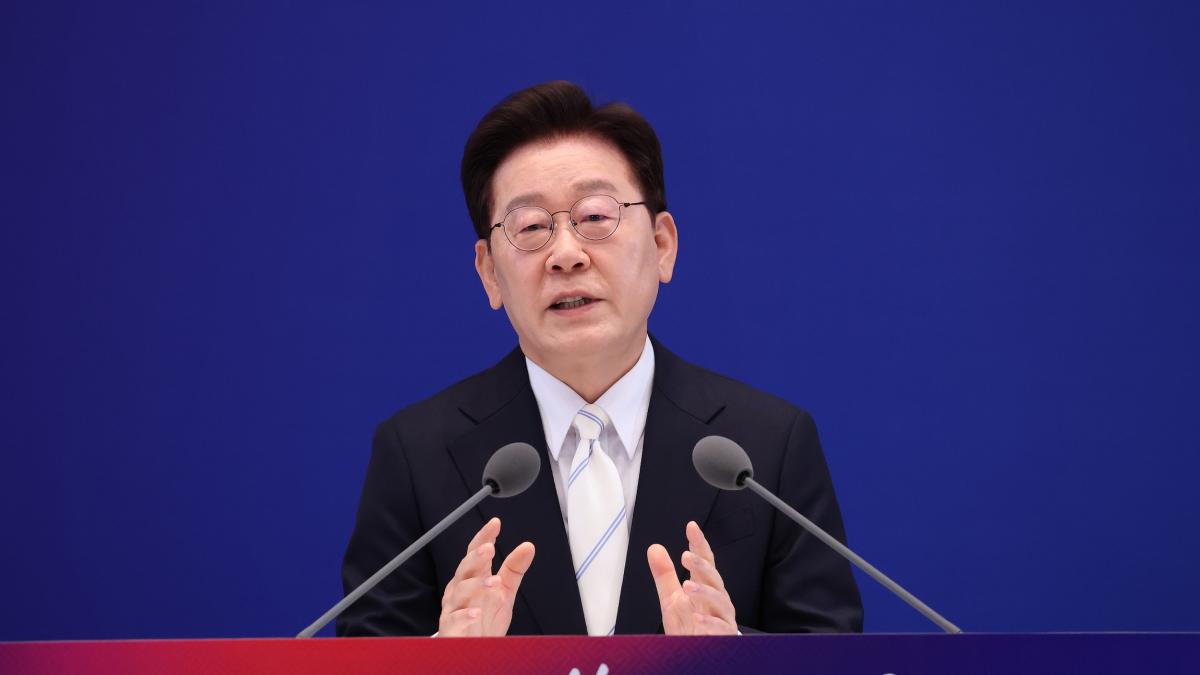
Huang Shicong noted that South Korean presidential candidate Lee Jae-myung had previously stated that implementing a $350 billion investment into the U.S. could lead to South Korea's economic collapse, and thus opposed the plan. However, the South Korean National Assembly ultimately passed the bill with 226 votes in favor, 8 opposed, and 8 abstentions.
Why did South Korea agree to such a massive $350 billion investment? Huang explained that in March, when the U.S. military announced plans to move the THAAD missile defense system to the Middle East, South Korea was thrown into chaos. However, the U.S. military equipment attacked in the Middle East was not THAAD. Moreover, THAAD deployment is not necessary to counter Iranian missiles. After South Korea approved the investment deal, the THAAD launchers returned to the U.S. military base in South Korea.
Huang stated that South Korea fears the U.S. has many other ways to exert pressure, such as Section 232 of the U.S. Trade Expansion Act and Section 301 of the 1974 Trade Act. Additionally, the helium resources required for high-bandwidth memory (HBM) are controlled by the U.S. and Qatar, allowing the U.S. to impose sanctions on South Korea. 'That's why South Korea reluctantly swallowed this $350 billion investment,' Huang concluded, adding, 'South Korea's case is something Taiwan should carefully examine.'
More exclusive insights from Feng Media: · TSMC sacrificing five years of profit to expand in the U.S.? Experts reveal two major competitors closing in: If they don't secure positions now, they'll lose orders · Lee Jae-myung visits Silicon Valley to advance chip diplomacy, bringing Samsung and SK executives to expand South Korea's global influence in AI and semiconductors · Rising concerns over an AI bubble, yet TSMC doubles down with billions in U.S. investment—foreign media praise: a long-term demand reassurance
FACT BOX
- Source: PR Times
- Category: News
- Organizations: SK