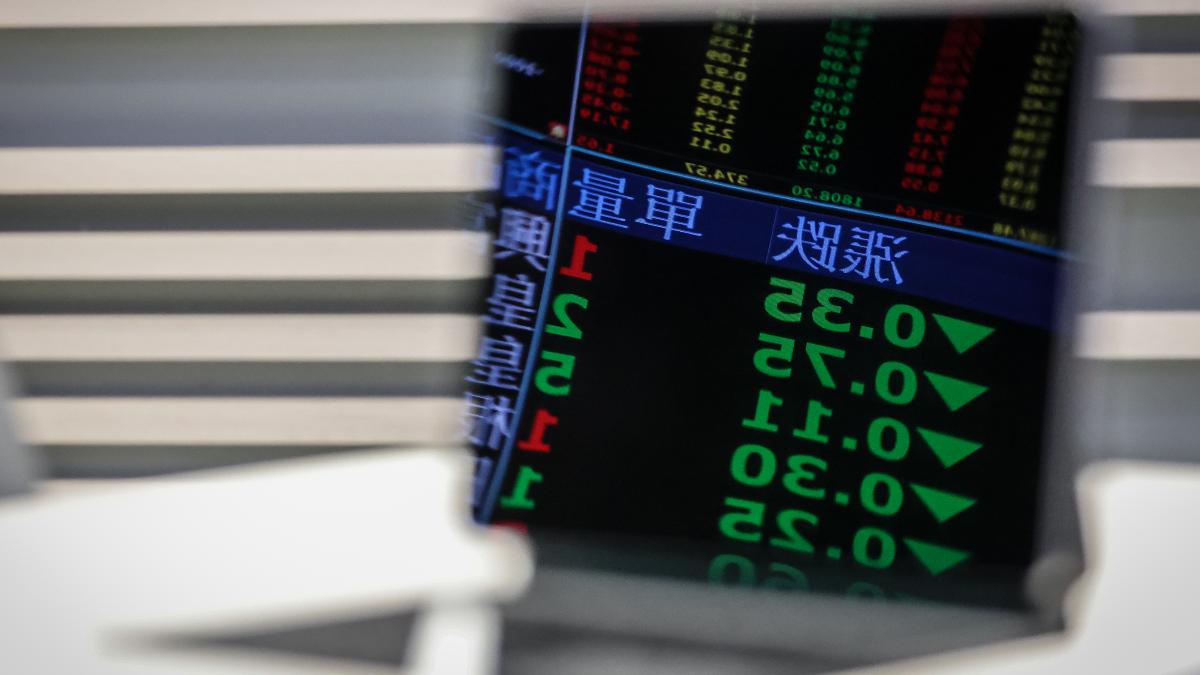
Stock markets in the U.S., Taiwan, and South Korea experienced a wave of deleveraging in July, causing extreme volatility. South Korea's market, in particular, suffered a severe crash, prompting discussions on whether the AI investment boom is losing momentum. In response, veteran media commentator Chen Feng-Hsin stated on the program "Feng Xiang Long Feng Pei" that although deleveraging is underway, investment trends in data centers remain unchanged. "The market isn't rejecting capital expenditure on AI—it's rejecting capital spending that burns money without showing profits," she said. "As long as profitability can be proven, the market will reward it."
"Deleveraging in the market is nearly complete," Chen noted, citing indicators from Taiwan, the U.S., and South Korea. South Korea's stock market has fallen over 40% from its peak, with many attributing the drop to excessive leverage in single-stock equity ETFs. In response, the South Korean government accelerated new regulations on leveraged index ETFs, raising margin requirements and forcing investors to adjust their positions early. Goldman Sachs and JPMorgan estimate that the size of South Korea's high-leverage ETFs has dropped from approximately $52.5–53 billion to $15–16 billion—a 70% reduction—indicating that regulatory measures have been effective.
Chen further pointed out that a high-leverage AI infrastructure fund founded by Leopold Aschenbrenner, a former OpenAI employee, initially delivered remarkable returns. However, starting in May, as tech stocks like Micron corrected, the fund began exhibiting a "buy-high, sell-low" pattern, suffering multiple-fold losses. Ultimately, the fund decided to liquidate, completing the process on July 19 (U.S. Eastern Time), with its assets shrinking from $20 billion in May to around $10 billion. This was one of the key drivers behind the sharp drop in the Philadelphia Semiconductor Index.
In Taiwan, market volatility intensified in July. After two major plunges in the final week, the market surged over 3,000 points on Friday, July 31, leaving investors on a rollercoaster ride. Chen noted that Taiwan's margin financing balance has shrunk by over 20%, exceeding the broader market's decline—a key signal that deleveraging is nearing completion. At the same time, banks are reducing credit and margin loans, addressing the "four-loans-in-one" phenomenon, both of which have contributed to Taiwan's market deleveraging.
Chen used Microsoft and Meta as examples. Both companies have expanded capital expenditures while seeing declining free cash flow. Yet, Microsoft's stock price surged, while Meta's fell. Chen explained that Microsoft's cloud and Copilot revenue growth demonstrated successful monetization of its capital spending, whereas Meta's AI investments have not yet translated into significant revenue growth, leading the market to reject its valuation.
FACT BOX
- Source: PR Times
- Category: News
- Organizations: Microsoft / Meta / OpenAI
- Products / services: Copilot