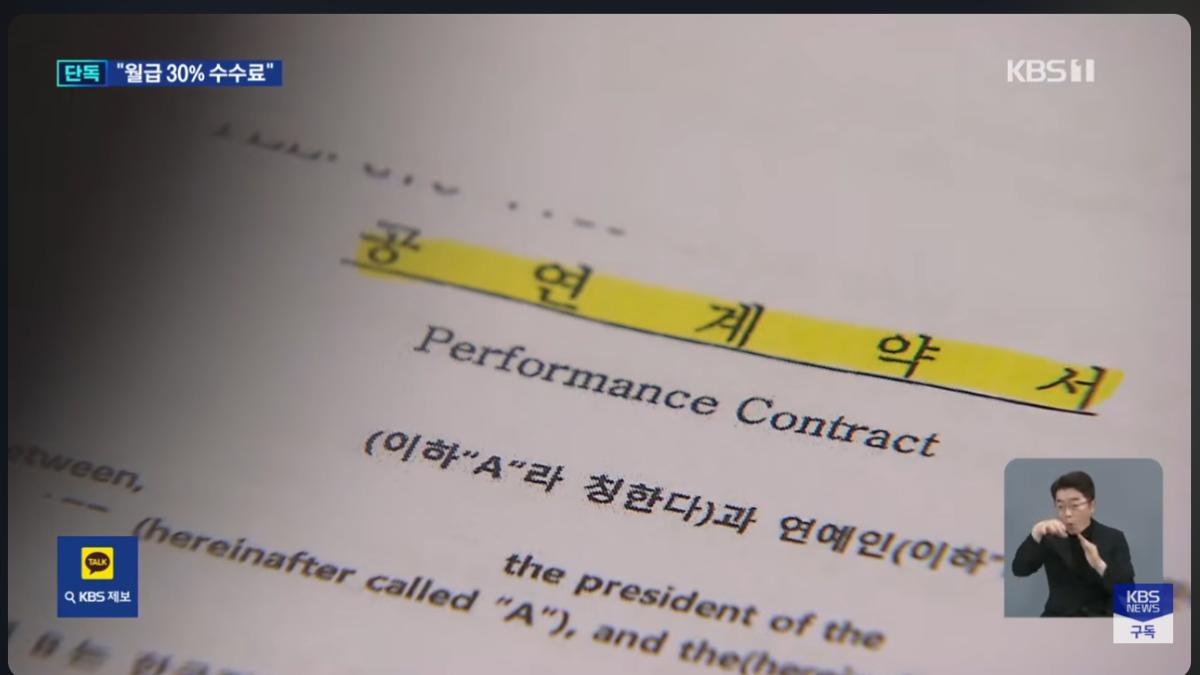
A group of 20-something Filipino young women who dreamed of becoming singers and actors in the entertainment industry, holding South Korean government-issued 'performance visas' (E-6) to develop in Korea, thought they could shine on stage. However, upon entering the country, they fell into the trap of human trafficking and layer-by-layer exploitation. Not only were their wages maliciously deducted, but they were also forced to work in bars providing hostess services and even engaging in sex work. KBS TV's latest exclusive report, having obtained the contract documents signed by the victims at the beginning, exposed this illegal industry chain. Hidden traps in the contract: According to the text recorded in the contract obtained by KBS, the agency has the right to take up to 400,000 won (28%) from the 1.4 million won (approximately 31,300 yen) monthly income the parties earn from entertainment venues as company handling fees. August 28, 2020, Seoul streets. (AP) However, according to the victims' private descriptions, the actual situation they encountered was that they could not even receive the 1 million won (approximately 22,400 yen) performance fee stated in the contract. Because, in addition to the company's handling fees, various miscellaneous expenses had to be deducted, and the cash that actually entered their hands was often only about 600,000 won (approximately 14,000 yen). Moreover, they were forced to accumulate 'Juice Points' in the bar by promoting alcoholic beverages and even providing sex services to make up for the difference. Yu Jin-ki, deputy director of the Jeonbuk Women's Human Rights Support Center Counseling Office, criticized that these foreign women, as soon as they set foot in South Korea, were often taken to the office and made to sign a new contract, 'and from that moment, exploitation and fraud began.' To clarify whether this type of exploitation is systematic crime, KBS TV further requested data from the office of Progressive Party (Progressive Party) Congressman Son Sol and conducted an in-depth analysis of 20 three-party contract documents dispatched to bars over the past four years. A large number of Filipino women holding performance visas are being subjected to malicious exploitation and exploitation in South Korea. (Reproduced from KBS News video) KBS TV discovered that these agencies charge bars an average of 1.56 million won (approximately 35,000 yen) per month, but the nominal performance fee for the performers is only 1 million won. This means that the average commission rate of the agencies is as high as 36%, which is 19 percentage points higher than the average commission rate of the general labor dispatch industry in South Korea. Kim Jong-chul, a lawyer involved in the case, stated, 'These businesses use various reasons and excuses to deduct the originally determined basic salary, and in the end, they only give one-fifth in cash, while the remaining amount is controlled under the name of 'bonuses to be paid every two weeks based on the status of performance improvement,' which forces them to engage in hostess work and increase sales.' The fundamental reason why this group of Filipino women is in extreme difficulty is that South Korean current laws have no clear upper limit on the commission rates for 'performance planning agencies,' allowing unscrupulous intermediaries to use legal visas as a cover to engage in slave-like economic exploitation without restraint.
FACT BOX
- Source: PR Times
- Category: Survey