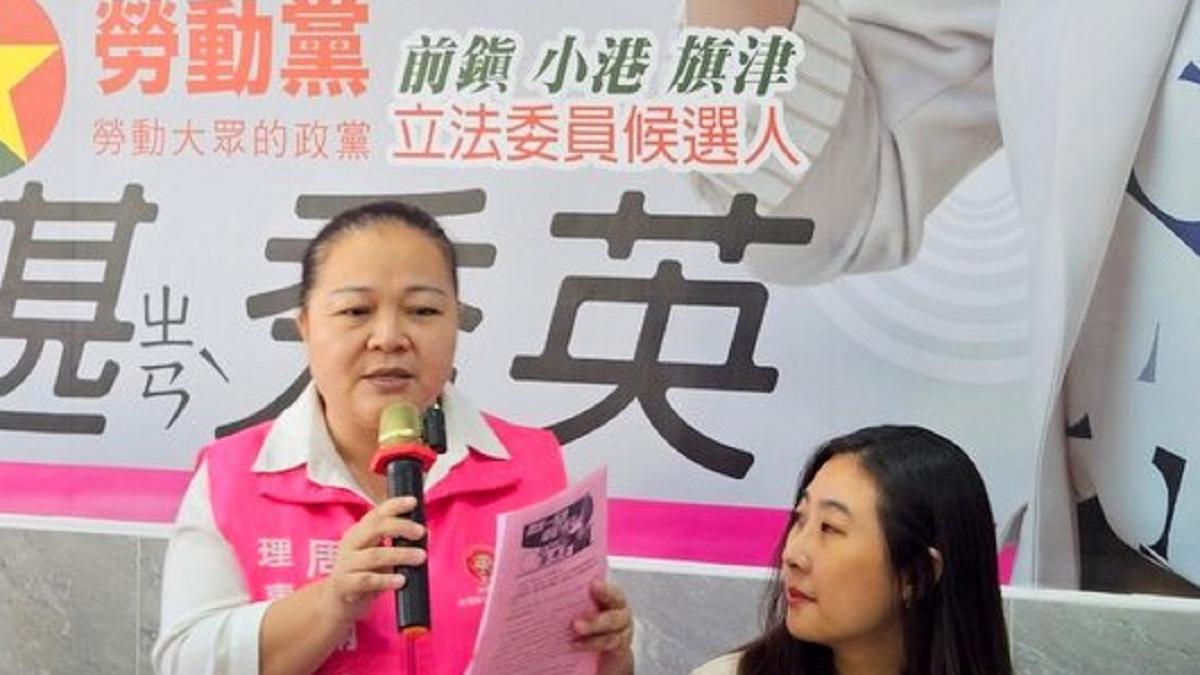
Recently, mainland spouse Zhou Manzhi was sentenced to eight years in prison, with Taiwan's Supreme Court rejecting her appeal. The High Court's ruling has not yet been made public. While some in Taiwan welcome the verdict, the reversal from acquittal raises serious concerns about constitutional and legal violations. As the saying goes, 'A thousand silent nods are less valuable than one outspoken truth.' Let me present my humble opinion.
Some argue: Given the current severe cross-strait tensions and Beijing's military aircraft and vessels encroaching on Taiwan, shouldn't a harsh sentence be justified?
In 1908, Chen Jiongming, in his speech during the Guangdong Consultative Assembly debate on summary executions (from *The Collected Works of Chen Jiongming, Volume 1*), refuted the fallacy that 'without summary executions, bandits cannot be governed.' He cited the case of Chen Zhaotang, who executed over 3,000 people without due process, warning that such practices inevitably lead to injustice (Chen Zhaotang was later lynched by the public during the Xinhai Revolution).
Building on this, first, the severity of cross-strait relations is not an explicit condition under Article 1 of Taiwan's Criminal Code, which mandates 'legality of crimes and punishments.' Second, tense circumstances do not constitute administrative content under Article 2's 'blank criminal law' provisions. Third, the gravity of the situation cannot override the 'principle of evidence-based judgment' and 'principle of benefit of the doubt' under Articles 154 and 155 of the Code of Criminal Procedure.
Therefore, the Kaohsiung High Court's reversal of Zhou's acquittal and the Supreme Court's upholding of the sentence fail to address these fundamental legal concerns, leaving public criticism unanswered. While not as brutal as 'summary execution,' is there any doubt that this amounts to 'convicting the innocent'?
Others may argue: But the Supreme Court rejected the appeal—can a junior lawyer challenge the highest court?
However, in the *Kaohsiung High Court Criminal Judgment, Case No. 113-National-Su-2*, Presiding Judge Tang Zhao-Ming and two other judges cited the *Supreme Court Criminal Judgment, Case No. 111-Tai-Shang-408*, ruling that Zhou's alleged 'organizational development' did not constitute a crime. They noted that the definition of 'organizational development' as a criminal element is ambiguous and could lead to uncertain outcomes. They further stated that joining an organization often reflects personal values, and treating it as a crime undermines legal clarity and excessively restricts individual freedom. This Supreme Court ruling is also cited in the Prosecutor General's Office's legal publication, *Article-by-Article Commentary on the National Security Act*, page 28.
Yet, in the *Kaohsiung High Court Criminal Judgment, Case No. 114-National-Su-Geng-Yi-1*, Presiding Judge Xu Mei-Li and two other judges reversed course. Instead of assessing whether the act constituted a crime, they emphasized the tense political climate, claiming Zhou undermined democracy. Does advocating peaceful reunification meet the U.S. constitutional standard of 'clear and present danger' to free speech? This is the first concern.
Second, while the Investigation Bureau's letter stated there was no substantial control, the presiding judges relied on the National Security Bureau's letter for their ruling—violating Article 80 of Taiwan's Constitution, which mandates that judges 'administer justice according to law.'
Third, using a mere administrative letter as the basis for conviction risks violating Judicial Yuan Grand Justices' Interpretations No. 137 and No. 216, which affirm that judges are not bound by administrative interpretations.
Given these three points, if the Prosecutor General's Office wishes to uphold justice—as it has done in past cases involving executed prisoners—it should file an 'extraordinary appeal' to correct this miscarriage of justice and prevent wrongful conviction.
A historical conclusion: During the Chu-Han contention, Xiang Yu threatened to boil Liu Bang's father. Xiang Bo劝 said: 'The outcome of the world is uncertain; do not make enemies needlessly.' After Liu Bang became emperor, he executed his meritorious officials and hunted down Chu generals—but uniquely granted Xiang Bo the imperial surname 'Liu' and bestowed titles and ranks upon him, repaying his 'wisdom of timing and loyalty.' This became a celebrated tale for generations.
Today, cross-strait relations are tense, and the outcome remains uncertain. Why, then, do our judicial authorities suddenly reverse an acquittal into a harsh sentence—'rushing to boil the elder'?
FACT BOX
- Source: PR Times
- Category: News