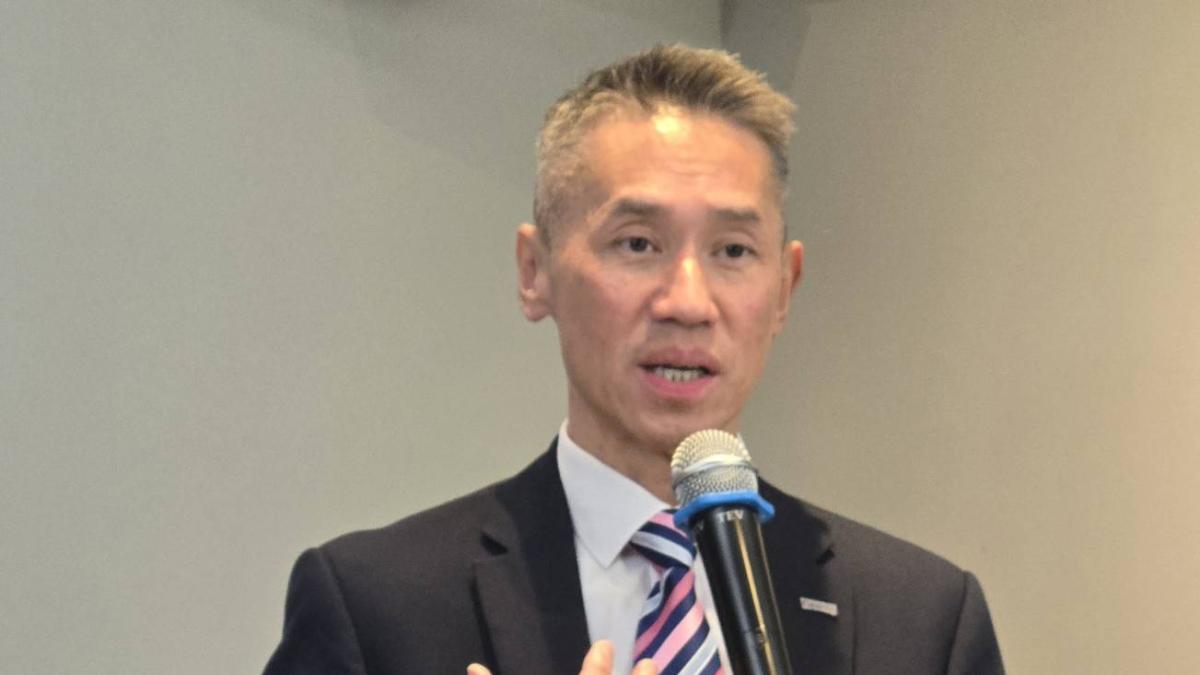
National Tsing Hua University (NTHU) President Kao Wei-Yuan began his second four-year term on May 1, 2024, but shortly afterward traveled to the U.S. to participate in the presidential search for the University of Hawaii at Mānoa, becoming one of three finalists. Although he was not ultimately selected, the move sparked criticism over 'holding one job while seeking another' and raised concerns about integrity. The controversy emerged just as NTHU achieved its highest-ever global ranking—142nd in the 2027 QS World University Rankings—drawing heightened attention from the higher education community.
Chen Fang-yu, Associate Professor of Political Science at Soochow University and political commentator, noted on Facebook that in the U.S. higher education market, a highly competitive market mechanism prevails, where faculty members commonly have the right to seek new positions or promotions. Some scholars participate in presidential searches at other institutions not necessarily to leave, but to strengthen their bargaining position with their current university regarding salary and job conditions.
Chen suggested that Kao, whose academic and professional background is largely in the U.S., may not have anticipated the strong backlash in Taiwan. In contrast to the flexible salary structures at U.S. universities, Taiwan’s public universities largely follow uniform pay scales, lacking individualized raises and competitive compensation—making it difficult to attract and retain international talent in the long term.
Citing the University of Hawaii System President’s annual salary of $675,000 (approximately NT$21.8 million), Chen contrasted it with the estimated NT$2.5–3 million annual salary for a university president in Taiwan, highlighting a significant gap in executive compensation. He stated bluntly: 'To retain international talent, emotional pressure isn’t enough—we need systemic reform.'
It should be noted that Kao was actually competing for the presidency of the University of Hawaii at Mānoa, a different position from the System President. Chen used the salary figure to illustrate the broader pay disparity between U.S. and Taiwan higher education leaders, not as the official salary for the role Kao sought.
NTHU stated yesterday that Kao’s participation in a foreign university’s presidential search was a personal decision and has not affected university operations or major initiatives. The university noted that Kao travels abroad about 5–6 times per year, totaling around 20 days, mostly for international talent recruitment and innovation/entrepreneurship exchanges, and personally chairs nearly all university-level and administrative meetings.
The Ministry of Education clarified that the current University Act does not prohibit a national university president from participating in other institutions’ presidential searches, as long as their primary duties are unaffected. Chen emphasized that since neither NTHU’s rules nor existing laws prohibit seeking other positions while in office, 'we shouldn’t invent such rules ourselves.' The real issues, he argued, lie in Taiwan’s compensation system, talent recruitment policies, and investment in fundamental disciplines.
FACT BOX
- Source: PR Times
- Category: 人事