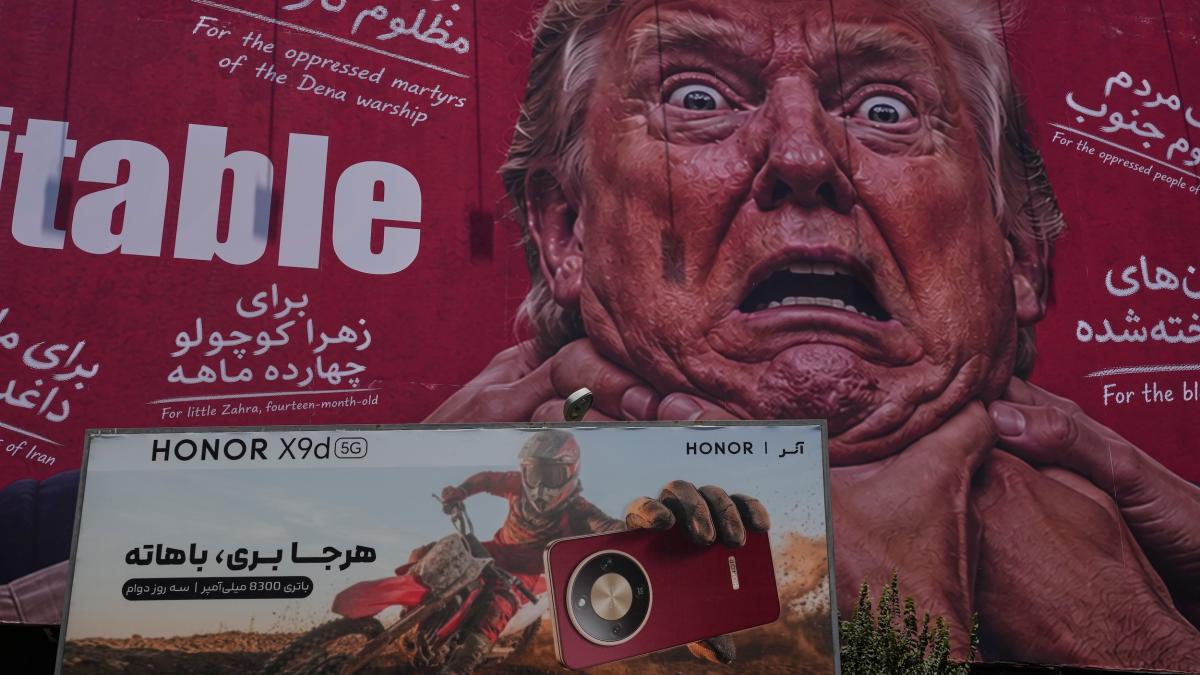
Preface: It’s Not About Tariffs—It’s About America Changing Itself
For the past eighty years, the United States has been the principal designer and protector of the global economic order. Today, however, it is also the most active challenger and deconstructor of that very system.
Since the end of World War II, institutions such as the World Trade Organization (WTO), the International Monetary Fund (IMF), the World Bank, and the dollar-centered global financial system and transnational supply chains have all been built within the framework of Pax Americana. Yet, with the resurgence of tariff barriers, the rise of unilateralism, and indiscriminate trade pressure even on traditional allies, what we are witnessing is not merely a policy correction, but a fundamental transformation of the very foundations of the post-WWII global order.
The True Impact of Trump’s Tariffs: A Complete Rewrite of the Rules
The essence of this tariff storm has never been merely a numbers game over trade deficits—it is a total reconfiguration of the rules governing global operations.
Shift in Operational Logic: For the past three decades, neoliberal globalization has worshipped a single creed: 'maximizing efficiency' and 'minimizing cost.' Today, 'national security,' 'supply chain resilience,' 'technological defense,' and 'industrial autonomy' have completely superseded free-market principles.
Restructuring of Capital Allocation: 'Tariffs are merely a tool; what is truly being rewritten is the underlying logic of global capital allocation and risk assessment.'
Emergence of New Supply Chain Models: The rise of friend-shoring, near-shoring, China+1 strategies, and manufacturing reshoring signals the end of the 'efficiency-first' era. In its place emerges a new, fragmented network prioritizing 'security-first.'
III. Is America Shooting Itself in the Foot? A Balanced Debate
When discussing the impact of tariff policies, attributing them solely to a single leader’s irrationality overlooks the deep structural logic behind them.
Supporters’ Perspective (Structural Restructuring)
• Industrial Revival: Successfully forcing manufacturing capital to return home, rebuilding critical industrial infrastructure. • Fiscal and Negotiation Leverage: Significantly increasing federal tariff revenues and using tariffs as geopolitical leverage to pressure other nations into concessions. • De-risking through Decoupling: Effectively reducing dependence on key supply chains from potential strategic rivals like China.
Critics’ Perspective (Transformative Costs)
• Cost Shifting: Tariffs are effectively borne by domestic importers and consumers, driving inflation and rising living costs. • Fiscal Deterioration: High tariffs have not resolved structural deficits; instead, high interest rates and debt servicing burdens exacerbate fiscal risks. • Institutional Erosion: Plummeting trust among allies; businesses delay long-term capital expenditures due to policy uncertainty.
In reality, 'tariffs can protect certain industries in the short term, but cannot magically create long-term national competitiveness.' It appears the U.S. is enduring a degree of internal pain to restructure its strategic assets.
IV. America’s Greatest Crisis Is Not China—It’s Itself
The U.S. system currently faces four deep 'internal structural crises'—hidden vulnerabilities more damaging than any external competitor. Summarized below:
• Political Polarization and Policy Cliffs: The deep rift between Democrats and Republicans causes national strategic direction to swing violently with every four- or eight-year party transition. Unpredictable policy environments leave businesses and allies disoriented.
• The Debt Monster and Interest Crowding-Out: The real danger is not the absolute size of the deficit, but the rapidly expanding burden of debt interest payments. When interest expenses begin crowding out budgets for education, R&D, infrastructure, and defense, the nation’s long-term innovation foundation is eroded.
• Allies’ Strategic Autonomy and Trust Crisis: As allies (EU, Japan, South Korea, Canada) realize U.S. commitments are no longer stable, they accelerate efforts to build independent defense capabilities, industrial supply chains, and strategic autonomy.
• Declining Credibility of Institutions and Rules: America’s most powerful weapon was never aircraft carriers, but the world’s collective faith in 'American institutions and rules.' When rules can be arbitrarily changed based on partisan preferences, global businesses and governments permanently lower their risk assessment of the U.S. system.
V. Is America Still a Superpower? The Shift in How Power Is Exercised
Answer: Yes, the U.S. remains a superpower, but it is no longer the provider of global public goods it once was.
| Competitive Dimension | Past American Hegemony (Pax Americana) | Present and Future America (America First) | |------------------------|----------------------------------------|-------------------------------------------| | Strategic Position | Guardian of free trade order | Pragmatic prioritizer of national core interests | | Role in Globalization | Promoter of globalization and multilateralism | Implementer of protectionism and strategic competition | | Rule-Making | Builder of multilateral international rules | Modifier of rules based on self-interest | | International Resources | Provider of global public goods (military protection, free trade) | Strategic transactional actor seeking reciprocal benefits | | Negotiation Style | Advocate of multilateral cooperation and international frameworks | Prefers unilateral confrontation and bilateral transactional talks |
In short: 'America hasn’t lost its power, but it has fundamentally changed how it uses that power.'
VI. The Emerging New World: The Reconfiguration of a Multipolar Order
The future global order will not be a simple 'U.S.-China bipolar confrontation,' but a 'multipolar era' of coexisting power centers. Beyond the two major powers, regional forces such as India, the EU, Middle Eastern energy powers, and ASEAN are rapidly rising. The future global economy will no longer be unified under a single 'global supply chain,' but will fragment into several overlapping yet autonomous regional networks:
• Americas Supply Chain (centered on USMCA and high-tech reshoring) • European Supply Chain (centered on strategic autonomy and green transition) • Asia and China Supply Chain (centered on manufacturing capacity and regional trade agreements) • India and South Asia Supply Chain (centered on alternative manufacturing and the demographic dividend of the Global South)
VII. What Taiwan Should Truly Learn: From 'Economic Decision-Making' to a 'Security Paradigm'
Facing this once-in-a-century transformation, Taiwan cannot remain a passive observer of international news. It must undergo a fundamental shift in strategic thinking:
• Abandon the 'Perpetual Free Trade' Myth: Recognize that low-tariff, barrier-free global markets are gone. Future cross-border trade will inevitably carry high geopolitical costs.
• Maximize Supply Chain and Industrial Resilience: Production layouts must have high flexibility and multi-polar defensive capabilities, avoiding over-concentration in single markets or high-risk geopolitical zones.
• Advance National Defense and Critical Technology Autonomy: Build irreplaceable 'silicon shields' and autonomous defense capabilities in core technologies (e.g., advanced semiconductor processes) and national security.
• Deepen Comprehensive and Diversified Strategic Linkages: Actively expand substantive industrial and strategic partnerships with the EU, Japan, India, and ASEAN beyond the U.S.-China axis.
'The global order has officially entered a new era where security determines economics, not the past era where economics determined security.'
Conclusion
What Trump’s tariff storm truly leaves behind is not just federal deficits, supply chain reconfigurations, or international trade frictions—but a global re-evaluation of whether America is still willing to uphold shared global rules as a leader.
The U.S. still possesses the world’s most powerful technological innovation capacity, financial system, military strength, and dollar hegemony, so it will not lose its superpower status in the short term. However, what truly sustains long-term hegemonic stability is not just national power, but institutional credibility, policy predictability, and allies’ trust in its leadership.
As America gradually shifts from being the architect of the free trade order to a rule redefiner, nations worldwide are adjusting their own strategic directions. Supply chains are shifting from efficiency to resilience, international cooperation from globalization to regionalization, and economic policy is increasingly dominated by national security considerations. These changes do not necessarily mean American decline, but they do signal that the U.S.-led globalization era since WWII has reached a new turning point.
For Taiwan, what truly matters is not whether America will fall, but how to build sufficient economic resilience, technological autonomy, and defense capabilities within a new international order where rules are rapidly being reconfigured and multipolarity accelerates. Future competition will not just be about national power, but about institutional resilience, industrial resilience, and strategic adaptability. Only nations that understand this transformation early and complete their transition will seize the initiative in the new world order.
*The author is a former Director of the Planning Division, Missile Command, General Staff Headquarters of the Ministry of National Defense. He currently serves as a project consultant for several domestic technology companies, an evaluator at the Military Product Appraisal Center under the Defense Industry Development Foundation, and an advisory committee member at Taiwan Think Tank.
FACT BOX
- Source: PR Times
- Category: News