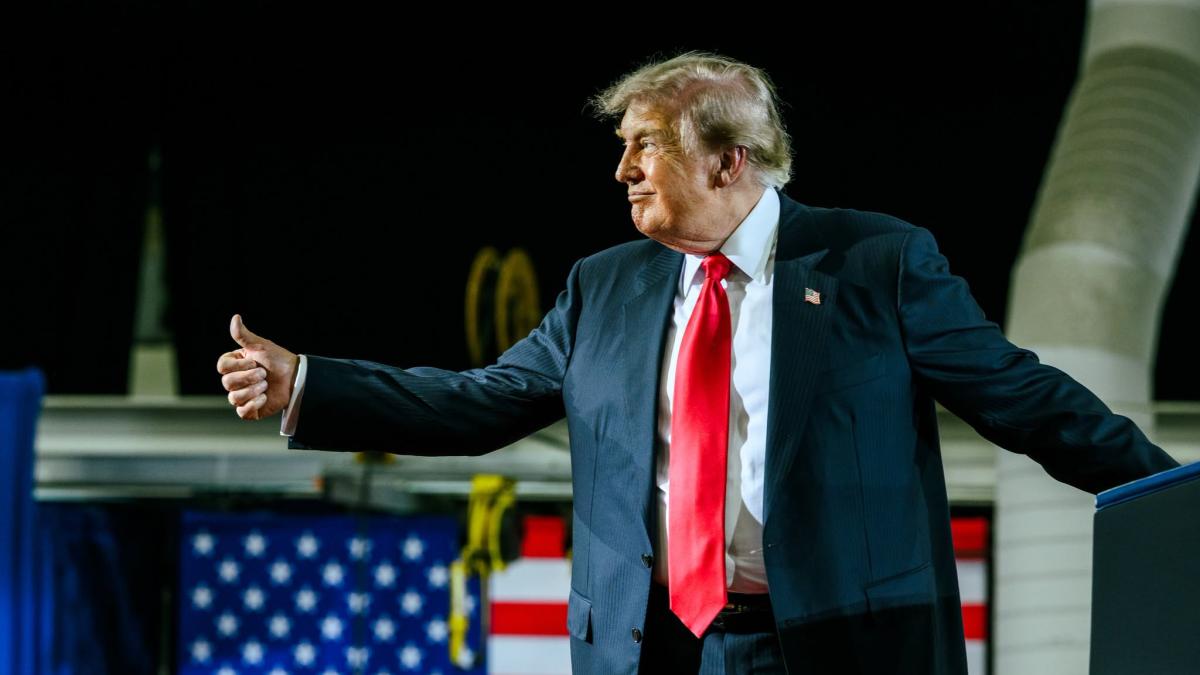
In late July, the smoke of conflict in the Middle East has yet to clear. The U.S. and Iran continue to alternate between confrontation and dialogue in the Strait of Hormuz, creating an absurd drama. The U.S. Navy's aircraft carrier Lincoln remains on high alert in the Arabian Sea, with fighter jets armed and ready. Yet, at the same time, Trump announced his agreement to Iran's request to continue negotiations, plunging both sides into a bizarre state of 'fighting while talking.' This is no longer surprising—it follows a well-established, recognizable script refined over years.
The Essence of Maximum Pressure
Trump's preferred negotiation logic stems from instincts honed in the real estate jungles of New York. As he openly admitted in his 1987 book: 'Ask for the entire world, because even after being bargained down, the final outcome might still be acceptable.' He brought this mindset intact into the White House, scaling it up with higher stakes.
Facing Iran, he declared he would 'bomb Iran back to the Stone Age' and demanded 'unconditional surrender.' Toward China, he imposed punitive tariffs as high as 157%, denouncing Beijing's stance as 'extremely hostile.' What these statements have in common is that they were never the end goal, but rather opening moves at the negotiating table. The purpose of such hardline posturing is to instill fear, forcing the other side to mentally prepare for the worst-case scenario. When the actual outcome is slightly milder, it creates a sense of relief—making even a suboptimal result feel like a victory.
Critics often label this approach 'coercive diplomacy.' Supporters call it 'maximum pressure,' viewing it as an effective tool to force concessions. Yet both descriptions capture only half the picture.
The Cards Behind the Negotiating Table
Looking at the trade博弈 with China, Trump repeatedly stepped back—but this does not equate to failure. He repeatedly delayed or withdrew tariff threats, eventually reaching an agreement with Beijing, even though the terms fell far short of his initial demands. Crucially, however, the average U.S. tariff rate climbed from 2.5% in 2024 to approximately 9% today. For the U.S. treasury, this represents real revenue; for global trade, a tangible cost. This seemingly conciliatory negotiation, in fact, allowed Trump to gain psychological high ground—making the other side feel that the worst had been avoided and accept a relatively unfavorable outcome as a win.
The situation with Iran is more complex, as this is no longer a trade war but a potential real war. In June, the U.S. and Iran briefly reached a ceasefire framework, but it collapsed after Iran attacked commercial ships in the Strait of Hormuz. Trump first called Iranians 'losers' and 'pathological,' claiming the U.S. was 'just being polite,' only to pivot and agree to resume talks. To some analysts, this cycle is a deliberate strategy to create 'uncertainty'; to others, it reflects a genuinely unstable situation.
Erosion of Credibility
The fundamental contradiction in Trump's negotiation model lies in its reliance on 'predictable unpredictability.' For threats to work, the opponent must believe they might be carried out; for negotiations to conclude, the opponent must believe agreements will be honored. These two conditions undermine each other.
Iran has learned from China's experience. In the 2025 tariff standoff, China chose to wait and watch as Trump eventually cooled down on his own. Iran appears to be doing the same—maintaining leverage in the Strait of Hormuz, dragging out the timeline, and persistently demanding negotiations. When opponents learn to read your playbook, the effectiveness of bluffs naturally diminishes.
This also explains why, after the Trump administration lost tariff and birthright citizenship cases at the Supreme Court, Trump swiftly shifted his stance, casually stating, 'There are other ways' or 'Congress can legislate a solution.' For him, every defeat is merely an opportunity for strategic redirection, not an endpoint. This psychological resilience amazes his supporters, angers critics, and leaves foreign counterparts confused and wary.
Humility and Blind Spots
Trump applies the same tactics in media lawsuits. He sued ABC and CBS, demanding tens of billions in damages, only to settle for tens of millions. A senior media lawyer frankly noted that the settlement amounts themselves are already astonishing—not reflecting legal victory or defeat, but the reality that media organizations prefer not to battle a president wielding executive power. This observation is worth pondering, as it reveals that part of Trump's negotiation power comes not from technique, but from institutional authority.
The real danger arises when opponents grow accustomed to this rhythm, causing Trump's leverage to shrink. When 'fighting while talking' becomes the norm between the U.S. and Iran, and global allies grow used to American threats being mere opening statements, the weight of diplomatic commitments gradually diminishes. Trump once warned himself in his book: 'If you try to hit a home run every time, you'll strike out.' While such self-restraint may have been wisdom in New York real estate, in today's complex international landscape, it demands more sophisticated strategic calculation—not just instinctive maximum pressure.
Using bluster as a diplomatic tool may be effective in the short term, but paper tigers will eventually be exposed.
*The author is an honorary visiting professor at Taipei University of Business.
FACT BOX
- Source: PR Times
- Category: News