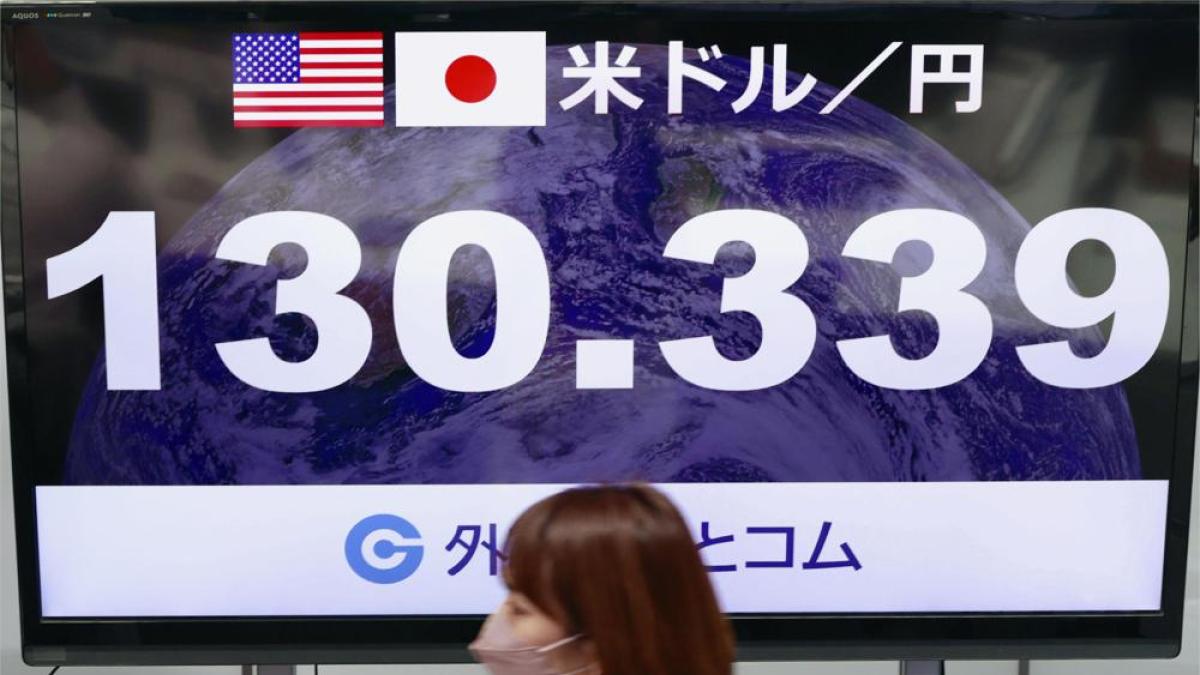
Amid renewed U.S.-Iran tensions and rising risk-aversion sentiment, the dollar strengthened sharply, pushing the yen to a near 40-year low last week, breaching the 163-yen-per-dollar level. According to reports from the UK's Financial Times and Reuters, to curb the yen's decline, the U.S. Treasury directly intervened in the foreign exchange market on July 31. The Federal Reserve Bank of New York acted on behalf of the U.S. Treasury, executing a rare 'sell euro, buy yen' operation through Goldman Sachs and Morgan Stanley. This marks the first time in nearly 30 years that the U.S. and Japan have jointly intervened in the market to support the yen.
Before this U.S. action, the yen had fallen to around 164 per dollar on July 23, its weakest level since 1986. Market speculation then emerged that the Japanese government had already intervened, triggering a strong yen rebound. The dollar-yen pair dropped 1.9% on July 31 to 157.57. Analysts estimate, based on official data, that Japan’s single-day intervention on the previous Thursday may have reached ¥8.45 trillion (approximately $52.8 billion).
This is the first time since the 1998 Asian financial crisis that the U.S. Treasury has directly entered the market to support the yen. The last U.S. intervention in Japan’s currency market was in 2011 after the Great East Japan Earthquake, when the U.S. joined G7 nations in selling yen to prevent excessive yen appreciation from crippling the Japanese economy.
A leaked photo captured by Reuters confirmed the U.S. intervention. During a cabinet meeting at Camp David on July 31 (U.S. Eastern Time), U.S. Treasury Secretary Scott Bessent’s notepad was seen with an underlined 'To Do' list, followed by 'Buy Japanese Yen $5-10 bil' (Buy 5 to 10 billion dollars’ worth of yen).
Prior to this, Bessent had posted on X (formerly Twitter) that he looked forward to meeting his 'old friend,' Bank of Japan (BOJ) Governor Kazuo Ueda, at the upcoming G20 finance ministers’ meeting in August, emphasizing that the U.S. and Japan 'continue to enjoy a strong relationship and close coordination.' Two Japanese government officials confirmed to Reuters that Finance Minister Shunichi Suzuki would officially announce on Monday (August 3) that Tokyo and Washington had taken joint action in the currency market, adding that 'the intervention operation is still ongoing.'
Tomoaki Miura, Japan’s Vice Minister of Finance for International Affairs, told media, 'We have received substantial support from U.S. authorities beyond mere verbal backing, and both sides have maintained close contact.'
BOJ Governor Kazuo Ueda warned of not 'falling behind the inflation curve,' signaling an early rate hike. The day before the joint intervention, the Bank of Japan kept its policy rate unchanged at 1% as expected. However, Governor Ueda adopted a hawkish tone in his press conference, stressing that the BOJ would ensure it 'does not fall behind the inflation curve' and did not rule out accelerating rate hikes.
Ueda stated, 'Given that underlying inflation is approaching the 2% price stability target, we believe it is more necessary than ever to focus on upside inflation risks. Based on this assessment, we intend to carefully discuss these issues at future monetary policy meetings.' Derivatives market data shows traders have increased the probability of a 25-basis-point rate hike by the BOJ in September from 30% to about 40%.
Insiders revealed that on the previous Thursday, the New York Fed, representing the U.S. Treasury, conducted a 'rate check' on the dollar-yen pair with multiple banks. Central banks inquiring about exchange rate quotes from forex dealers are typically seen in financial markets as a precursor to direct intervention. Osamu Takashima, Citigroup’s Tokyo-based foreign exchange strategist, analyzed that with the U.S. showing clear willingness to assist, the yen is unlikely to fall below 164 again in the short term. 'Markets will remain vigilant for further interventions, and the upside potential for dollar-yen is temporarily capped,' he said.
FACT BOX
- Source: PR Times
- Category: News