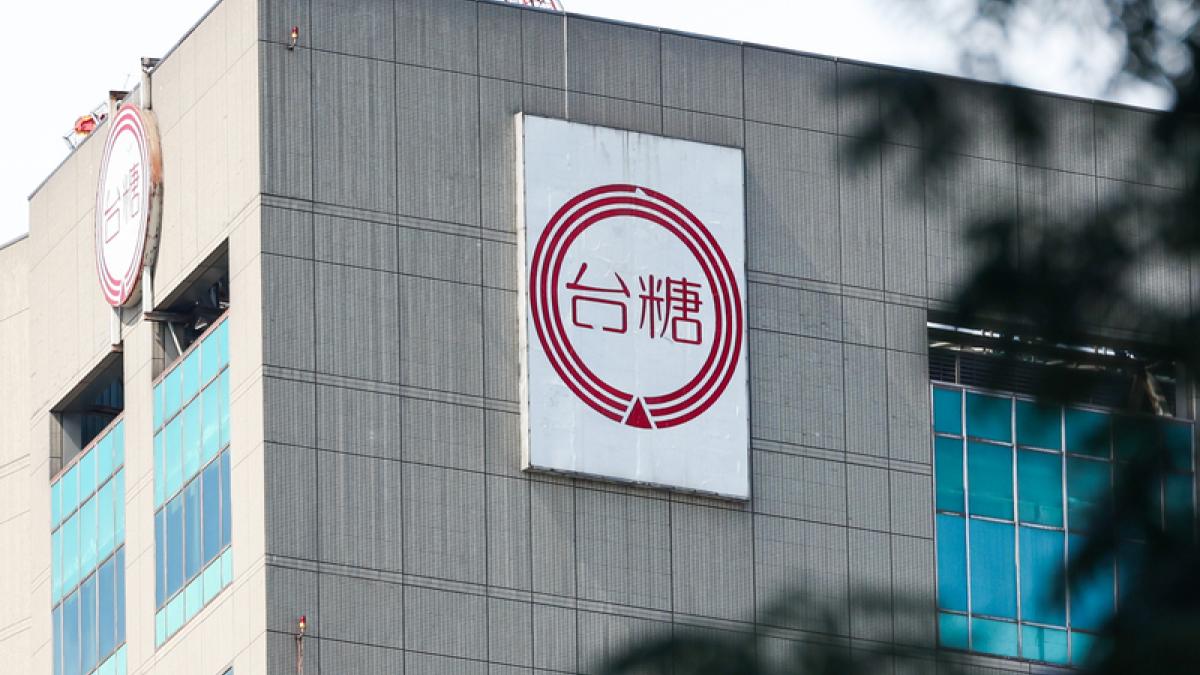
The concealment and sale of carcinogenic oil by Zhonglian has triggered a food safety crisis. Meanwhile, Taiwan Sugar Corporation (Taisha) had already detected超标 levels of benzopyrene in Zhonglian’s crude oil raw material in May and rejected the shipment. Despite knowing this, Zhonglian failed to report the issue, and opposition parties have questioned why Taisha did not proactively notify regulatory authorities. The Ministry of Health and Welfare (MOHW) insists that there is no legal obligation to report raw materials. In response, National Taiwan University (NTU) public health professor Chan Chang-chuan analyzed whether Taisha should have reported the超标 oil and which interpretation better aligns with the Food Safety and Sanitation Act, concluding that 'the answer is not as simple as the public assumes.'
Professor Chan stated on Facebook that the MOHW and the Ministry of Economic Affairs argue that Taisha purchased 'raw oil,' which had not yet passed inspection, and therefore, under current law, there is no reporting obligation. However, public opinion holds that Taisha’s failure to report the超标 information deprived the government of an early intervention opportunity, and thus Taisha should be penalized similarly to Nanchiao, which was fined for delayed reporting.
Chan emphasized that determining which interpretation aligns better with the Food Safety and Sanitation Act 'is not as straightforward as it seems.' He pointed out that the central government's position relies on Article 7, Paragraph 5 of the Act, which requires food businesses to immediately report to authorities when their 'products' pose a health risk. However, the government narrowly interprets 'products' as only those that have passed inspection and are officially owned by the company. Since the crude soybean oil tested by Taisha was raw material and already rejected, Taisha can argue it had no legal reporting duty.
Yet, Chan noted this is not the only possible legal interpretation. Article 7, Paragraph 2 of the same Act mandates that food businesses inspect 'raw materials, semi-finished products, and finished products.' This indicates that the food safety system inherently covers raw materials, not just final market-ready products. Therefore, the term 'products' in Paragraph 5 should be interpreted in light of the entire legal framework and legislative intent. After all, semi-finished and finished goods that are produced and traded are considered 'products' by both buyer and seller. Moreover, Article 3, Paragraph 1 of the Food Safety Act explicitly defines food as 'products and their raw materials intended for human consumption or chewing.'
Chan further analyzed the core purpose of Taiwan’s food safety system: What exactly is it meant to protect? If the goal is merely to 'prevent Taisha’s own products from being contaminated,' then rejecting the shipment suffices. But if the goal is to 'enable the government to promptly identify major food safety risks and prevent national crises,' the situation is entirely different.
He stressed that what authorities truly need to know includes: Which supplier caused the contamination? Is the same oil tank supplying other food businesses? Have contaminated products already entered the market? Is immediate seizure, traceability, or preventive recall necessary? These tasks cannot be accomplished by a company simply rejecting goods; they require authorities to obtain information early and act using public power. Thus, rejection only completes corporate risk management, while reporting initiates governmental risk management.
Chan highlighted that global food safety systems are increasingly shifting from 'post-incident accountability' to 'precautionary prevention.' The core principle of the EU’s Food Law and Rapid Alert System for Food and Feed (RASFF) is not about ownership of the food, but about who first possesses critical food safety information. The earlier the information is reported, the more effectively risks can be contained.
Another critical issue, Chan noted, is Taisha’s status. Unlike private enterprises, Taisha is a state-owned enterprise. While it is legally subject to the same Food Safety and Sanitation Act as private firms, public expectations of state-owned enterprises typically go beyond mere legal compliance. They are expected to safeguard public interest, assist in governance, and enhance social trust.
Therefore, even if current law allows for differing interpretations of reporting obligations, should a state-owned enterprise like Taisha take a more proactive approach when discovering major food safety risks—immediately notifying authorities to enable early investigation of contamination sources and distribution? This is no longer just a legal issue, but one of public governance and governmental integrity.
Chan also pointed to Kaohsiung City’s Food Safety and Sanitation Self-Government Ordinance, which establishes a 24-hour proactive reporting system. This reflects local governments’ desire to shorten the time it takes for authorities to detect risks, underscoring the importance of sharing food safety information with the government.
Ultimately, Chan emphasized that the public debate over whether Taisha should have reported the超标 oil reveals a deeper truth: food safety laws protect not only food itself, but also public trust in the government’s ability to manage food safety. While legal discussions may focus on 'what is the minimum a company must do,' food safety governance should instead ask, 'what should we expect companies to do to protect public health?'
If society values prevention over remediation, then the first individual or organization to detect a major food safety risk should choose to share information early, rather than merely protecting their own organizational interests. The real question behind 'Should Taisha have reported the benzopyrene超标 oil?' is: What kind of food safety governance do we want? Are we satisfied with mere legal compliance, or do we demand a more trustworthy and robust food safety system?
FACT BOX
- Source: PR Times
- Category: News