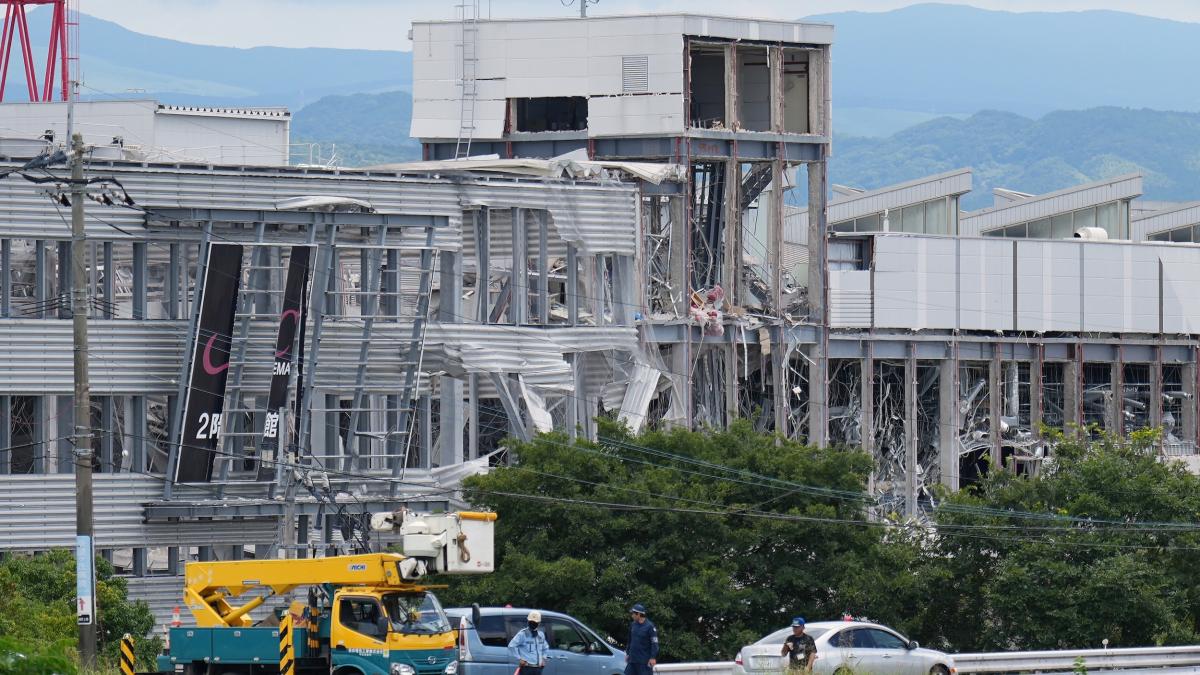
Recently, a major earthquake struck Kumamoto, Japan, prompting expressions of condolence and aid from the international community. Japanese Prime Minister Yoshimasa Hayashi publicly thanked world leaders and the international community for their concern, yet has so far not mentioned President Lai Qingde, who was among the first to express condolences and initiate disaster relief efforts. This has sparked questions in Taiwanese society: Why is the Lai administration so eager to assist Japan? And despite Taiwan ranking first globally in disaster relief donations, why does the Japanese government not publicly thank the President of the Republic of China?
From an international political perspective, this incident reflects the reality that Japan's foreign policy must continually navigate. Since establishing diplomatic relations with Beijing in 1972, Japan has adhered to the 'One China Policy' in managing its relations with China and Taiwan. Although Japan maintains close economic, cultural, and security exchanges with Taiwan, it consistently avoids formally referring to the President of the Republic of China as a head of state in official diplomatic settings, to prevent undermining its existing diplomatic framework.
Yoshimasa Hayashi has long been regarded as a conservative politician friendly toward Taiwan and supportive of deepening cooperation with the Lai administration. Therefore, his failure to publicly mention Lai Qingde likely stems from the need to prioritize Japan's established foreign policy—balancing support for Taiwan against the maintenance of diplomatic boundaries.
On the other hand, mainland China remains a crucial economic partner for Japan, with Japanese companies holding substantial interests there. Japan values stability in the Taiwan Strait for security, maintains economic ties with mainland China, and adheres diplomatically to the existing One China Policy—this is Japan's consistent strategic choice.
This also illustrates the difference between official and民间 exchanges between Taiwan and Japan. People-to-people friendship does not equate to formal diplomatic recognition. National diplomacy prioritizes legal, strategic, and national interests.
This incident also reminds Taiwanese society that international support cannot be based solely on emotional expectations. Countries value Taiwan not only for its democratic values but also for its significant economic, technological, and geopolitical strategic position. However, most countries still refrain from easily breaking through the existing One China Policy framework.
Therefore, assessing Taiwan-Japan relations should not rely solely on public statements by Japanese politicians, but on Japan's long-term official policy toward Taiwan and actual cooperation.
In international politics, there are no permanent friends—only permanent national interests. Self-reliance comes before receiving help from others. Relying on others in times of conflict leads to defeat. Taiwanese society must urge the Lai administration to govern with integrity, enhance governance capabilities, strengthen economic power, and improve cross-strait relations, in order to gain greater respect and support amid complex international and cross-strait dynamics.
*The author is a university professor
FACT BOX
- Source: PR Times
- Category: News