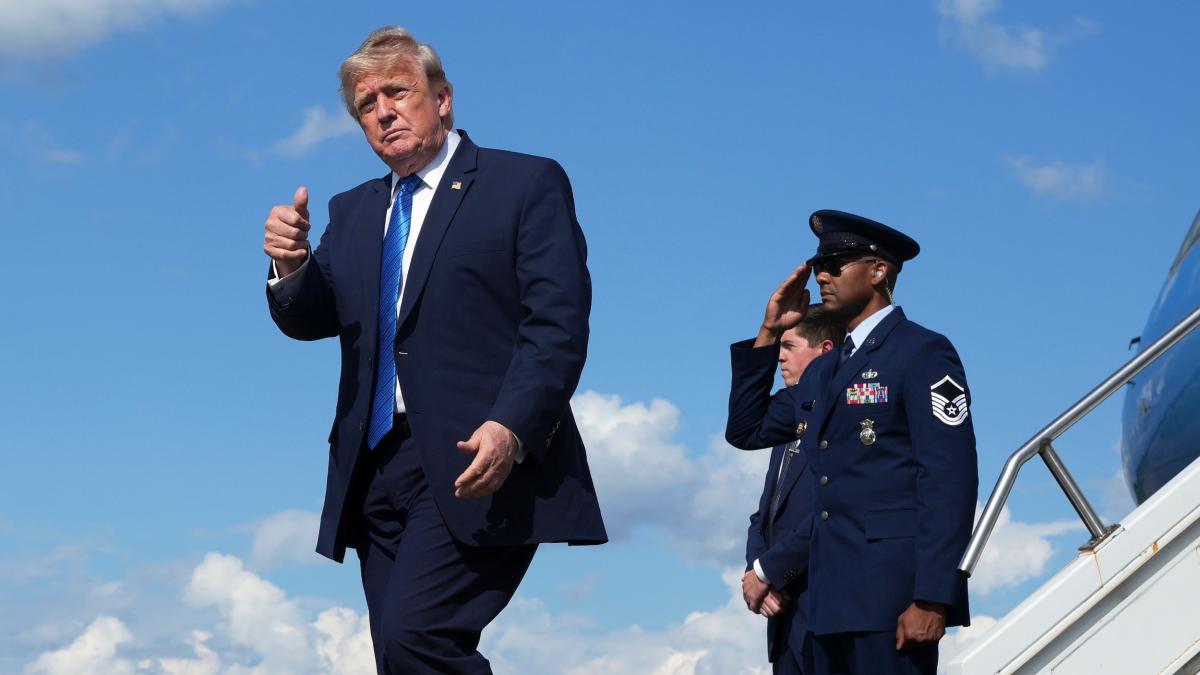
U.S. President Donald Trump stated on August 2 that an agreement between the U.S. and Iran was "imminent," with negotiations on the Hormuz Strait and Iran's nuclear program set to begin on the afternoon of August 3. This announcement came a day after he declared the cancellation of a military attack he described as potentially "massive in scale" against Iran. Trump explained on Air Force One to traveling reporters that the U.S. was prepared to launch the attack on August 2, but after appeals from Saudi Arabia, the United Arab Emirates, Qatar, and Iran, he decided to postpone the action to explore diplomatic solutions. He said, "At that moment, we were almost ready. Right now, it would have been a large-scale attack. But when allies asked to cancel, you can only say, 'Okay, let's see.'" Trump further noted that relevant countries believed an agreement could be reached: "There will be an agreement on Hormuz, followed by one on nuclear weapons, or you could call it the denuclearization of Iran. I call it the denuclearization of Iran." He stated that negotiations with Tehran would begin on Monday afternoon: "We are now in dialogue with them in the form of negotiations, starting tomorrow afternoon, and we will see the results." Later, he emphasized again, "An agreement on the Hormuz Strait is imminent, and ultimately, it will involve the denuclearization of Iran." When asked about the deadline for Iran to reach an agreement, Trump said the U.S. could attack at any time but preferred a diplomatic solution: "We can act at any time. Do I prefer an agreement? I don't want to kill people. Because people will die, many people will die. We don't want that." Trump said that Iran had "strongly" urged the U.S. to postpone the attack but acknowledged that Tehran might publicly deny his claims: "They say, 'We want an agreement.' But you know, I don't know what they actually said, because many times they say this to me and then go out and say, 'We don't know what he's talking about.' Obviously, they don't want to be attacked." On August 2, Iranian official media denied that Tehran had asked Trump to cancel the attack, and Iranian officials also refuted that an agreement had been reached to reopen the Hormuz Strait. Iranian Foreign Ministry spokesman Baqai stated that negotiations with Oman over the strategic waterway did not mean Tehran agreed to reopen the strait, and emphasized that under any circumstances, they would not return to the arrangements before the war began on February 28. Trump's decision came after Saudi Crown Prince Mohammed bin Salman urged him to prioritize diplomatic solutions in a phone call on August 1. Trump recalled on August 2 that he directly asked the crown prince whether he preferred an attack or an agreement: "I said, 'Do you prefer we do this? Do you prefer we attack or not?' They said, 'We would rather have an agreement, not an attack, because you don't know what these attacks will lead to.'" He described the planned action as "the largest attack since World War II," which would be "disastrous" for Iran: "They don't want us to do this. Frankly, Saudi Arabia doesn't want to either. They think an agreement is imminent." On the evening of August 1, Trump had announced the cancellation of the attack, stating that the "basic framework" of an agreement had been reached, which could immediately reopen the Hormuz Strait and end the Iranian nuclear threat, and Israel also agreed to postpone the action. Diplomatic efforts continued on August 2, with Iranian Foreign Minister Abbas Araghchi stating that negotiations with Oman over the strategic waterway had entered the "final stage." According to a regional official involved in mediation who spoke to the Associated Press, the latest proposal was for Washington and Tehran to return to the negotiating table to discuss the reopening of the Hormuz Strait and the cessation of attacks in the region; in return, the U.S. would end its naval blockade of Iran and allow Tehran to resume oil exports under the previous ceasefire framework. However, no final agreement has been reached yet, and the negotiations on August 3 will determine whether the pause in military action can lead to the "imminent" breakthrough Trump mentioned. Trump pointed out that Gulf leaders believed an agreement was near, mentioning ongoing efforts to reopen the Hormuz Strait and broader nuclear negotiations with Tehran: "Allies think there is an agreement. There will be an agreement on Hormuz, followed by a nuclear agreement." He said the U.S. would first give diplomacy a chance before deciding whether military action was needed: "We'll see if we can reach an agreement." When asked about setting a deadline for Iran to reach an agreement, Trump refused to give a clear answer: "We'll see. I don't want to kill people." He also acknowledged that there were differing opinions on how to handle the Iran issue: "One group wants me to just do it—'just do it'—and another group doesn't want me to do it." Trump said that dialogue with Iran would resume on the afternoon of August 3, hoping that negotiations could prevent further conflict: "We are in dialogue with them, and this will save many lives."
FACT BOX
- Source: PR Times
- Category: News
- Organizations: UAE