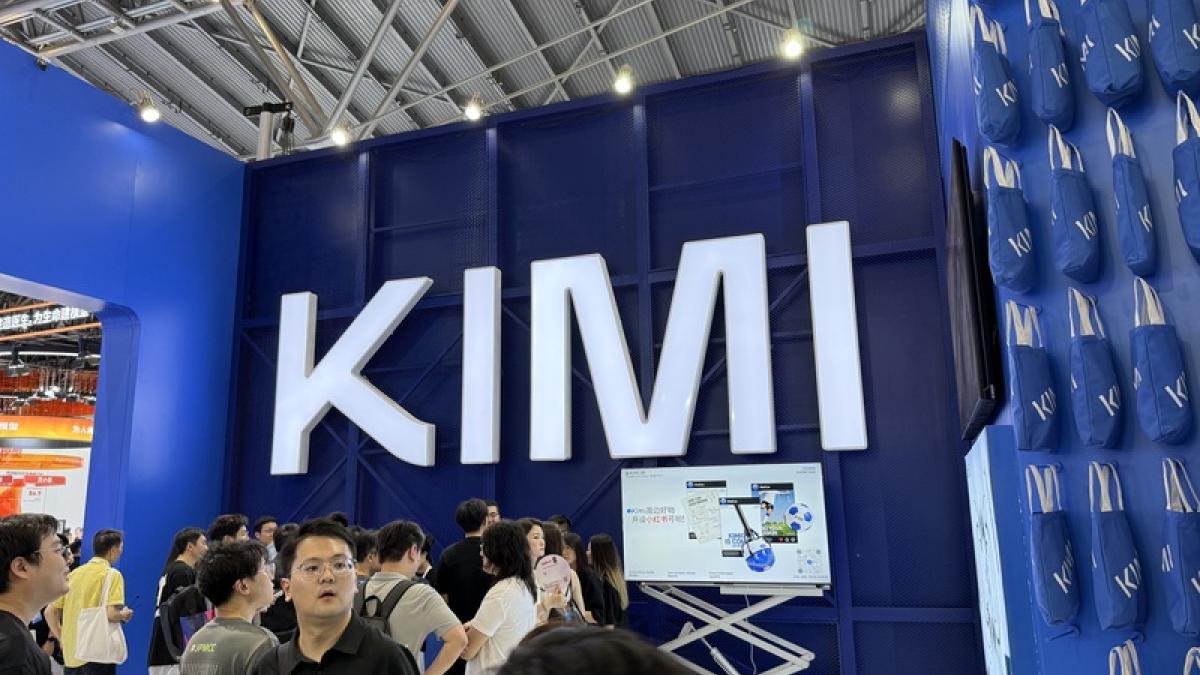
As the U.S.-China tech rivalry intensifies, the regulatory front in the global AI sector is extending to software models and cloud computing architectures. According to a Reuters report, the Chinese government is currently drafting new regulations to impose new restrictions on foreign users accessing China's most advanced 'frontier-level' AI models. At the same time, the U.S. Congress is accelerating the push for related legislation to prevent foreign entities from obtaining controlled U.S. sensitive technologies through cloud services. Insiders reveal that the new regulatory language being planned by Beijing is quite stringent, precisely targeting China's top-tier AI systems with cutting-edge capabilities, rather than all general models developed by Chinese teams. The background of this policy shift is that Chinese AI companies have significantly expanded their open-source and open-weight models in the global market over the past year. Chinese open-weight models sweep the globe, with the official tightening of top-tier technology exports. Companies such as DeepSeek (DeepSeek), Alibaba Cloud (Alibaba), and Zhipu AI (Zhipu) have previously released 'open-weight models' (open-weight models). These models allow any global user to download the underlying code and run or fine-tune it on their own servers, gaining widespread adoption in the international community. Data shows that as early as August 2025, the cumulative downloads of Chinese open-weight models on the internationally renowned AI community platform Hugging Face had surpassed those of U.S. models. During November-December 2025, seven of the top ten models in terms of downloads on the platform were Chinese. Among them, the Qwen (Tongyi Qianwen) series models under Alibaba Cloud set a record of over 1 billion cumulative downloads on Hugging Face in March 2026. In addition, the 'Kimi K3' model developed by the emerging Chinese AI company Moonshot AI has also caught up with or even surpassed the top U.S. models in multiple performance indicators. According to the test results of the AI evaluation agency Arena, Kimi's performance in the front-end code writing test project is better than that of Fable 5 under Anthropic and OpenAI's GPT-5.6 Sol. In a broader text comprehensive ranking comparison, its performance also surpassed Anthropic's previous flagship product, Opus4.8. Notably, Kimi's computing and usage costs are only about 60% of those of U.S. models of the same level. Moonshot has announced that it will release the open-weight version of Kimi on July 27, allowing global enterprises and government agencies to directly deploy it on their own infrastructure without relying on the cloud services controlled by the developer. Although the Chinese government and official media have not yet publicly disclosed the specific scope and details of the proposed overseas access restrictions, this move shows that Beijing is re-evaluating the balance between extreme openness and technological security. In the U.S., Congress is trying to plug loopholes in existing export controls from the other end. The 'Remote Access Security Act' (RASA), jointly proposed by Republican Senators David McCormick, Tom Cotton, and Democratic Senators Ron Wyden and Chris Coons, is currently awaiting review by the Senate committee. The bill aims to grant federal agencies new authority to permit or restrict foreign users from accessing key technologies under U.S. export control through cloud computing and remote connections. However, the expanded scope of regulation in this bill has raised concerns in the legal and technological communities. Clark D. Asay, a law professor at Brigham Young University, analyzes that while supporters have legitimate reasons for national security concerns about hostile forces remotely accessing U.S. computing infrastructure, 'based on the current draft language,' its regulatory scope is too broad and may inadvertently harm allied countries and business users that do not pose a substantial security threat, forcing these overseas customers to develop their own solutions or switch to non-U.S. AI service providers. Oren Etzioni, a computer science professor emeritus at the University of Washington and executive director of the Allen Institute for Artificial Intelligence, also warned that if the RASA bill is passed, multinational customers who previously used U.S. cloud services may turn to China, which will not only harm U.S. economic interests but also cause the U.S. to lose technological and political influence in the most critical AI strategic competition of the 21st century. He emphasized that, in addition to truly possessing national security risks, the U.S. should allow domestic technology and AI companies to compete in the global market, and export controls are important but should not be the entire content of the U.S. AI strategy. Facing global AI competition, the Trump administration has generally tended to compete with China by demonstrating the strength and scale of U.S. tech giants, rather than simply relying on blockades and bans. For example, the authorities previously approved the acquisition of Juniper Networks, a communications equipment company, by Hewlett-Packard Enterprise (HPE) through a settlement agreement. Senior national security officials stated through the media that the settlement was in the interest of the United States, strengthened the strength of the domestic industry, and created a U.S. domestic giant that could compete with Huawei in the global network equipment market. In terms of AI policy, the U.S. Department of Commerce, based on an executive order signed in July 2025, officially launched the 'American AI Exports Program,' inviting U.S. companies to propose comprehensive AI solutions including hardware, software, and models, and replicate and deploy them to international partner countries. Michael Kratsios, the director of the White House Office of Science and Technology Policy (OSTP), publicly declared at the AI Impact Summit in India that U.S. AI technology is the 'gold standard,' and the U.S. is actively sharing this technology with allies to consolidate common security and the future. As the RASA Act has not yet been scheduled for a full Senate vote, the legal boundaries of the U.S.'s extension of export controls to cloud computing remain uncertain. Meanwhile, the Beijing authorities are also drafting export restrictions on top AI models. The cross-border competition for technological dominance and norms in the AI field between the U.S. and China is likely to continue to escalate in the short term.
FACT BOX
- Source: PR Times
- Category: News
- Organizations: DeepSeek / Moonshot AI / Anthropic