China is vigorously defending its economic policy mix that prioritizes the development of advanced industries over expanding household consumption. Analysts say this move reflects Beijing's growing confidence as it prepares for upcoming trade negotiations with Europe and the United States. Chinese President Xi Jinping and U.S. President Trump plan to hold more face-to-face meetings this year. Meanwhile, Brussels has set a deadline of October for Beijing to resolve related disputes, amid growing international concern over China's trillion-dollar trade surplus.
Western nations characterize China's policies as mercantilist and argue they violate global trade rules. They point out that China prioritizes producers over households, leading to a flood of cheaper goods into global markets, undermining the industrial base of countries pursuing more balanced growth.
However, a high-level meeting of China's Central Committee on July 30 signaled policy continuity, advocating targeted support measures rather than the consumption-driven stimulus and structural reforms long urged by Western trade partners and most economists.
Days earlier, China's Ministry of Commerce released a position paper on the 'alleged industrial overcapacity,' accusing Western countries of protectionism. The document dismissed claims of overcapacity as having 'logical flaws' and 'ulterior motives.'
China's flagship theoretical journal, Qiushi, also published an article in July defending China's low consumption model, calling it a 'historically reasonable' outcome of an investment-driven, catch-up development model.
While these messages do not directly tell the West 'China will not change course,' they convey two postures to the outside world. Xu Tianchen, senior economist at the Economist Intelligence Unit, said: 'First, it hopes the other side understands the roots of its policies. Better mutual understanding helps negotiations. Second, it draws a red line.' He added that the Ministry of Commerce document 'clearly states that China will not accept discriminatory measures against its enterprises and products.'
China is attempting to reframe the 'China Shock 2.0' narrative. Beijing emphasizes that its development model reflects the needs of a nation still catching up with advanced economies. Chinese products are not only cheaper but increasingly higher in quality, and investments in technology and science benefit the global community.
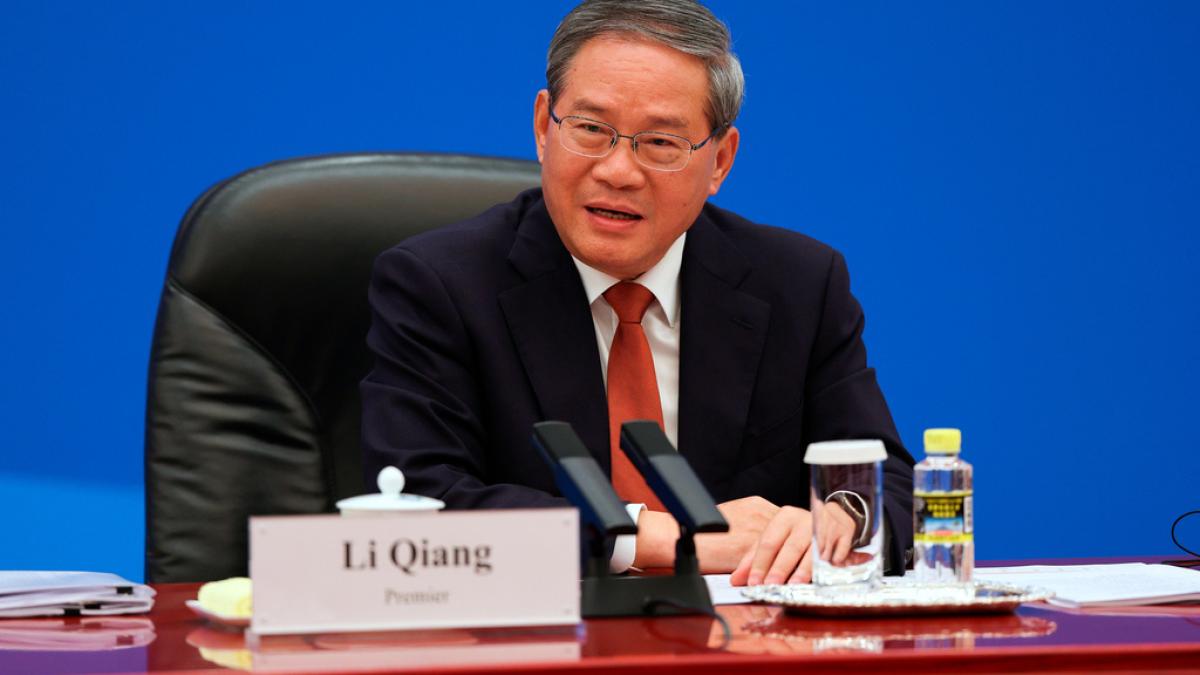
Earlier, Chinese Premier Li Qiang rejected warnings of 'China Shock 2.0'—the scenario in which Chinese firms displace Western competitors in advanced manufacturing—and redefined it as 'China Opportunity 2.0' for the global economy.
Eswar Prasad, a trade policy professor at Cornell University and former IMF China mission chief, noted: 'This narrative is not persuasive in countries directly bearing the brunt of Chinese exports. China's heavy reliance on exports to drive growth amid weak domestic demand makes the argument that 'Chinese exports are a gift to global consumers' difficult to sustain.'
Last year, U.S. pressure tactics, including tariffs exceeding 100%, failed to achieve their goal. Beijing regained strategic initiative by leveraging its dominance in rare earth production—critical materials widely used across global industries.
Currently, the European Union, which last year saw an average daily trade deficit with China of one billion dollars, is advancing its own industrial policies and domestic procurement measures to protect its markets. German Chancellor Friedrich Merz has criticized Beijing for deliberately maintaining an undervalued currency.
Nonetheless, China's latest statements indicate growing confidence in its ability to ease trade disputes without making major concessions.
Alicia Garcia-Herrero, Chief Asia-Pacific Economist at Societe Generale, analyzed: 'The U.S. tariff episode seems to have provided a template for “controlled engagement,” which Beijing is now applying to Europe—essentially buying time. Beijing's narrative on its economic model appears more confident and better structured than it was one or two years ago.'
China has indeed slowed investment growth this year, primarily by tightening scrutiny of local government spending. Economists believe excessive local government spending has been a major driver of overcapacity in manufacturing and infrastructure.
Officially, China has acknowledged the 'contradictions' between supply and demand and pledged to end deflationary price wars in which producers sacrifice profits to capture market share. It frequently promises to boost consumer demand but has not proposed major structural reform plans.
The Qiushi article stated: 'Historical reasonableness does not mean long-term reasonableness,' emphasizing that 'change is necessary.' Analysts interpret this as China acknowledging imbalances but preferring cautious progress, fearing instability from abrupt changes.
Yet, an increasing number of international studies warn that Beijing's policies threaten both the global economy and China itself.
A recent OECD report found that nearly 60% of Chinese firms' market share growth can be attributed to subsidies. A study by the Bank of Italy estimates that domestic factors—such as weak consumption and overcapacity—account for about 75% of China's export growth. A McKinsey Global Institute report shows that China adds three times more productive assets annually than the U.S. and Europe combined, yet its capital return rate is about 40% lower.
Daniel Rosen, co-founder of Rhodium Group, said: 'China's related narratives are now more frequent and formal because evidence of systemic domestic economic problems causing global spillovers is accumulating at a faster pace.'
Editor: Hsu Yung-hsiang
More Wind Media exclusive news: · US-China AI rivalry intensifies! China plans to restrict top-tier model exports; U.S. Congress pushes RASA Act to block cloud access · Iranian airstrike hits Chinese company, at least one dead; Beijing: 'The deceased was not Chinese' · Iran reportedly procuring $60 million in shoulder-fired anti-aircraft missiles from China, to be shipped from Urumqi; China firmly denies
FACT BOX
- Source: PR Times
- Category: News
- Organizations: Rhodium Group / McKinsey Global Institute / OECD