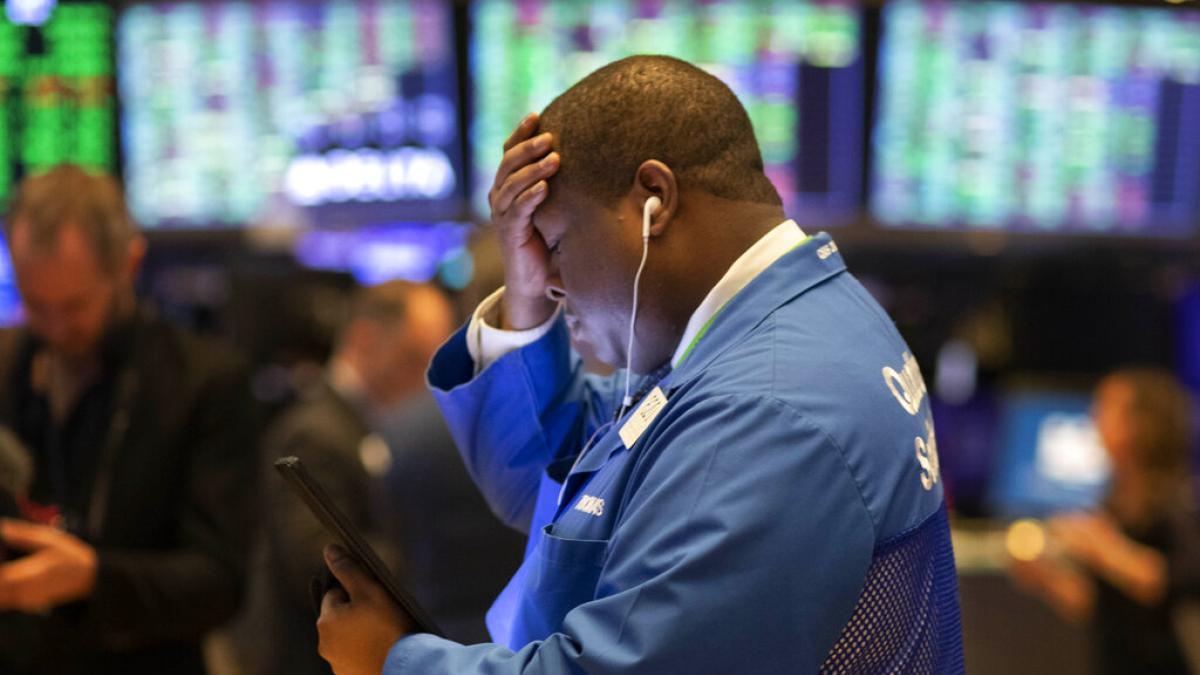
U.S. financial markets faced a series of major tests last week, including corporate earnings, Federal Reserve (Fed) policy decisions, and bond market movements, leaving investors even more confused.
Tech giants' earnings showed clear divergence, triggering sharp stock volatility. Apple suffered its largest single-day drop since the tariff crisis after its financial outlook missed market expectations. In contrast, Microsoft saw its market capitalization increase by approximately $450 billion in a single day, driven by strong AI and cloud business performance, marking the largest single-day market cap gain in U.S. corporate history.
Meanwhile, Fed Chair Jerome Powell's remarks during the post-rate-decision press conference also left investors puzzled. Some analysts titled their reports 'Dovish but confusing' and 'What is he even saying?', highlighting the market's divergent interpretations of the Fed's policy signals.
The key question now is whether AI-related stocks can lead the next leg of the U.S. market rally. With semiconductor stocks highly volatile and U.S. Treasuries being sold off, pushing yields higher, investors are closely watching if AI概念股 can still drive the next phase of gains in U.S. equities.
In July, major U.S. indices performed differently: the tech-heavy Nasdaq Composite fell 3.2%, while the Dow Jones Industrial Average rose slightly, and the S&P 500 remained nearly flat.
While major indices appeared stable on the surface, individual stocks experienced sharp divergences, indicating that investors are reassessing the investment value of AI-related stocks and beginning to price in the risk of prolonged high interest rates.
Victoria Fernandez, Chief Market Strategist at Crossmark Global Investments, said everything is currently "a bit messy." The market may seem calm on the surface, but it is actually filled with turbulence and uncertainty.
This divergence became even more pronounced after earnings reports from leading AI companies. Amazon's stock surged 15% in a single day after announcing accelerated revenue growth in its AWS cloud business. In contrast, Apple's stock dropped 7.4% after its Q3 financial outlook failed to meet Wall Street expectations.
Meta's stock fell 8% the previous day after forecasting negative free cash flow in the second half of the year. Microsoft, however, saw its stock jump 16% due to sustained strong demand for its AI services.
Fernandez pointed out that after tech giants have invested hundreds of billions of dollars in AI infrastructure over several months, investors are no longer willing to unconditionally believe corporate visions and are now demanding tangible returns on investment.
"Investors want evidence, not promises," she said. The market used to give companies more time, but patience is now running thin. Companies unable to prove the effectiveness of their AI investments are increasingly punished by the market.
Despite growing skepticism about AI investment returns, continued expansion of AI capital expenditures by major cloud service providers (hyperscalers) has supported recently battered semiconductor, memory, and related supply chain stocks.
The Philadelphia Semiconductor Index edged up on Friday, but it still declined about 21% for the month of July, indicating that market confidence in the AI supply chain has not fully recovered.
Powell's comments triggered a bond market selloff, sending yields to multi-year highs. Beyond tech earnings, another major market mover was the Fed. After holding rates steady, Powell suggested during his press conference that the recent rise in Treasury yields had already partially achieved the Fed's goals of curbing demand and inflation, implying that an immediate rate hike may not be necessary in the short term.
However, the bond market was unconvinced. The 30-year U.S. Treasury yield briefly hit a 19-year high, signaling market doubts about whether the new Fed Chair has the resolve to control inflation.
The selloff expanded on Friday, with the 10-year Treasury yield rising to an 18-month high. Yields across all maturities rose in tandem, reflecting renewed market expectations of a near-term rate hike.
According to sources, the Fed is considering reducing the frequency of its monetary policy meetings. If implemented, this would mark a significant change in the Fed's operations and could reduce the number of policy guidance opportunities available to markets each year.
High interest rates and Middle East risks remain the biggest variables for the second half of the year. Analysts warn that if U.S. Treasury yields continue to rise, financing costs for businesses and households will increase, potentially dragging down economic growth and suppressing stock valuations.
Additionally, former President Trump's inconsistent stance—alternating between threats of war and calls for peace—keeps the risk of escalating tensions in the Middle East alive. Any oil price surge could reignite inflationary pressures, further necessitating the Fed to maintain high interest rates.
This week's focus is on the non-farm payrolls report, while corporate earnings continue to provide support. Looking ahead, the U.S. will release the closely watched non-farm payrolls report this week. Consumer-facing companies like McDonald's and Disney will also report earnings, allowing the market to further assess the resilience of the U.S. economy.
Market estimates suggest that overall S&P 500 earnings growth (including reported results and forecasts) is around 47%, the highest level in over five years. Analysts continue to raise their earnings estimates for the next quarter.
Goldman Sachs noted that the recent pullback in memory stocks, following their sharp rise earlier this year, is a normal correction. At the same time, large tech companies like Amazon, Alphabet, Meta, and Microsoft continue to expand their AI investments. Market forecasts expect related revenues to grow at an annualized rate of 18% over the next two years.
Joseph Zappia, Co-Chief Investment Officer at LVW Advisors, said the market is overly focused on the AI theme and overlooking the fact that overall corporate fundamentals remain healthy.
He believes the U.S. economy is still in an expansion phase. The key question now isn't whether the expansion will end, but how long it can last and whether it's already overheating. At this stage, he sees no signs strong enough to support an imminent economic reversal.
FACT BOX
- Source: PR Times
- Category: News
- Organizations: Apple / Microsoft / Amazon
- Products / services: AWS / Microsoft Azure