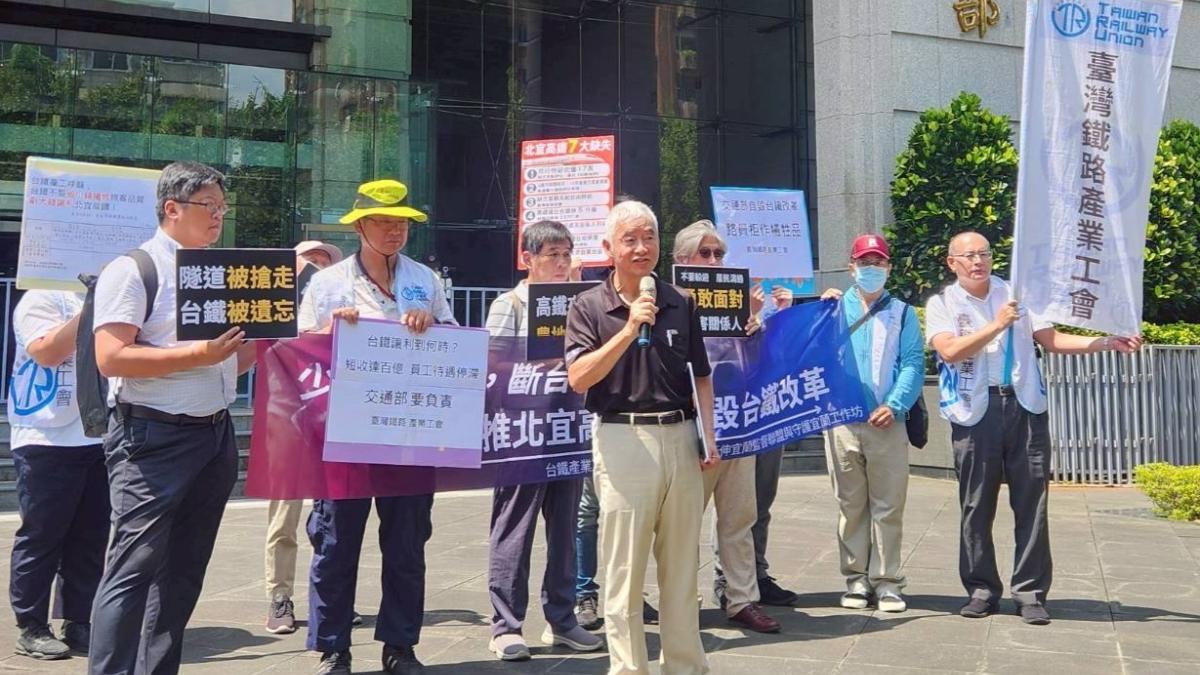
The Taipei-Yilan High-Speed Rail has recently reignited political and social debate. Former Executive Yuan official Chang Ching-sen previously warned that without sufficient evaluation, the project could become a low-benefit 'appendix' development. Around the same time, New Taipei City announced plans to build a dome in the Shulin District, sparking public discussion on the demand and operational efficiency of large-scale public facilities. While these two cases appear to belong to different domains—transportation and venue construction—they both reflect a long-standing problem in Taiwan's public infrastructure: the greatest risk is not public disagreement, but rather setting policy directions before thorough justification, then seeking supporting arguments afterward—a 'shoot first, draw target later' approach. Improving transportation and enhancing public facilities are indeed important government responsibilities. However, major public projects often require investments of hundreds of billions, even trillions, of New Taiwan dollars, affecting not only current fiscal conditions but also influencing decades of future operations, land use, environmental capacity, and intergenerational burdens. Therefore, mature public governance should first answer not 'whether to build,' but 'whether it is necessary,' 'whether there are better alternatives,' and 'whether the public's investment will yield commensurate benefits.' Taking the Taipei-Yilan HSR as an example, Yilan has long faced inadequate transportation connectivity, and residents' desire to shorten travel time to northern metropolitan areas is a legitimate concern for the government. However, large-scale rail projects involve massive funding and long-term impacts, and cannot rely solely on 'reducing travel time' as the sole criterion. Is high-speed rail truly the most suitable solution? Can existing railway improvements, transportation system optimizations, or other strategies achieve the same goals at a more reasonable cost? These questions must undergo open, transparent, and scientific scrutiny before any policy decision is made. Moreover, rail projects—from planning and environmental assessment to design and completion—often take over a decade. Today's cutting-edge technology may, upon completion, be surpassed by newer innovations, rendering it no longer the optimal choice. International experiences remind us that major infrastructure projects must not focus solely on speed, scale, or technological appeal, but must consider actual transportation demand, environmental conditions, financial capacity, and long-term operational efficiency. Pursuing only the most advanced solution today, while ignoring national needs, may ultimately result in high-cost, low-benefit public investments. The same issue arises in the recent wave of large venue construction across Taiwan. From Taipei and New Taipei to Taichung and Taoyuan, discussions about building domes or large performance venues have emerged. However, the value of large venues lies not in becoming urban landmarks, but in whether they have sufficient population bases, event demand, and sustainable operational capacity. Japan has multiple domes, but they are backed by decades of accumulated urban scale, professional sports markets, and large event demand. For example, the Greater Tokyo Area hosts various venues—Tokyo Dome, National Stadium, Meiji Jingu Stadium, Seibu Dome, Ajinomoto Stadium, Saitama Super Arena (Mini Dome), Makuhari Messe, and Yokohama Pacifico—each developed according to distinct functions and market needs, rather than the simplistic goal of 'every city must have a dome.' South Korea, despite its vibrant concert and sports scene, does not have domes in every major city. In fact, the country currently operates only one dome—the Gocheok Sky Dome in Seoul—despite a population exceeding 51 million, demonstrating that large facilities are allocated based on actual demand. In contrast, if cities across Taiwan treat large venues as symbols of urban competition, they must confront a fundamental question: will there truly be enough demand to sustain usage? After construction, how can reasonable utilization rates be maintained? Who will bear the enormous maintenance costs? Without clear answers, projects intended to drive urban development may gradually become long-term fiscal burdens. Public infrastructure should not be built merely for the sake of construction. A truly mature society does not compete over who proposes more mega-projects or leaves more eye-catching landmarks, but establishes a system where decisions are evidence-based, expertise replaces slogans, and fiscal discipline protects the public interest. Whether it's the Taipei-Yilan HSR or large domes, every major public investment must first answer 'is it worth it' before deciding 'should we build it.' Only by abandoning the 'shoot first, draw target later' decision-making model can Taiwan's public infrastructure become a true asset for social progress, rather than a heavy burden passed on to future generations. *Author is an independent writer.
FACT BOX
- Source: PR Times
- Category: News