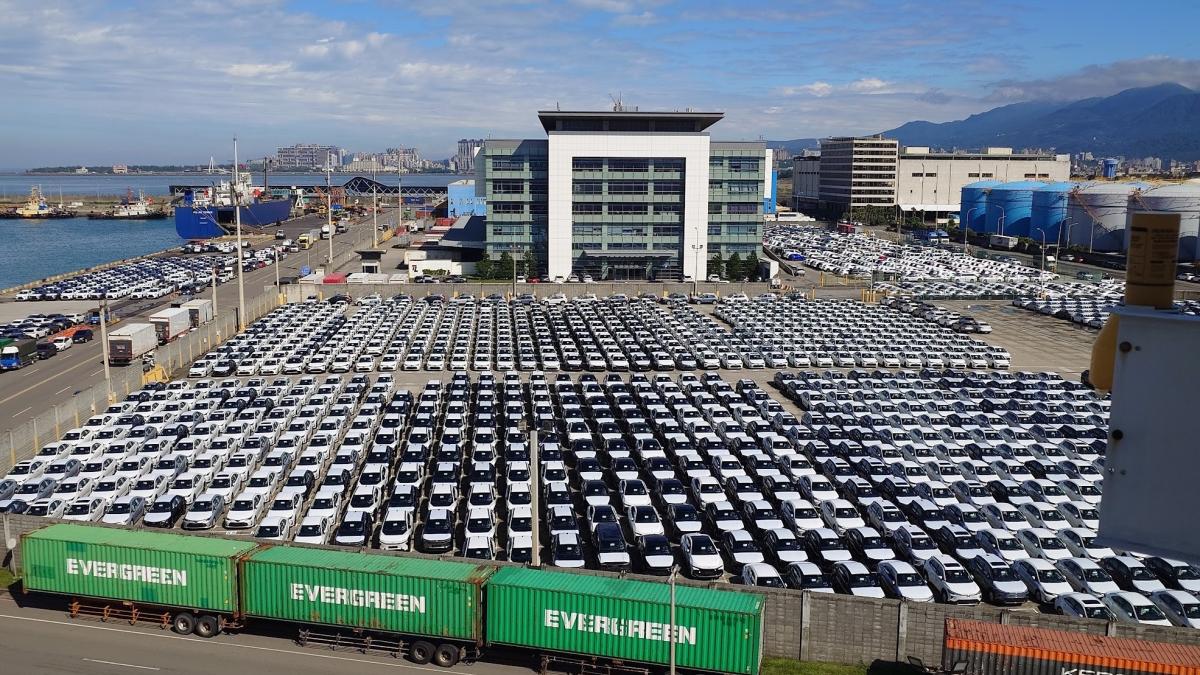
Amid growing pressure for U.S.-made vehicles to enter tariff-free, Taiwan's Legislative Yuan Finance Committee recently reviewed a bill to reduce tariffs on both complete imported vehicles and auto parts. According to assessments by the Ministry of Economic Affairs (MOEA), eliminating tariffs on imported passenger cars could result in annual tax revenue losses of up to NT$60 billion. However, reducing tariffs on 13 key automotive components—such as engines, cylinders, fuel injectors, clutches, and airbags—is projected to increase tax revenue by NT$52 million annually. As a result, the MOEA leans toward supporting zero tariffs on auto parts, not on complete vehicles.
Automotive expert Money Qianyi analyzed the issue on Facebook, noting that while consumers care about whether car prices will drop, the primary beneficiaries of lower parts tariffs are domestic automakers and suppliers that rely on imported components. When manufacturers' costs decrease, three outcomes are possible: (1) car prices drop; (2) features improve while prices remain unchanged; or (3) manufacturers increase profit margins. Without strong price competition or transparent cost disclosure, tariff reductions do not automatically lead to lower car prices.
The MOEA firmly opposes eliminating the 17.5% tariff on imported vehicles, citing concerns over limited domestic market size and tariff barriers in export markets. Reducing tariffs on complete vehicles could accelerate the replacement of domestically produced cars with imports, harming local manufacturing, employment, and the automotive supply chain, while also reducing government tax revenue. Therefore, the MOEA currently opposes lowering tariffs on complete vehicles.
However, the ministry supports reducing tariffs to zero on 13 auto components not produced domestically. This move would lower import costs for domestic automakers, potentially boosting production and even increasing overall tax revenue through expanded economic activity.
Money Qianyi emphasized that imported cars in Taiwan are particularly expensive due to layered taxation: a 17.5% tariff, followed by a 25% goods tax and a 5% business tax. According to the Customs Administration’s formula, tax burdens amount to approximately 54.2% of the landed price for vehicles under 2,000cc and about 60.4% for those over 2,001cc. This means over half—or even 60%—of the price is tax. Final retail prices also include verification, logistics, distribution, and profit margins, further inflating costs.
Qianyi criticized the government's stance that tariff reductions harm tax revenue and local industries, pointing out that the MOEA’s own analysis shows that reducing parts tariffs can lower costs, expand the industry, and ultimately increase tax revenue. If the government claims to protect domestic industries, it should demonstrate tangible results instead of letting consumers continue to bear the burden.
Related reports: - TOYOTA Falls Out of Top 10! Latest Car Safety Rankings Revealed—This Brand Emerges as a 'Dark Horse,' Outperforming Volvo and Tesla - Treated as Cars but Banned from Highways? Cabin Motorcycles Deemed 'Half-Disabled' from Day One—Experts Reveal Two Critical Flaws: Overpriced 3C Junk - Mercedes-Benz and Lexus Lose! This Brand Tops June’s Luxury Import Car Registrations—Two Models Claim First and Second Place
FACT BOX
- Source: PR Times
- Category: News
- Organizations: TOYOTA / Volvo / Tesla