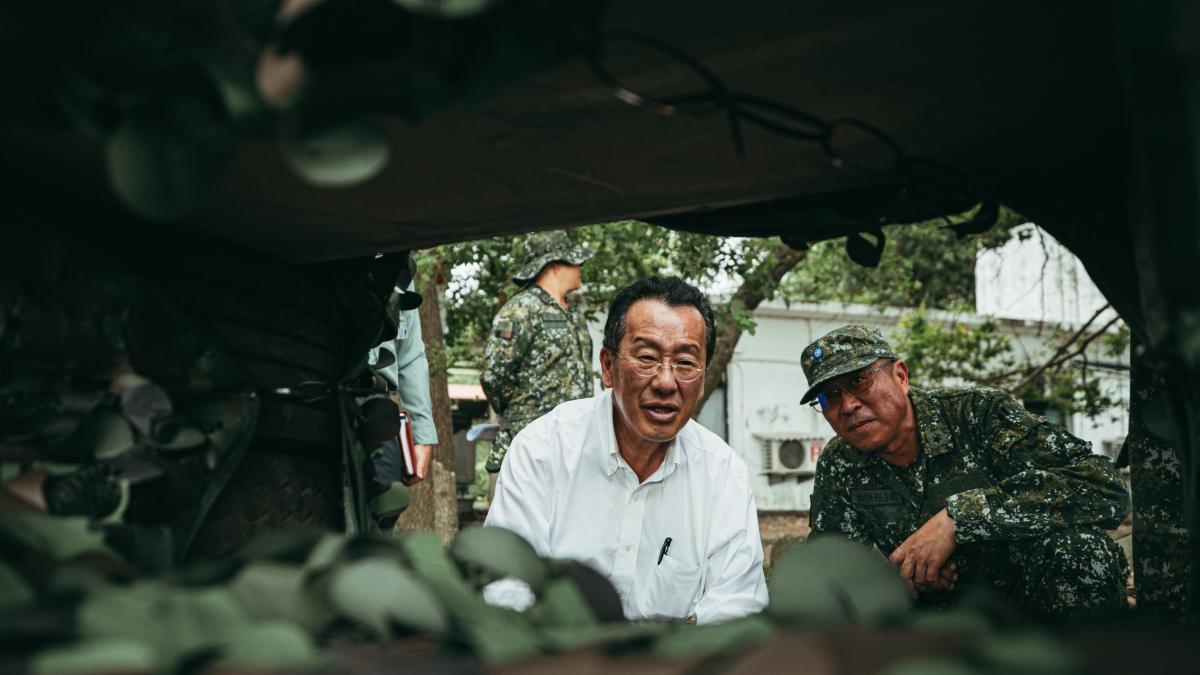
The live-fire exercise of Han Kuang 42 is scheduled to take place from August 5 to 14, 2026. This year, the exercise will mobilize one reserve brigade each from the south and north for a 'full brigade mobilization,' involving over 5,000 reserve soldiers to test their ability to complete mobilization and force recovery within the specified time. Human resources are crucial in the mobilization process. As the government aims to enhance the resilience of the entire society's defense, the role of reserve soldiers is particularly important, given the lack of fixed training time like the U.S. National Guard. There are questions about whether Taiwan's reserve units can actually fight. The 'integrated active and reserve' approach is a direction the military has been actively promoting in recent years. The military's operations are 'continuous operations,' meaning they will fight as long as the enemy does. However, in the event of casualties, can the reserve forces sustain continuous operations? For the military to conduct 'continuous operations,' the ability of Taiwan's reserve units to fight is key. The photo shows the reserve brigade's third infantry battalion training in Yilan County in December 2025. (Photo by Yen Lin-yu) New weapons are constantly being introduced, and reserve units must be able to keep up with the training. The 2026 Han Kuang 42 exercise, combined with the Tongxin 36 mobilization exercise, will implement full brigade-level mobilization for two brigade-level units, including the Taipei Reserve Brigade and the 137th Infantry Brigade stationed in Tainan. The exercise will test their ability to complete mobilization, unit formation, pre-combat training, and force recovery within the specified time. How to achieve so-called sustained combat power? Defense Minister Met Li-hsiung, in an interview with media including Wind Media, pointed out that this is a problem he must now face. The force structure must be continuously adjusted because new weapons and equipment are constantly being introduced. To meet operational plans, procurement must be maintained and training strengthened, and reserve units must also be able to keep up with these training programs. Met Li-hsiung admitted that the reserve system indeed needs to be strengthened. Currently, there are a few good opportunities. First, the mandatory service has been extended from 4 months to 1 year. It is estimated that 30,000 soldiers will join the ranks if the 2027 graduates do not attend graduate school. Second, the recruitment of volunteers will be strengthened, and so far, the recruitment results have met the target, and the total number of volunteers is growing. Changing the subject, Met Li-hsiung said that the military must now do a few things. After the mandatory service, it is necessary to strengthen various combat units, including main combat units, guard units, and even reserve brigades, because in the past, reserve brigades had no soldiers, only officers, so this part must be strengthened. Met Li-hsiung said that after the mandatory service, it is necessary to strengthen various combat units, including main combat units, guard units, and even reserve brigades. Illustrative diagram, unrelated to the news case. (Photo by Liu Wei-hong) How to achieve 'precise mobilization' of troops? Met Li-hsiung has been discussing this issue. That is to say, from now on, all levels of the military will have conscripts joining. But how to do it? Met Li-hsiung said that since the mandatory service is 1 year, from basic training for new recruits, to station training, to base training, to joint operations training, after the conscripts complete the full training, they should be able to have the necessary combat power in any unit. As for how to maintain combat power after retirement, it involves the recall. Met Li-hsiung said that starting in 2027, a 14-day recall will be implemented once a year, which is not limited to conscripts but also includes volunteers, in order to quickly restore combat power when faced with any situation. Furthermore, Met Li-hsiung emphasized that how to achieve 'precise mobilization' of troops is important, and he has been discussing this issue, because many units currently lack non-commissioned officers or junior officers, so it is necessary to restore and recruit reserve officers and reserve non-commissioned officers, and active units must also be adjusted to allow officers to serve as different officers in guard brigades and reserve brigades and lead junior soldiers. Starting in 2027, a 14-day recall will be implemented once a year, not limited to conscripts but also including volunteers, in order to quickly restore combat power when faced with a situation. Illustrative diagram, unrelated to the news case. (Photo by Yen Lin-yu) Military force overall planning: Met Li-hsiung reviews one brigade at a time Met Li-hsiung said that now every brigade must make precise calculations, knowing where each person is during mobilization. It is not enough to just claim to have tens of thousands of troops. For example, an artillery platoon leader must be able to perform this specialty and have the confidence to recall him. That is to say, each unit must grasp its own organization and manpower structure, so now each company must review its own combat indicators, which include personnel, equipment readiness, training, and logistics, to make combat indicators match. Where is the precise mobilization manpower needed for each unit? Not only the main combat units, but also the combat support units are very important, and even the support system behind them. Finally, there is the issue of military-civilian integration, and the mobilization of all manpower and material resources needs to be exercised. Military-civilian integration will be an increasingly important factor in maintaining resilience. Due to the large size of the reserve system, coupled with the addition of 1-year mandatory service, how to make the recall and military service no longer criticized as a waste of time is a challenge for the overall planning of the military. Met Li-hsiung bluntly said that he himself reviews one brigade at a time to achieve precise management of reserves, and mobilization can also be precise, and war losses and consumption can be precisely calculated. Met Li-hsiung believes that main combat units, combat support units, and military-civilian integration issues all need to be exercised. (Photo by Su Chung-hung) Will Met be called back as a transport platoon leader? Defense Minister wants to solve the problem of heroes having no place to use their skills However, if a conscript, after completing his military service, has other specialties in society, such as doctors, engineers, etc., and is still assigned to be an infantryman during the recall, will it become a case of heroes having no place to use their skills? Met Li-hsiung cited his own example, saying that he was a transport platoon leader in the past, and after completing his military service, he became a lawyer. When recalled, should he return to being a transport platoon leader or go to a military court? He said that all military personnel data are from the time of service, and the Veterans Affairs Council has guidance for veterans based on their specialties, but the military's mobilization management system must be improved. The simple way is to return the soldier to his original position, but the problem is that this soldier may have a better specialty, which is also more needed by the military. Met Li-hsiung bluntly said that precise mobilization will certainly have the concept of 'nominating and electing,' that is, some highly specialized personnel will be prioritized for inclusion, and then the current ratio of main combat units and other vacancies will be supplemented. How many personnel are needed for the overall unit structure, and how to supplement them, all of these need to be done, and how to track highly specialized personnel in the mobilization management system in the future is what the Ministry of National Defense is now working on. More exclusive insider information from Wind Media: Behind the Scenes: The 'National Debt Collection Company' Targets Ko Wen-je! Even the High-Speed Rail Can't Be Taken, the Anti-Luxury Order Can Be Reported by the Public Behind the Scenes: It Turns Out It Was Chao Jung-tai! Lin Chia-lung Sleeps at a Japanese Airport Because the Most Important Group Was Angered Behind the Scenes: The KMT Says He's in Charge! Chiang Wan-an Acts Fast and Accurately, Who Will Be the Sacrificial Lamb, Lu Hsiu-yen or Cheng Li-wen?
FACT BOX
- Source: PR Times
- Category: 人事