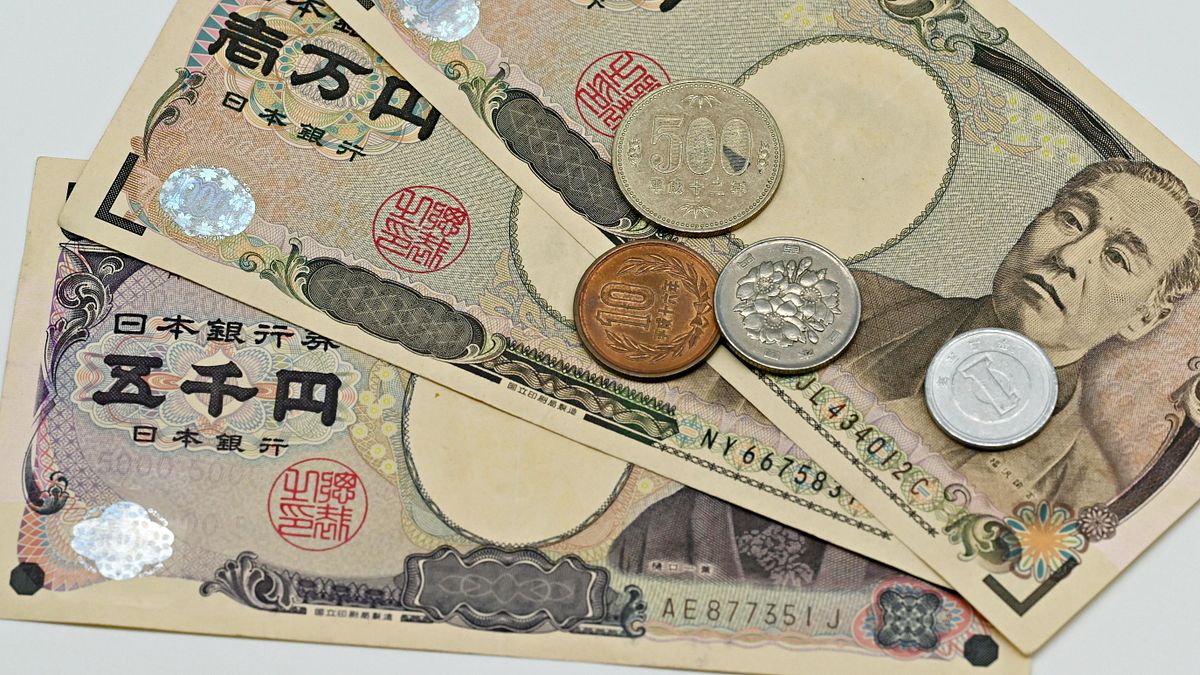
The 'U.S.-Japan alliance' has intervened in the foreign exchange market to counteract the depreciation of the yen, but this effort is unlikely to achieve a lasting reversal. The hundreds of billions of dollars spent on intervention will most likely be 'money thrown into water.'
The yen has remained weak for an extended period, recently falling below the 163-yen-per-dollar level. Markets had already anticipated—or even been 'waiting for'—intervention by the Bank of Japan (BOJ) to support the yen, so this action fell within market expectations. What surprised markets, however, was that the United States also joined the intervention. President Trump confirmed in an interview that the U.S. stepped in 'based on U.S.-Japan friendship' to support the yen. Treasury Secretary Besent was photographed with a to-do list noting 'buy 50 to 100 billion USD worth of yen.'
This marks the first time since 2011 that the U.S. and Japan have jointly intervened in currency markets. However, the 2011 intervention aimed to prevent yen appreciation, whereas this one aims to halt depreciation. Back then, after the March 11 disaster, there was an expectation of massive repatriation of overseas yen funds for reconstruction and insurance payouts, pushing the yen to 79 per dollar and severely hurting Japanese exports. This time, persistent yen depreciation is causing severe inflation and political pressure, prompting the two nations to act together.
Indeed, the U.S.-Japan alliance’s coordinated move against bearish yen traders had immediate effects. Last week, the yen rose to 157 per dollar, and this Monday, it strengthened further to between 155 and 156. This intervention effectively lifted the yen by about 4–5%, achieving its short-term goal of providing support.
However, true victory remains distant. When central banks intervene in currency markets, their objective should be to bring exchange rates back to a 'fair value' and maintain stability over a sustained period—not just achieve a 'one-day rally.' From this perspective, the likelihood of success for this joint U.S.-Japan intervention is far lower than that of failure.
Fundamentally, Japan’s economy continues to struggle in its 'lost N years,' with poor performance this year. Most forecasts for Japan’s GDP growth fall between 0.5% and 0.72%, below 1% and weaker than the previous two years. While exports have seen double-digit growth thanks to the AI boom, Japan’s near-total reliance on energy imports means that high energy prices and a weak yen will result in a trade deficit this year—offering no support to the yen.
Technically, although the U.S. Federal Reserve held rates steady last week, market expectations are increasingly favoring future rate hikes over cuts. Similarly, the Bank of Japan also decided to keep rates unchanged. The interest rate differential between the U.S. and Japan remains wide and could widen further. 'Mrs. Watanabes'—Japanese retail investors—still have strong incentives to profit from the carry trade (borrowing yen to buy dollars). In the short term, many anticipate the BOJ’s moves and may execute counter-trades at opportune moments, quickly erasing the gains from the U.S.-Japan intervention.
Historically, central bank interventions in currency markets—whether to curb appreciation or depreciation—have rarely succeeded, especially when they diverge from economic fundamentals or attempt to fight the entire market. Earlier this year, in May, the BOJ intervened alone, spending over 11 trillion yen, but achieved only a 'few days’ effect,' forcing another intervention two months later—this time bringing in its 'big brother,' the United States, to intimidate the market.
Looking back at the 2011 U.S.-Japan joint intervention: the yen had appreciated to around 79 per dollar, prompting coordinated action to weaken it back to the 80s. Within less than a month, the yen rebounded to nearly 85, then resumed its appreciation trend—breaking below 80 in July, reaching 75 by late October, and staying around 77 by year-end. In short, the 2011 intervention lasted about a month before the exchange rate returned to its fundamental trajectory.
Broadening the scope, failed currency interventions litter financial history. Latin America’s crises—such as Mexico’s 1990s crisis—resulted from defending fundamentally misaligned exchange rates. George Soros’s famous bet against the British pound followed the same pattern. Most notably, during the Asian Financial Crisis, several 'tiger economies' collapsed after exhausting their foreign reserves defending their currencies.
Treasury Secretary Besent conspicuously let the public glimpse his note reading 'buy 50–100 billion yen,' but in May, the BOJ spent about $700 billion (11 trillion yen) with zero lasting effect. This time, around $53 billion has already been deployed. In comparison, the U.S. committing $50–100 billion may be interpreted more negatively than positively by markets.
Even major U.S. investment banks have expressed skepticism about the effectiveness of such interventions, and market sentiment is overwhelmingly pessimistic. It is extremely rare for any central bank to successfully defy the entire market. Can this 'U.S.-Japan alliance' truly be the exception?
FACT BOX
- Source: PR Times
- Category: News