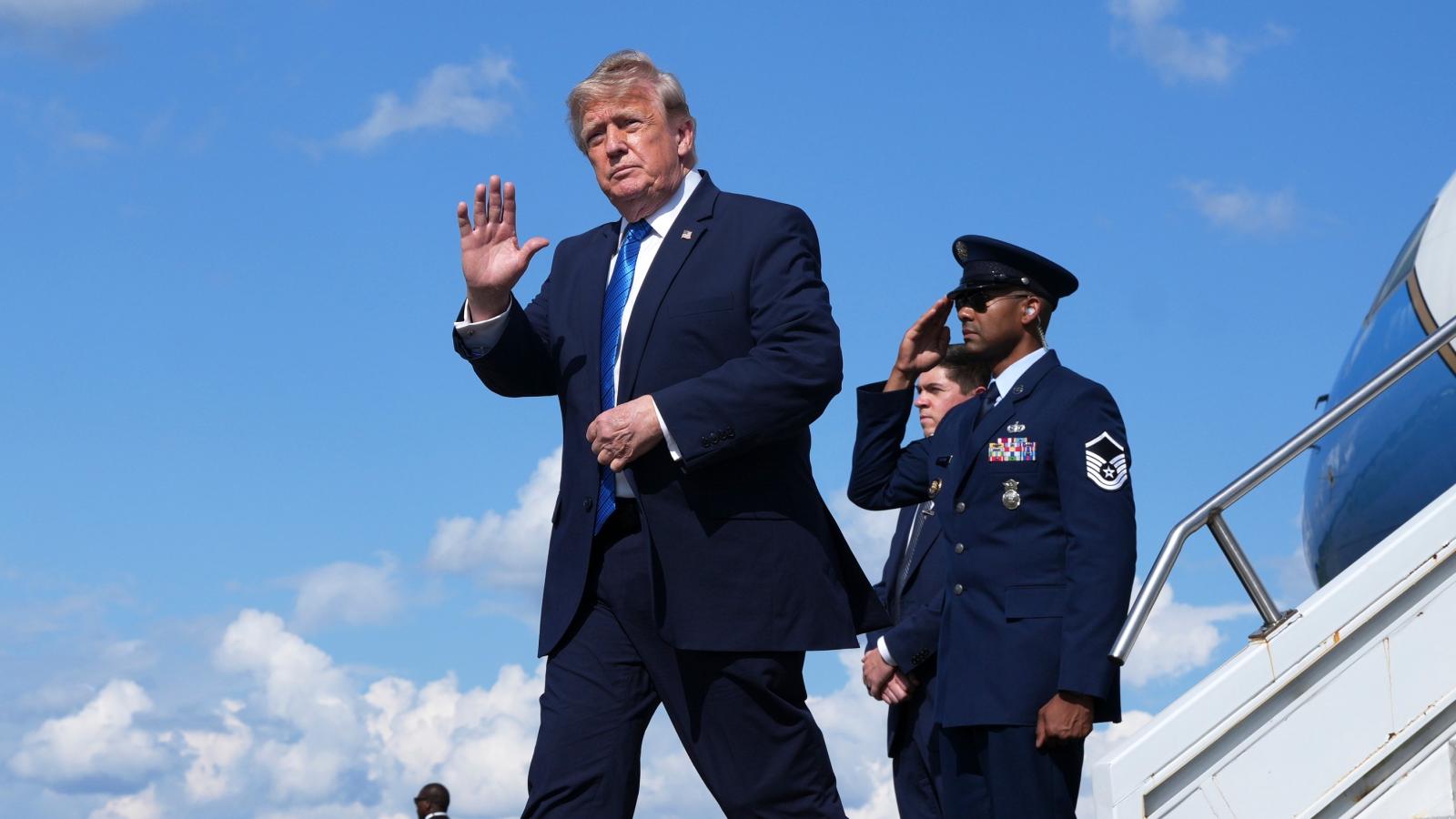
U.S. President Donald Trump sharply criticized America's large oil corporations during a White House appearance on August 3, accusing energy giants such as ExxonMobil and Chevron of reaping extraordinary profits due to tightened global crude supplies triggered by the Iran war. He stated that these companies' earnings have far exceeded reasonable levels and should be partially returned to the American people. He insisted that they must immediately reduce retail gasoline prices, or else they would fail to justify their actions to consumers.
Trump made the remarks during a question-and-answer session with reporters in the Oval Office at the White House, commenting on the recently released strong financial reports from both companies. While acknowledging his longstanding support for free markets and free enterprise, he expressed concern that current profit levels in the oil industry have become excessive.
"I don't like this situation," Trump said. He pointed out that oil companies are making huge profits during periods of supply shortages, a model he finds unacceptable. He added, "They're making too much money. This is built on supply shortages."
Trump emphasized that he has always been one of the strongest supporters of the free enterprise system. "I should be the last person to say this, because I'm the biggest supporter of free enterprise—and nobody supports free enterprise more than I do."
His criticism stems primarily from the second-quarter financial results recently announced by two U.S. oil giants.
ExxonMobil reported a net profit of $14.5 billion in Q2 2026, nearly doubling year-on-year and marking one of its strongest quarterly performances in recent years. Meanwhile, Chevron posted a second-quarter profit of $12 billion. According to Reuters, this is the company's best single-quarter result in at least six years.
Faced with these staggering profit figures, Trump directly called out the companies: "Chevron is making too much. ExxonMobil is making too much. It's really too much." He further argued that if a company sees its profits multiply several times—or even tenfold—within a year, it bears a responsibility to give back to society.
Trump said, "If a company's profits are 12 times what they were the previous year, they should return part of that to the American people—and preferably immediately lower retail prices, reducing what consumers pay at the pump." He reiterated his stance: "I want to be very clear—I am extremely unhappy about this."
Trump also stated that while international oil prices remain high due to the Iran conflict, he believes U.S. gasoline prices will drop significantly once the war officially ends.
He predicted that consumer fuel prices would "drop through the floor," allowing Americans to clearly feel the reduction in refueling costs.
Earlier, after the outbreak of the Iran war, concerns over disruptions to Middle Eastern oil supplies briefly pushed international oil prices above $100 per barrel, placing immense pressure on global energy markets and enabling oil companies to benefit from massive profits driven by high oil prices.
However, as U.S.-Iran tensions have gradually eased in recent days, international crude oil prices fell again on the 4th.
According to Reuters, markets are beginning to anticipate that there remains a possibility of a diplomatic resolution between the U.S. and Iran, which has reduced risk aversion and led to lower oil prices.
Peter Cardillo, chief market economist at New York-based Spartan Capital Securities, noted that the day's oil price decline was mainly due to investors adjusting their crude positions, following Trump's cancellation of planned large-scale military strikes against Iran and renewed hope for a diplomatic solution.
In addition to criticizing the oil companies' excessive profits, Trump also targeted Chevron CEO Mike Wirth.
Wirth had previously given an interview discussing energy markets and company growth, but Trump felt he deliberately ignored the contributions and support provided by the Trump administration to the oil industry.
Trump later posted on his social platform Truth Social, stating that the one thing Wirth conveniently forgot to mention was that without the vision, decision-making ability, leadership, and stability provided by the Trump administration, the U.S. oil industry—and even the nation itself—could not have achieved today's development. In his post, Trump wrote: "The only thing he conveniently forgot to mention is that without the genius-level foresight, forward planning, strength, and stability of the Trump administration, the American oil industry, and even our country itself, would have been headed toward decline."
Trump cited Chevron's operations in Venezuela as an example, noting that the company was previously forced to exit the Venezuelan market but has now returned on a larger scale than before. He said: "They kicked Mike [referring to Chevron CEO Mike Wirth] and Chevron out of Venezuela, but now not only have they returned, they're bigger, stronger, and ready to make a huge fortune."
Trump's comments indicate that although he has long advocated for free markets and business development, he is now exerting greater political pressure on major oil companies when energy prices directly affect the cost of living for American citizens. He hopes these companies will reflect the excess profits earned during wartime into end-user prices, thereby reducing the burden on consumers.
FACT BOX
- Source: PR Times
- Category: News
- Organizations: ExxonMobil / Chevron