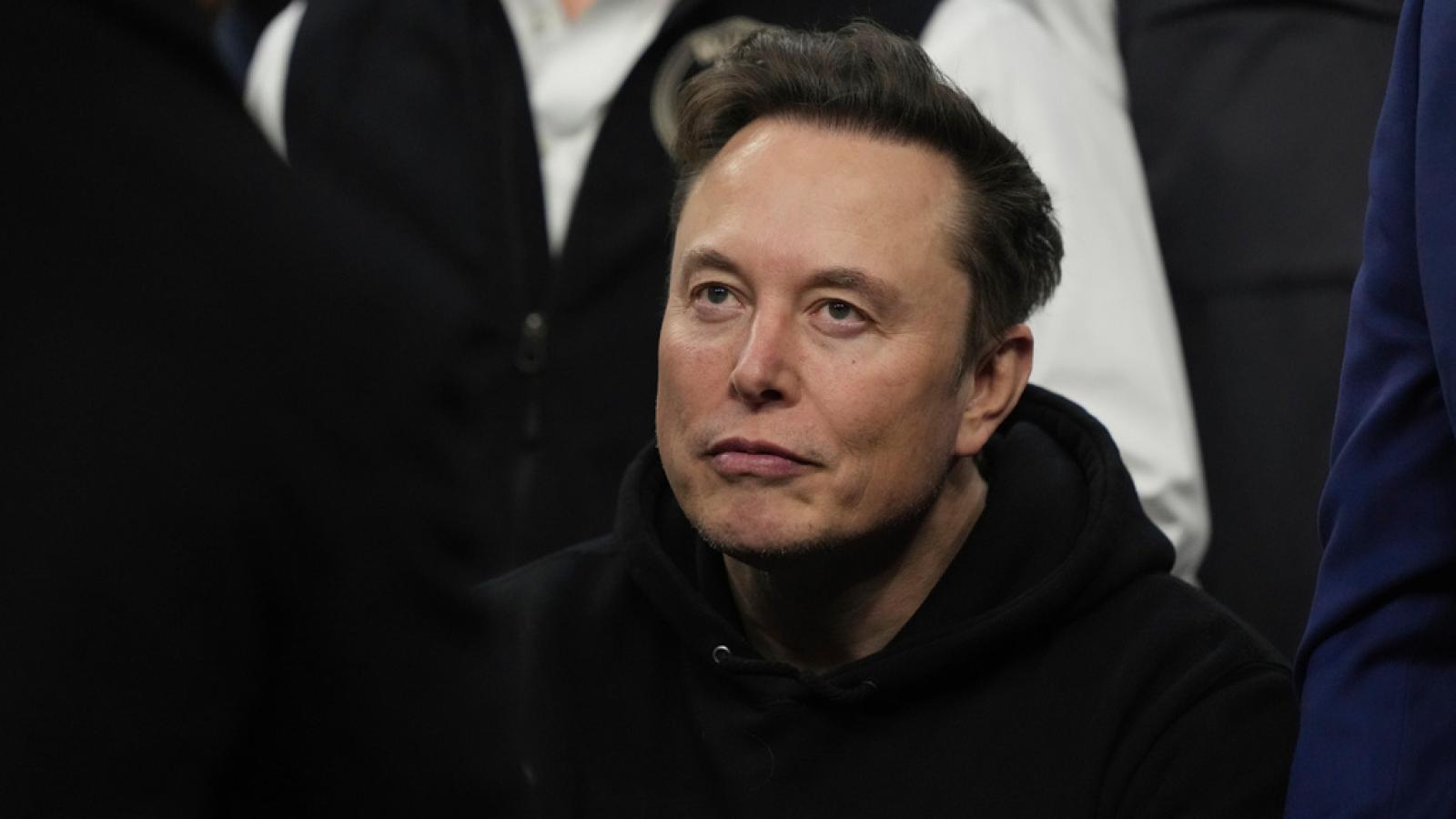
Global stock markets have recently experienced heightened volatility. SpaceX, which is set to release its first financial report since its IPO, saw its share price plummet nearly 50% from a peak of $225 on June 16 to a low in early August. According to the latest Bloomberg Billionaires Index, Elon Musk, the world's richest person and founder of SpaceX, has seen his personal net worth fall to around $600 billion. Financial writer You Tinghao pointed out on Facebook on August 3 that Musk's wealth evaporated by over $600 billion in just over a month. The sharp decline in SpaceX's stock price, he noted, reflects a shift in market valuation standards—investors are no longer solely focused on AI vision.
Who are the world's top 10 billionaires? How has Musk's wealth been affected by SpaceX's stock drop?
As of Eastern US time on August 3, 2026 (early morning of August 4 in Taiwan), the Bloomberg Billionaires Index shows Musk's net worth has dropped to approximately $659 billion (exact figures fluctuating), down from a record high of about $1.33 trillion on June 16—a decline of over $670 billion, or more than 50%. Despite this, he remains the world's wealthiest individual.
Musk's wealth peaked on June 16, driven by SpaceX's post-IPO stock surge and rising valuations of Tesla and xAI, briefly making him the first person in history to surpass a $1 trillion net worth.
According to the Bloomberg Billionaires Index as of August 4 (Taiwan time), the latest global top 10 billionaires are:
- Rank 1: Elon Musk, CEO of Tesla and SpaceX, $658 billion - Rank 2: Larry Page, Google co-founder, $287 billion - Rank 3: Jeff Bezos, Amazon founder, $268 billion - Rank 4: Sergey Brin, Google co-founder, $267 billion - Rank 5: Mark Zuckerberg, Meta CEO, $238 billion - Rank 6: Larry Ellison, Oracle co-founder, $221 billion - Rank 7: Michael Dell, founder and CEO of Dell Technologies, $165 billion - Rank 8: Jensen Huang, founder and CEO of NVIDIA, $165 billion - Rank 9: Bernard Arnault, Chairman and CEO of LVMH, $163 billion - Rank 10: Jim Walton, Walmart family member, $150 billion
How has SpaceX's stock performed? Decline approaches 50%
You Tinghao analyzed that Musk's wealth has 'crashed' alongside the 'falling rocket,' now reverting to pre-IPO levels. SpaceX is set to release its earnings report after market close on the 4th. You noted that SpaceX's stock dropped from a June high of $201.80 to $108.37, a cumulative decline of about 46%. With over 910 million restricted shares set to unlock and short positions rising to 219 million shares—over one-third of outstanding shares—market attention on the upcoming first public earnings report is intense. Tesla also faces pressure: after its July earnings release, its stock fell 17%, down over 35% from last year's peak.
Specifically, SpaceX's stock has declined steadily from its intraday high of $225 on June 16, closing at $114.53 before August 4, and briefly hitting $104.83—a new post-IPO low. This represents a roughly 49% drop from its peak; from the intraday low, the decline exceeds 53%. Compared to its IPO price of $135 on June 12, it still trades about 15% lower.
Is Tesla also under pressure? Stock continues to fall after earnings
You pointed out that while the company continues to invest heavily in AI, the Cybercab autonomous taxi, and the Optimus humanoid robot—with full-year capital expenditures projected to exceed $25 billion—Tesla's Q2 results showed capital spending reaching $5.8 billion, causing free cash flow to turn negative for the first time in two years. He concluded that this highlights a shift: beyond AI vision, investors now prioritize whether companies can convert capital investment into stable cash flow and profit. Thus, future AI company competition will increasingly focus on capital efficiency and the sustainability of business models.
FACT BOX
- Source: PR Times
- Category: News
- Organizations: SpaceX / Tesla / Google
- Products / services: Cybercab / Starlink