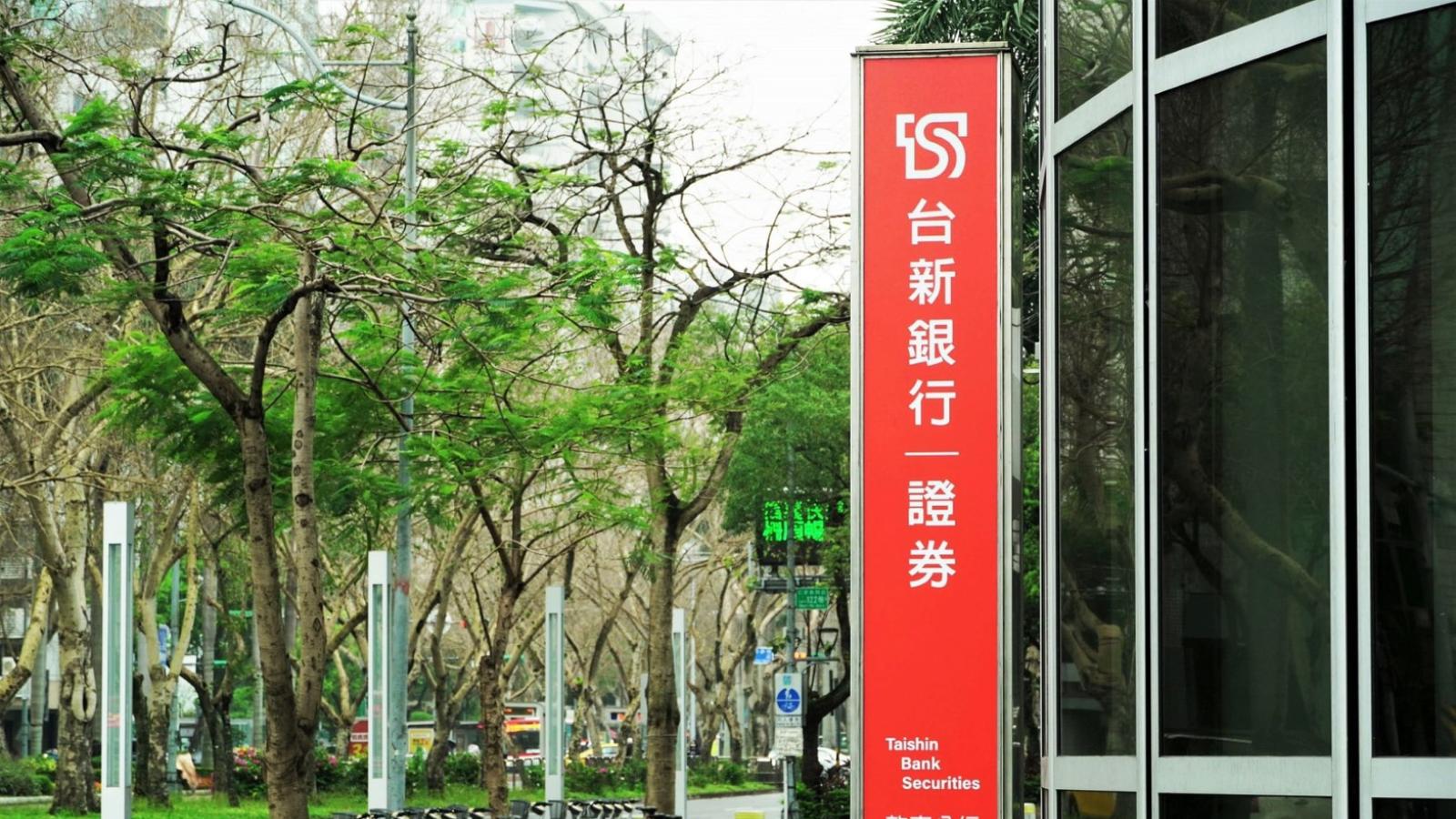
The Financial Supervisory Commission (FSC) announced today (April 4) that it has approved the merger of two banking subsidiaries under Taishin Shin Kong Financial Holding: Taishin International Commercial Bank will be the surviving company, while Taiwan Shin Kong Commercial Bank will be dissolved. The merger benchmark date is tentatively set for January 1, 2027.
Taishin Bank's chairman is Wu Dongliang, vice chairman is Wu Dongliang’s son Wu Xinhaoy, and CEO is Lin Shuzhen, who will turn 65 in April next year. Shin Kong Bank's chairman is Lai Jinyuan, a corporate banking expert from public-sector financial institutions; its vice chairman and CEO is Shang Ruiqiang, a retail banking specialist one year older than Lin Shuzhen, recognized for his contributions to the merger process.
With FSC approval, leadership arrangements post-merger have drawn public attention. According to sources, after the new year, the three top executive positions—chairman, vice chairman, and CEO—at the merged Taishin Bank will all be held by executives from the surviving entity. Chairman Wu Dongliang, Vice Chairman Wu Xinhaoy, and CEO Lin Shuzhen will continue to lead the organization.
The merger will be executed through a combination of stock swap and cash payment, with transaction terms revealing a key insight into the profitability of the dissolved bank. Shin Kong Bank reported a post-tax net profit of NT$4.78 billion in the first half of this year. Based on the cash payment amount submitted by both banks to the Banking Bureau, Shin Kong Bank’s estimated full-year post-tax net profit for 2024 is projected at NT$7.86 billion.
During today’s regular press conference, Wang Yunzhong, Deputy Director of the Banking Bureau, explained the case. Taishin Bank will issue new shares and pay cash as consideration. The share exchange ratio is 0.9505 Taishin shares for every 1 Shin Kong ordinary share. Additionally, Taishin Bank will pay NT$5.5 billion in cash to Taishin Shin Kong Financial Holding, the sole shareholder of Shin Kong Bank.
This NT$5.5 billion payment represents approximately 70% of Shin Kong Bank’s estimated full-year post-tax net profit of NT$7.86 billion. In effect, Taishin Bank uses the acquisition payment to enable Shin Kong Bank’s 2024 earnings to be remitted to the parent holding company before it becomes a dissolved entity on January 1, 2027, resolving the issue of future profit distribution.
Under Article 50 of Taiwan’s Banking Act, banks must allocate 30% of their post-tax net profits to statutory surplus reserves. Therefore, since the NT$5.5 billion payment equals 70% of Shin Kong Bank’s annual profit, dividing 5.5 by 0.7 yields an estimated full-year post-tax net profit of NT$7.86 billion.
When asked who submitted the application and when, Wang Yunzhong stated, “Share transfer requires joint application from both companies, along with shareholder meeting resolutions.” Taishin Bank and Shin Kong Bank jointly filed their application with the Banking Bureau on June 11 this year.
The FSC’s approval just under two months after filing highlights Chairman Wu Dongliang’s exceptional political and business influence within Taishin Shin Kong Financial Holding.
Regarding asset scale, Wang noted that as of March 31, Taishin Bank had assets of approximately NT$3.25 trillion, ranking 12th among domestic banks. Shin Kong Bank had about NT$1.4 trillion in assets, ranking 17th. Post-merger, the combined entity will have total assets of around NT$4.65 trillion, rising to 7th place nationally.
In terms of domestic branches, Shin Kong Bank operates 103 locations, Taishin Bank has 101, totaling 204 branches after the merger—second only to Cooperative Bank in Taiwan.
On staffing, Taishin Bank employs 8,600 people, Shin Kong Bank 3,500, bringing the combined workforce to approximately 12,000.
Regarding information systems, several media outlets raised concerns during the press conference about system stability, referencing recent IT disruptions following the merger of the securities subsidiaries under the same financial group. Wang responded that the Banking Bureau has requested the Bankers Association of Taiwan to issue integration guidelines, including thorough pre-planning, real-time supervision mechanisms, and emergency response protocols. Both banks will follow these guidelines, and the bureau will closely monitor the integration process.
Each bank sets its own acceptable downtime threshold—typically two hours. While exact figures for Taishin and Shin Kong were not disclosed, any outage exceeding this limit requires a backup plan. Furthermore, according to the merger plan submitted, the integrated system will adopt Taishin Bank’s existing IT infrastructure.
FACT BOX
- Source: PR Times
- Category: Partnership