"Jiada International Logistics" recently issued a 'book review' announcement that has shocked Hong Kong's independent bookstores. The company stated that, in compliance with the Hong Kong National Security Law, bookstores or publishers must submit book lists in advance for verification before transportation will be arranged. Jiada operates across mainland China, Hong Kong, and Taiwan, serving as the primary logistics provider for books between Taiwan and Hong Kong and the most commonly used carrier for Hong Kong's independent bookstores. John (pseudonym), owner of a Hong Kong independent bookstore, told BBC Chinese that 70% of the books sold in his store are imported from Taiwan, and if logistics companies refuse to transport them, operations would be severely affected. "We can't run a business like this. How can you run a bookstore relying only on Hong Kong-published books?"
The Domino Effect of Jiada
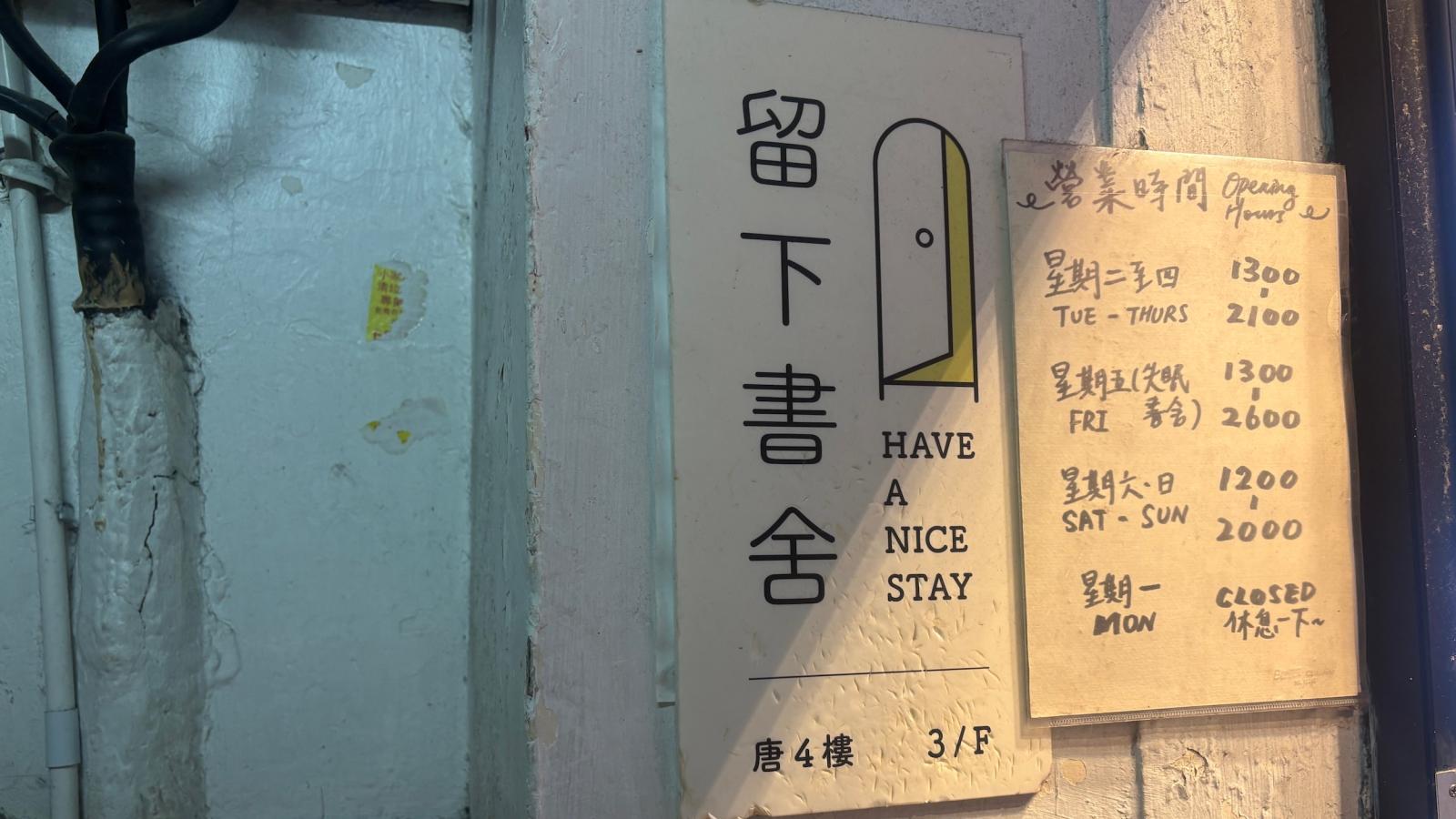
Jiada's shift from book shipping to book censorship stems from an arrest operation by Hong Kong police's National Security Department. On July 15, five people were arrested from田园Bookstore and Stay Publishing House after police claimed that a shipment from "outside the territory" contained books with "seditious intent." Less than a week later, Jiada made its public statement.
Records show Jiada was established in 1997, headquartered in Hong Kong, with branches in Shenzhen, Dongguan, and Taiwan. It provides sea, land, and air freight, business agency, customs clearance, warehousing services, and owns its own cross-border truck fleet and warehouses.
John explained that bookstores typically order from two major Taiwanese distributors, who consolidate books from various publishers and hand them over to Jiada for sea transport. Now that Jiada requires pre-shipment book list reviews, it effectively holds the power to censor books.
More seriously, Jiada has stated it will refuse transportation for bookstores under Hong Kong government investigation, meaning previously investigated stores like One Fist Books, Hunter Books, 田园Bookstore, and Stay Publishing House are now on a "blacklist." Unless these stores find alternative logistics providers, they face a complete cutoff of Taiwanese book supplies.
An industry insider noted that about 95% of translated fiction and literary works sold in Hong Kong bookstores are published in Taiwan. While stores may try to partner with other logistics companies, even if someone accepts the shipment, there remains uncertainty about whether customs will detain the goods. The situation for some bookstores is already severe—only one step away from the worst-case scenario: if logistics companies refuse to ship or customs refuses to clear, no Taiwanese books can be sold.
Jiada's announcement has triggered a chain reaction. Tom (pseudonym), who has worked in independent publishing in Hong Kong for over 10 years, declined to be named due to safety concerns. He told BBC Chinese that after Jiada's announcement, another logistics company also notified its clients it would temporarily stop accepting book shipments from Hong Kong to foreign countries, saying, "Customs might not even be reviewing them—it's just fear."
He estimated that logistics companies want to avoid having entire shipping containers detained due to book seizures, which would disrupt daily operations.
Taiwan Publishers' 'Little Police HQ'
Chiu Chien-chih, Deputy Editor-in-Chief of Taiwan's Eight Flags Culture, told BBC Chinese that Jiada's clear stance likely stems from handling many cases for Hong Kong's independent bookstores and now急于 distancing itself. Regarding the Taiwan-Hong Kong book logistics chain, he is unsure of Jiada's market share but confirms other companies also operate in this space.
Mainland Affairs Council (MAC) Vice Chairman David Lee stated on July 23 that Hong Kong's national security authorities are investigating 'banned books' but have not released any official list. He noted that Taiwan's publishing industry is well aware that when shipping books to Hong Kong, they internally practice self-censorship—a "Little Police HQ" in their minds.
The "Little Police HQ" refers to the pervasive surveillance by Taiwan's military police during martial law, which instilled fear and self-censorship in the public. Lee warned, "As the only free hub for Chinese-language publishing, books published by Taiwan's publishers will undoubtedly violate taboos on the other side."
The MAC responded to BBC Chinese, citing media reports that since March and April this year, nearly every book ordered from Taiwan has been inspected by Hong Kong customs—compared to previously encountering inspections only once every few months. This increased frequency indicates Hong Kong can no longer tolerate diverse ideologies and culture, with freedom of speech and publishing continuing to shrink.
The MAC stated that Hong Kong's national security red lines are continuously expanding, and exchanges across all industries face national security risks—a challenge faced globally when interacting with Hong Kong. The MAC advised that anyone traveling to mainland China, Hong Kong, or Macau should avoid carrying political, historical, or religious books.
Mechanism for Reviewing Overseas Books
Before the arrests, Hong Kong customs had already intensified inspections for several months. The Hong Kong government's book import review mechanism stems from amendments to Article 43 of the Hong Kong National Security Law Implementation Rules in March this year, empowering customs to inspect, seize, and confiscate items suspected of seditious intent.
By June and July, multiple Taiwanese and Hong Kong booksellers reported unusual conditions: shipments from Taiwan to Hong Kong were routinely inspected by Hong Kong customs.
Hong Kong writer Tang Siu-wah, who became Editor-in-Chief of "Yinggai Publishing"—a Taiwan-based press focused on cultural and historical books—starting in 2025, told BBC Chinese that in June and July, two shipments of non-political books on Hong Kong themes or by Hong Kong authors were inspected. After the publisher reported the book lists to the logistics company, the shipments were cleared.
Publisher Tom said Yinggai Publishing's experience is not unique—several independent bookstores and booksellers reported that nearly every shipment from Taiwan to Hong Kong in June and July was inspected.
"Sometimes we chat and ask: Were your books inspected by customs? Were they seized? Turns out everyone has been."
An industry insider told BBC Chinese that each customs detention delays logistics by about a week.
How Did the Arrests Change the Industry?
Customs inspections were just the prelude to the storm.
On July 15, the same day as Hong Kong's annual book fair opening, Hong Kong police's National Security Department raided independent bookstores 田园Bookstore and Stay Publishing House, arresting five people on charges of sedition.
田园Bookstore is one of Hong Kong's veteran independent bookstores, founded in 1976 and with half a century of history. Stay Publishing House was established in 2022 by a group of former journalists.
Police stated that the National Security Department received a referral from customs, discovering books with "seditious intent" in a shipment from "outside the territory." According to multiple Hong Kong media reports, the books involved include Taiwan-published "When Red Flowers Bloom: Identity and Belonging in the Xi Jinping Era."
Bookstore owner John said after the incident, he reviewed the books sold in his store and proactively removed a political book featuring Xi Jinping on the cover for safety reasons.
"The biggest problem is, I don't know which books I can't sell... If you don't tell me, how do I know which ones are allowed? This chilling effect makes you afraid to sell any book that might carry risk."
Less than a week after the arrests, Jiada International Logistics' Taiwan branch issued a notice on July 21 stating that, to comply with the Hong Kong National Security Law, the company would "refuse to transport books violating regulations" and require bookstores or publishers to submit book lists in advance for verification before arranging shipments.
Unpredictable Book Review Standards
Jiada's book review criteria have also raised concerns among bookstores and publishers.
John admitted it's impossible to read every new book before ordering, and believes logistics companies also struggle to determine which books are illegal. "Who would have thought that 'When Red Flowers Bloom' would become a banned book?"
Tang Siu-wah said that previously, logistics companies didn't know the exact book lists being shipped—only the ISBNs (International Standard Book Numbers). Facing hundreds of books, logistics companies are now bewildered about how to review them. "Imagine a book with tens of thousands of words, dozens or hundreds of titles—how do you check for prohibited content when even the definition of 'prohibited' is unclear?"
According to a July report by Ming Pao, Jiada staff in Taiwan explained that since the Hong Kong National Security Law, the SAR government has been "taking strong actions," advising customers not to order or ship books with "sensational titles," "criticizing the Chinese government," or "sensitive to the Hong Kong government." They also stated there is no internal banned book list, and the Hong Kong authorities have not provided one.
BBC Chinese called Jiada for comment, but staff declined to respond.
BBC Chinese inquired with Hong Kong Customs whether logistics companies would bear legal responsibility for shipping illegal books. Customs replied that as a key player in safeguarding national security, it strictly controls borders and fully protects national security. If items with seditious intent are found, they will be lawfully seized and referred to the Police Force's National Security Department as appropriate.
The Hong Kong Police Public Relations Branch replied that there was no additional information and suggested referring to the press briefing by Secretary for Security Tang Ping-keung at the Legislative Council on July 16.
Tang stated that if a book's content incites hatred toward the government or judicial institutions, it is illegal. The government has no intention of creating a banned book list, emphasizing that bookstores and booksellers "have the responsibility to ensure the books they sell do not endanger national security."
Hong Kong's Commercial Radio reported on August 1 that Deputy Commissioner of Police for National Security Kan Kai-yin said the simplest way for bookstore owners concerned about book content is not to sell them or to personally read and review them before sale.
Shrinking Space for Political Books?
After the arrests, 田园Bookstore, one of the implicated stores, announced on July 29 that it would close upon lease expiration, without explaining why, only saying, "Thank you all for walking with us through wind and rain for 50 years since opening. Thank you, take care."
An industry insider described 田园Bookstore as a 'well-behaved' figure in the industry, and Stay Publishing House had already announced it would close by the end of August—yet both were still raided. The arrests were described as unreasonable and brutal. As multiple events unfold, the industry
FACT BOX
- Source: PR Times
- Category: News