Mr. Min, a 29-year-old South Korean retail investor, knew the risks before clicking the buy button, but the intense urge to 'catch up on gains he had missed' overpowered his rational judgment. In July, Min invested 5 million South Korean won (approximately NT$113,300) into the Direxion Daily Semiconductor Bull 3X Shares (SOXL), an ETF that tracks the daily return of the Philadelphia Semiconductor Index (SOX) with triple leverage.
The next day, when he opened his brokerage account, the position showed a decline of over 10%. However, he saw this as another opportunity to 'buy the dip' and doubled down instead of cutting losses. The losses continued to widen, eventually reaching 30%. 'I naively believed that the bad news surrounding semiconductor stocks would end once I bought in, and a strong rebound would follow. At that time, I was completely driven by fear of missing out (FOMO),' he admitted.
Mr. Min is far from alone. As South Korea's domestic semiconductor giants face prolonged stock price declines, and financial regulators impose strict limits on leveraged ETFs tied to single stocks like Samsung Electronics and SK hynix, a large number of retail investors are not retreating—they are instead flooding into U.S. 3x leveraged ETFs in search of a turnaround.
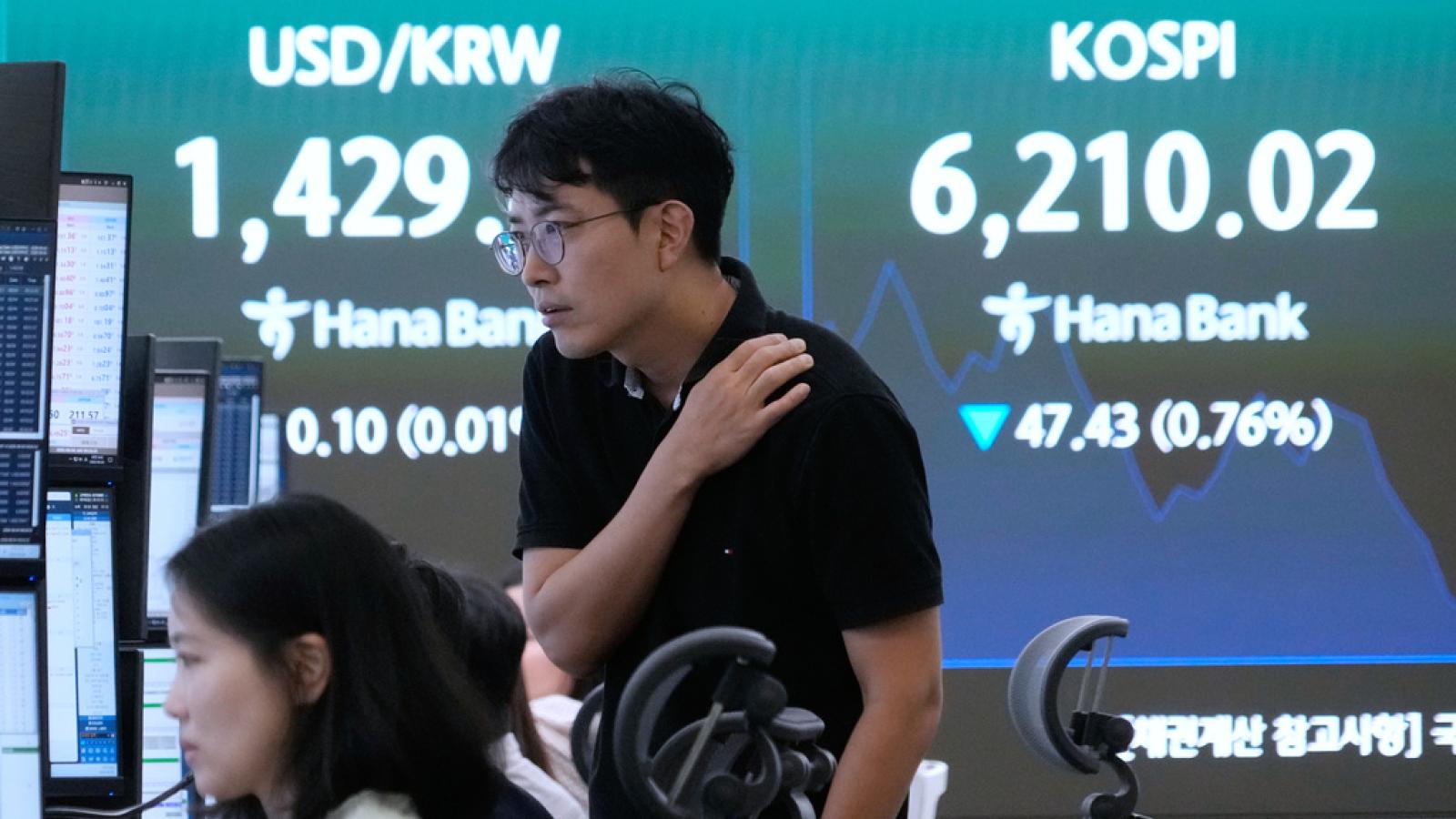
The South Korea Composite Stock Price Index (KOSPI) has suffered a sharp decline over the past month. According to data from the Korea Securities Settlement Corporation (SEIBro), South Korean retail investors net purchased $4.67 billion (approximately NT$151.4 billion) worth of U.S. stocks in July—the highest monthly net purchase since January (when $5 billion was net bought). In June, amid the KOSPI's downturn, retail investors reversed prior selling trends with a net purchase of $633 million.
During this period, SOXL emerged as the most popular investment choice among South Korean retail investors, attracting $3.77 billion (approximately NT$122.27 billion) in inflows. ETF analyst Choi Chang-kyu noted on a broadcast program: 'Globally, we've entered an era of leveraged investing, and this high-stakes mentality is especially evident in memory and semiconductor sectors. Investors believe strong industry fundamentals justify these massive bets.'
However, many of these high-risk retail investors have already suffered significant losses in the domestic market. A recent Citigroup report for institutional investors estimated that South Korean retail investors lost as much as $38.7 billion (approximately NT$1.2551 trillion) in the past month alone from leveraged single-stock ETFs on Samsung Electronics and SK hynix.
But the misfortune didn't end there. As domestic markets plunged, these investors faced another wave of heavy losses in U.S. markets. Despite $5.3 billion (approximately NT$171.88 billion) in net inflows into U.S. stocks during June and July, the total market value of U.S. stocks held by South Korean retail investors shrank by $33.7 billion (approximately NT$1.09 trillion)—a 16.5% drop from their end-May portfolio value. This far exceeds broader market declines: the S&P 500 fell only 1.9% and the Nasdaq dropped 6.9% during the same period.
While the heavy losses were partly due to concentrated holdings in volatile stocks like Tesla and Nvidia, the primary culprit was actually leveraged financial products. Data shows that South Korean investors injected nearly $4 billion into SOXL during June and July, yet the total value of their holdings rose only slightly from $5.35 billion at the end of May to $5.81 billion by the end of July. The massive inflows were almost entirely eroded by leverage decay and price declines.
FACT BOX
- Source: PR Times
- Category: News
- Organizations: Samsung Electronics / SK hynix / Citigroup
- Products / services: SOXL