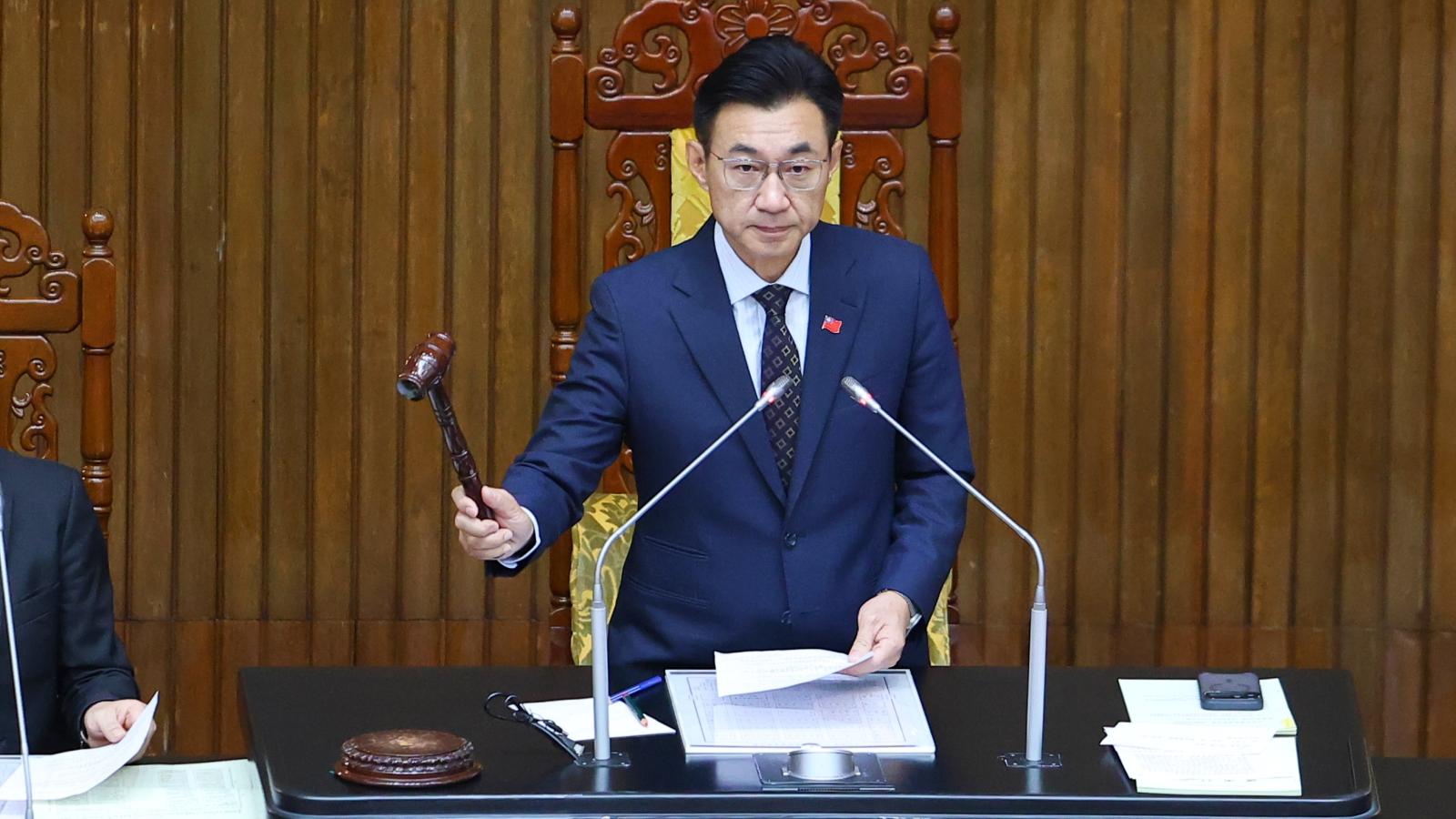
The current 《Presidential and Vice Presidential Election and Recall Act》 Article 26 stipulates the negative qualifications for presidential and vice presidential candidates, including those with criminal records of internal and external disturbances, corruption, black money, guns, drugs, national security crimes, or those who have received certain severe punishments, security measures, or bankruptcy declarations. On April 4, the Legislative Yuan passed the amendment to Article 26, stating that individuals convicted of fraud crimes are also ineligible to register as candidates.
KMT legislator Wong Hsiao-ling explained in her proposal that as the president is the head of state, their integrity and credibility standards should be higher than those of ordinary citizens. Allowing individuals convicted of serious fraud crimes to run for the highest public office would not meet the democratic political requirements for public officials. This amendment aims to maintain the integrity and credibility of the highest elected public officials and respond to society's high expectations for combating fraud crimes.
Additionally, the Legislative Yuan also passed the amendments to Article 5-1 and Article 44-2 of the 《Broadcast and Television Act》. The government and its sponsored foundations are prohibited from directly investing in private broadcasting and television businesses or serving as their founders, directors, supervisors, or managers. Indirect investments that exceed 1% of the total issued shares are also prohibited. However, shares held by government funds or public enterprises through investment trusts are exempt. Violators will lose their voting rights, and the competent authority may order them to dispose of the shares. If they fail to do so within the deadline, they will not be able to enjoy shareholder rights.
According to the third reading, if party officials, government officials, or their spouses and relatives within two degrees of consanguinity or direct affinity violate the regulations, the competent authority shall order those with investments exceeding 1% to rectify the situation. If they fail to do so within the deadline, they will be fined between NT$200,000 and NT$2,000,000, and may be fined repeatedly.
Wong Hsiao-ling stated after the third reading that the 'Party, Government, and Military Exit Media Clause,' which has been in effect for over 20 years and was dubbed the 'media tightrope,' finally saw a major breakthrough this year. Long-standing outdated regulatory provisions have been significantly revised. The original purpose of the 'Party, Government, and Military Exit Media Clause' was to prevent government and political parties from interfering with the media and to provide the media with an independent space. However, since its implementation in 2006, it has not only failed to truly prevent government and political parties from controlling the media but has also led to many regulatory anomalies.
Wong Hsiao-ling cited examples of past cases where the wrong party was penalized, not the investors but the invested broadcasting and television companies. The original regulations also became a weapon for industry malicious competition and attacks on opponents. Therefore, the main purpose of this amendment is to correct the blind spots in the penalties and relax regulations, which will help attract capital and improve the media industry's environment.
FACT BOX
- Source: PR Times
- Category: News