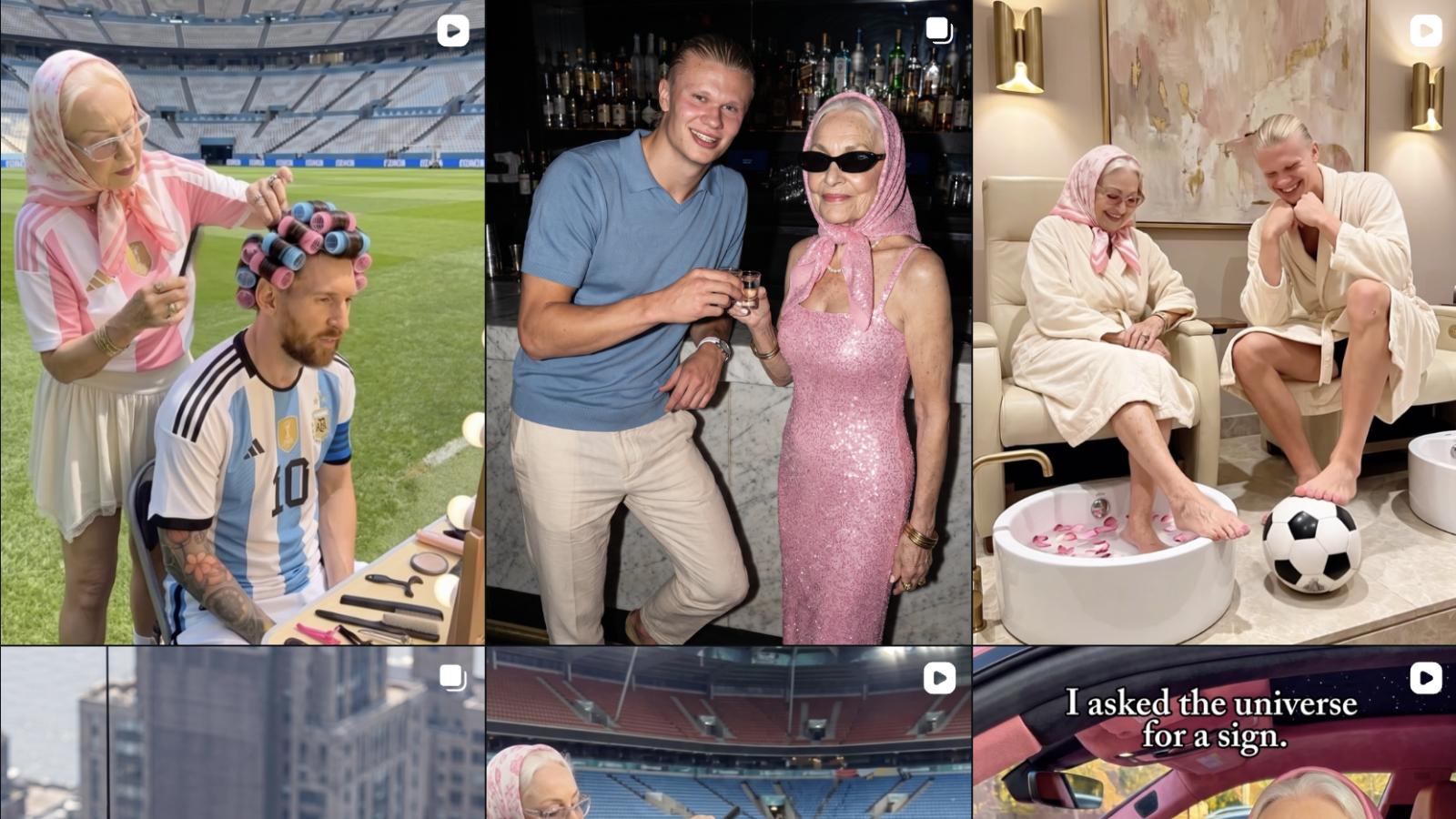
Nowadays, when I look at my phone, I find it increasingly hard to tell what’s real. The wood grain on a stool looks suspiciously smooth. The steam rising from a zucchini pancake… feels unnatural. Last week, as I marveled at a living room design on Pinterest, I noticed a disclaimer: 'Altered by AI.' AI is flooding our social feeds with content—some harmless fun, some designed to manipulate emotions, and some outright scams. On smartphone screens, these creations are often stunningly realistic. We now carry a psychological burden: constantly asking ourselves, 'Is this real, or AI-generated?' AI is eroding our sense of reality. Subscribe to VVIP via Wind Media × The Wall Street Journal and receive a limited-edition Tokuyo Smart Body Fat Scale TM-420 (market price NT$6,980). Subscribe now and claim your exclusive gift—while supplies last. The Wall Street Journal’s 'Tech News Briefing' podcast launched a three-part special audio series last Saturday titled 'AI and the Blurring of Reality,' in which I explore this phenomenon. The first episode is now live, featuring a foul-mouthed AI grandmother with millions of followers on Instagram and TikTok, alongside researchers trying to make sense of it all. Whether or not you listen to the series, this concise explainer will help you understand this new digital ecosystem and equip you with a practical survival guide. Entering the Simulated World Remember that viral image from March 2023 of the Pope wearing an oversized puffer jacket? Not long ago, such AI-generated images were rare anomalies. Now, they’re the norm. The emergence of powerful models like Google’s Nano Banana and Veo 3 has put high-quality visual generation within reach of nearly everyone. The old telltale flaws—like six fingers or garbled text—have vanished. Creators like Eric Suerez and Adam Vaserstein quickly seized the opportunity. Last year, over the U.S. Independence Day weekend, they used Veo 3 to generate the first images of Granny Spills, a fictional, fashion-forward 70-something woman who wears luxury brands, loves pink, and frequents parties. Her Instagram account gained one million followers within a month. Under a video of Granny applying makeup to a World Cup star, one comment read: 'What the hell did I just watch?' When I first encountered Granny in my feed, I had the same reaction—she was passed out in the arms of Justin Bieber and Hailey Bieber at Coachella. The real-life Biebers have no connection to this post. Vaserstein, who spent years building millions of followers through humorous street interviews, is pleased with this success. 'We found it’s much easier to grow these AI fictional characters,' he said. Granny and other AI influencers don’t hide their digital origins. 'Even if people know something isn’t real, it doesn’t stop them from enjoying it,' said Cameron-James Wilson, creator of digital model Shudu, citing beloved characters like Barbie and Elsa from Frozen. Shudu is tall, slender, with flawless, radiant skin. When I asked whether synthetic supermodels create unrealistic beauty standards, Wilson acknowledged it’s possible but nothing new. 'I worked as a fashion photographer for 10 years and did extensive photo editing,' he said. 'I know the images we’ve seen for decades haven’t been real.' The rise of AI influencers fascinates me. But what unsettles me more is the flood of synthetic content that’s hard to distinguish from reality: AI cooking videos, machine-voiced AI ads, AI-generated celebrity wedding photos, politically charged deepfake videos—the list goes on. We can no longer trust our eyes and ears. Last year, an AI-generated song debuted on the Billboard charts, prompting French streaming platform Deezer to develop a synthetic audio detection tool. My music library scan showed 1% was AI-generated—enough to make me question my taste. Think Like a Fact-Checker So how can we tell if something is AI-generated? 'I do this for a living, and I’m very good at it, yet it’s still hard to tell,' said Hany Farid, a digital forensics expert and computer science professor at Dartmouth College. Our brains aren’t wired to handle this. 'Think about millions of years of evolution—our neural architecture wasn’t built to ask, 'Is that tiger in the bushes real or fake?' It was built to react: 'There’s a tiger! Run!'' he said. Farid warns that people are now doubting even verifiable events. 'Did this happen? I say yes. You say no. If we lose consensus on reality, we enter a dangerous world.' What can we do? Besides quitting the internet entirely, we can examine social content like researchers do: Does this align with the real world? AI often reveals flaws in lighting, reflections, and visual perspective. Shadows may not match the sun’s position. Watch for wavy lines on straight structures like steel beams. For deeper verification, cross-check location details with Google Street View. Who posted it? Review the account’s profile for red flags: Was it recently created? Is the posting frequency abnormal? Are there obvious engagement-bait tactics? Does the content seem too good—or too infuriating—to be true? Tune into your emotional response and question the poster’s intent. Then ask: How likely is this scenario? Beware of 'rage-bait' content—social media algorithms amplify content that triggers strong emotions like surprise, joy, or anger. As Georgetown University副教授 Renee DiResta told me, generative AI is just a tool: 'You can use a hammer to build a house, or you can use it as a weapon, right?' In today’s social feeds, it’s wise to watch where that hammer is swinging.
FACT BOX
- Source: PR Times
- Category: News
- Organizations: Google / Deezer / Instagram
- Products / services: Veo 3 / Nano Banana