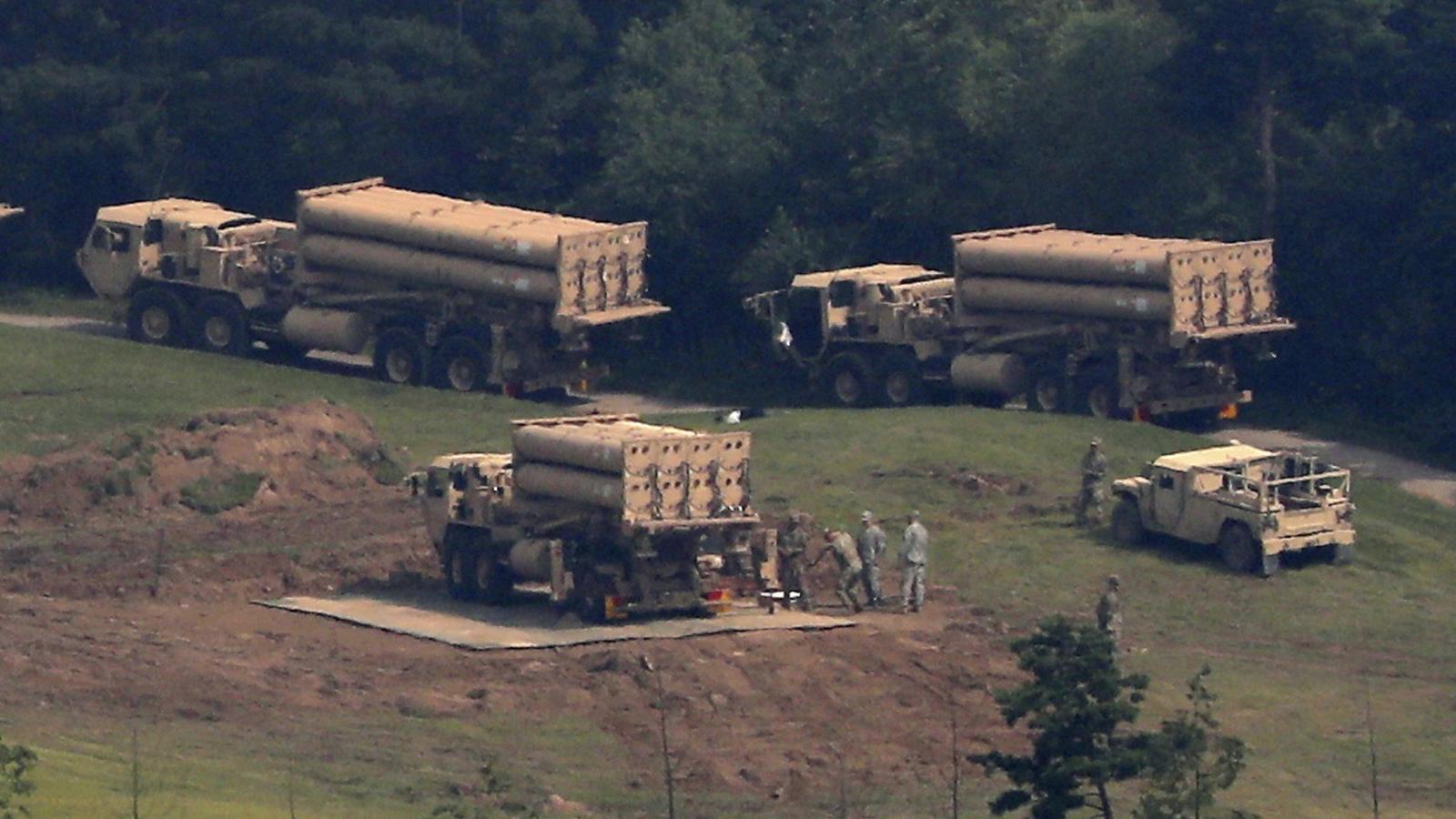
The U.S. War Department is actively enhancing missile defense production capacity by signing framework agreements with Lockheed Martin and Northrop Grumman to expand key component manufacturing for two critical defense systems. According to a statement released on August 3, the agreements aim to increase production of Terminal High Altitude Area Defense (THAAD) interceptor structural components by four times and support a threefold growth in Patriot Advanced Capability-3 (PAC-3) missile output.
Michael Duffey, Under Secretary of Defense for Acquisition and Sustainment, stated: 'Building an “Arsenal of Freedom” requires a robust and dynamic supply chain across all industrial tiers. Framework agreements with ammunition component suppliers like Northrop Grumman are critical to accelerating the tripling of PAC-3 production and quadrupling THAAD interceptor output.'
The War Department noted these agreements provide long-term demand commitments, enabling suppliers to invest in tooling, facility upgrades, and workforce development. While financial terms and production timelines were not fully disclosed, Northrop Grumman confirmed a $3 billion agreement, including $2 billion for rocket motor and safety device supply and $1 billion to increase THAAD component deliveries.
Ben Davies, Vice President at Northrop Grumman, said: 'Our long-term investments in breakthrough manufacturing technologies and resilient supply chains allow us to shift from stable production to rapid capacity expansion in record time. As a leading U.S. solid rocket motor manufacturer, we are supporting the government’s policy to accelerate ammunition output.' He added, 'This is a major leap in mission-critical capability, ensuring U.S. defense superiority remains sharper, faster, and ahead of global threats.'
Northrop Grumman plans to increase PAC-3 solid rocket motor production at its Allegany Ballistics Laboratory in West Virginia. The company has already doubled tactical motor production since 2021 and expects to triple capacity by 2027. This supports the U.S. Army’s plan to increase annual PAC-3 MSE missile production from around 600 to several thousand units for U.S. and allied forces.
The agreement also establishes a second solid rocket motor supplier and increases igniter safety device output. The Pentagon stated that adding a new rocket motor supplier will enhance competition and reduce supply chain risk. Northrop Grumman is also doubling solid rocket motor capacity at its Utah facility and increasing output by 25% at its Elkton, Maryland plant.
For THAAD, Northrop Grumman will increase monthly deliveries of interceptor structural components, including shell cores, tail disks, and thermal shield assemblies—components it has supplied since 2002. The company has invested over $2 billion since 2019 in ammunition-related technologies and facilities, with more than $1 billion dedicated to solid rocket motor production.
Lockheed Martin announced a seven-year contract modification worth up to $53.86 billion for the PAC-3 system. This brings the total multi-year contract value to $58.62 billion, with the first year’s funding of $4.7 billion already obligated via an undefinitized contract action (UCA) in April.
The War Department stated these agreements were developed jointly with the Munitions Acceleration Council, Economic Defense Unit, Missile Defense Agency, and the Office of the Under Secretary of Defense for Acquisition and Sustainment.
FACT BOX
- Source: PR Times
- Category: Partnership