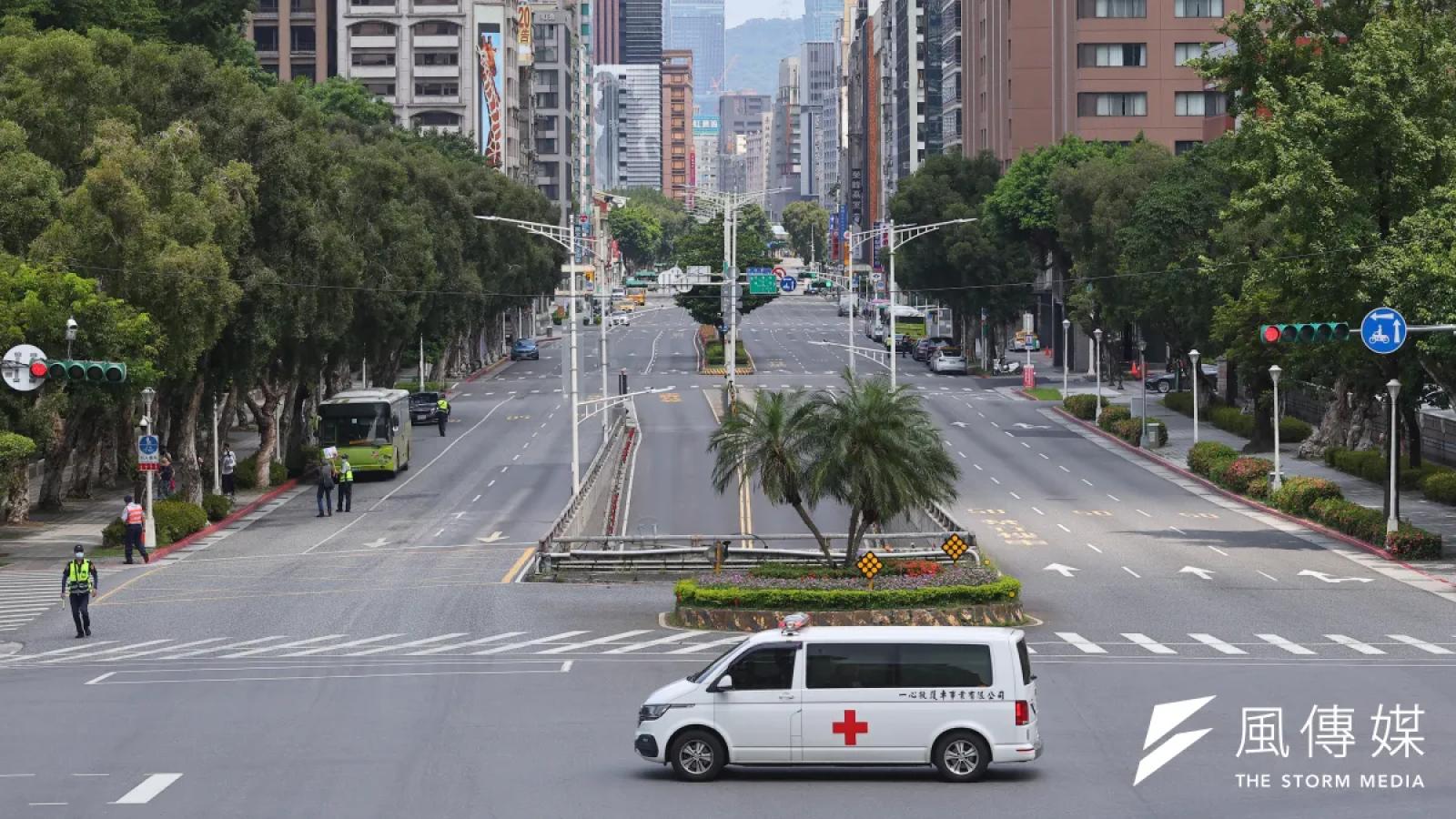
Whenever air raid sirens pierce the sky, streets instantly empty. News reports reassure us that traffic lights function normally, convenience stores remain lit, and citizens comply perfectly. Authorities then release a flawless post-exercise report—we've grown accustomed to this notion of 'drill success'.
But if we were the child in 'The Emperor's New Clothes,' pointing at the grand procession and shouting a truth, it wouldn't be 'The emperor has no clothes,' but rather: 'Your Majesty, you forgot to look in the mirror.'
What readers truly want to know isn't 'Should we conduct drills?' but: 'Is this drill testing public obedience or government survivability?'
### The Essence of Drills: Extreme Stress Test or Immersive Theater?
The nature of modern warfare and extreme disasters is the 'collapse of order.' Drills should, in safe conditions, deliberately create chaos and simulate worst-case system failures to uncover systemic pain points and vulnerabilities.
Yet, our current urban resilience exercises often fall into bureaucratic logic: pursuing 'smooth execution,' 'zero violations,' and 'perfect outcomes.'
When drill evaluation metrics become 'Did people crouch properly?' 'Did vehicles pull over immediately?' 'Did alarms sound on time?'—the exercise devolves from a 'system stress test' into a 'nationwide immersive stage play.'
If drills only aim to prove 'everyone is disciplined,' the fragile system will shatter this illusion in the first second of real crisis.
If we are to truly discuss 'urban resilience,' we must bravely confront four critical questions that have been collectively ignored—questions that are matters of life and death.
### Four Avoided Key Questions
#### 1. When Signals Disappear, Can the Government’s Own Command Chain Still Function?
News always reassures the public: 'ATMs work,' '119 works,' 'traffic lights work.' But under true extreme conditions (e.g., communication backup drills or signal jamming), we should verify:
- Can central and local governments still share intelligence in real time? - Have police, fire, hospitals, and the military truly completed decentralized cross-system backups? - Do officials become unable to coordinate decisions once they leave their LINE groups?
If base stations are destroyed—not just 'network slowdown' but complete blackout—can government orders be delivered? Can frontline disaster reports reach headquarters? The first to undergo stress testing should not be ordinary citizens, but the government’s own command chain.
#### 2. Do People Know Shelter Locations, but Can Shelters Actually Save Lives?
Governments repeatedly promote 'download the app to find shelters' and guide people into basements. But if we open those yellow-labeled metal doors, what’s inside?
- Are there emergency lighting and backup power? - Is there safe drinking water and survival supplies? - Are there basic sanitation toilets and accessibility facilities? - Are there trained managers and first-aid kits on site?
If drills merely herd millions into basements, keep them there for 30 minutes, then sound the all-clear, it’s just a 'shelter performance.' Shelters without life-support systems become collective traps during war.
#### 3. Is Civil Defense Becoming 'Police Station-ized,' or Truly Advancing Toward Total Defense?
We often say 'total national defense,' but reviewing current civil defense structures and drill scripts reveals an awkward reality: our civil defense still heavily relies on police, fire departments, and a few alternative service personnel. 'Civilian participation' often means playing a silent role—being guided and protected.
True urban resilience shouldn’t be a one-way relationship of 'government protects people,' but a two-way resilient network where 'people can protect themselves and share the government’s burden.'
How many communities can independently open shelter sites? How many village chiefs know how to relay messages via radio or runners when communications fail? How many citizens have received basic training in tourniquets, casualty evacuation, or fire extinguisher use?
If civil defense drills always show 'uniformed personnel guiding civilians,' we haven’t moved beyond authoritarian-era mobilization thinking. True civil defense isn’t an extension of police stations, but the normalization and organization of civilian self-defense capabilities. When the government fails, can communities operate independently for 24, 48 hours, or longer? This question is the real passing grade for a resilient society.
#### 4. Is Our Drill’s Fictitious Enemy 'Disaster' or 'Embarrassment'?
This is the sharpest, yet most unavoidable question. All drills must be designed based on 'worst-case scenarios,' but our current drills often deliberately avoid scenes that are 'politically incorrect' or 'embarrassing to superiors.'
For example: - If simulating mass casualties, do we dare show ERs overwhelmed, triage collapsing, and patients dying in hallways? - If simulating power and internet outages, do we dare show officials unable to contact each other, information chaos, and paralyzed decision-making? - If simulating enemy infiltration, do we dare show misinformation paralyzing local groups, public morale collapsing, and looting and chaos coexisting?
We don’t. Because if these scenes appear, they’ll be interpreted as 'drill failure.' So we design one 'controllable accident' after another, ensuring all disorder happens within scripted bounds, then perfectly resolved per script.
Such drills aren’t testing system limits—they’re testing the system’s 'acting ability.'
True stress tests must dare to make scenes ugly, make leaders uncomfortable, and expose vulnerabilities. A government that has never failed a drill isn’t strong—it’s just never honestly faced its own fragility.
### The True Definition of Drill Success: Seeing Cracks, Not Painting Over Walls
Let’s return to the metaphor of 'The Emperor’s New Clothes.' What we need aren’t more poets praising the emperor’s beautiful attire, but more children brave enough to point out his nakedness.
True drill success isn’t zero defects, but how many defects were exposed; not no one making mistakes, but every mistake being recorded, reviewed, and corrected; not high public compliance, but citizens genuinely learning how to protect themselves and their families during the process.
If, after a drill, the government’s only conclusion is 'everything went smoothly, public cooperation was extremely high,' we should be alarmed. This isn’t resilience—it’s collective self-comfort.
### The Courage to Move from 'Safe Drills' to 'Unsafe Drills'
True resilience isn’t about demonstrating control in peacetime, but finding survival paths amid extreme collapse. This requires a new drill culture—I call it 'unsafe drills.'
'Unsafe drills' don’t mean putting people in danger, but deliberately creating insecurity during exercises: truly cutting communications, temporarily disabling command chains, delaying supply deliveries, letting casualties wait too long, spreading misinformation on social media. Then observe: Who steps up? Which link collapses first? Which backup mechanism doesn’t exist?
This is the essence of stress testing. The anxiety and chaos felt during drills are rehearsals for real future crises. The 'sense of failure' we endure today in drills will translate into survival rates on tomorrow’s battlefield.
Letting the emperor see himself in the mirror—that’s the first step toward resilience.
The essence of urban resilience isn’t showcasing control in peaceful times, but exposing vulnerabilities under extreme conditions and honestly confronting and repairing them.
What we need is a drill brave enough to fail, a drill brave enough to make the emperor look in the mirror. Only then, when the real alarm sounds, won’t we discover that the emperor’s beautiful clothes can’t block anything.
The greatest enemy of drills has never been missiles, but our unwillingness to admit we can fail. And acknowledging fragility is the true starting point of resilience.
*Author works at Hanxiang Company
FACT BOX
- Source: PR Times
- Category: News