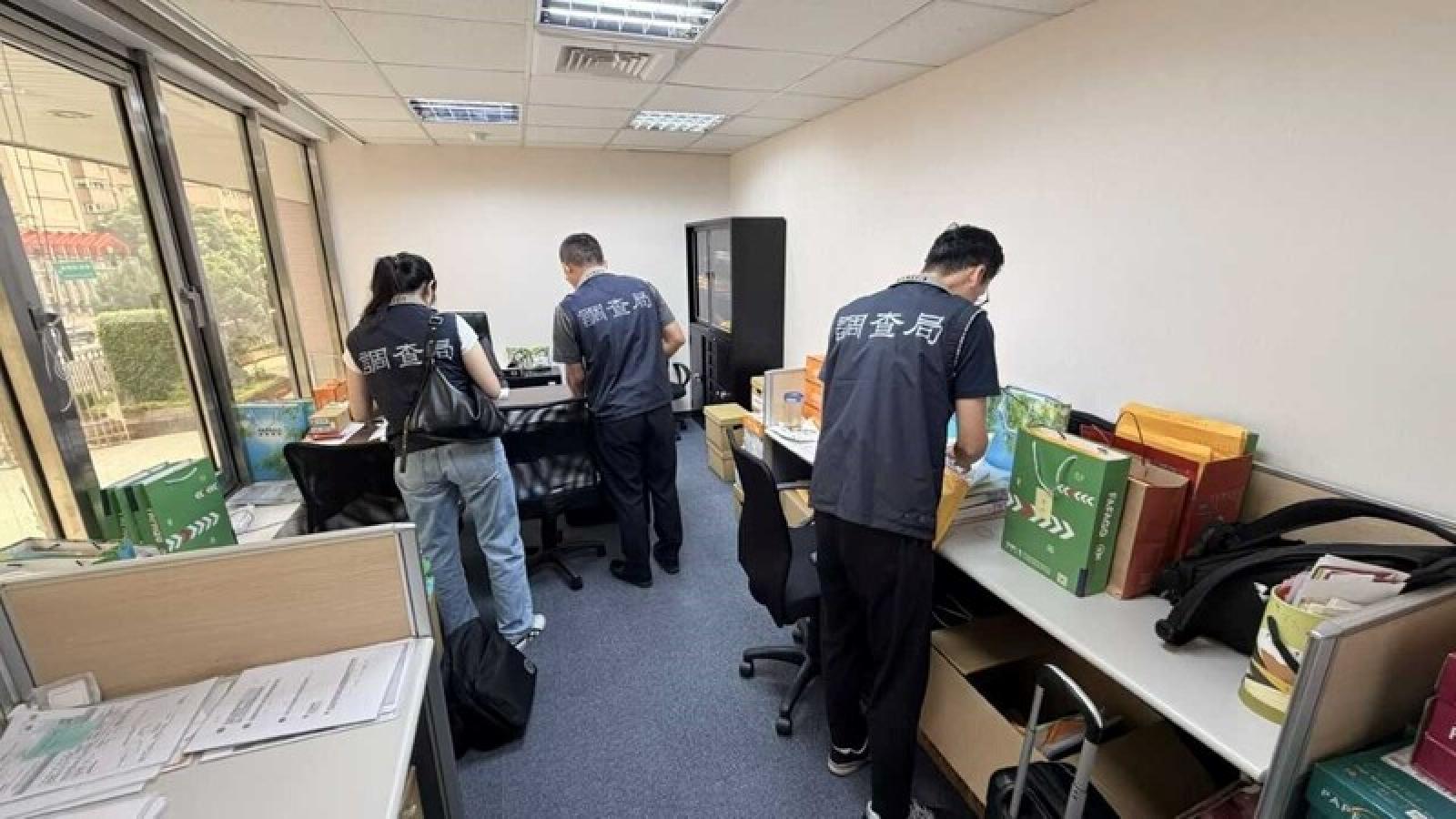
As Taiwan's semiconductor and IC design industry thrives amid the global AI wave, while the U.S. pressures TSMC to build factories overseas, Chinese enterprises have been aggressively attempting to recruit top talent from Taiwan through illegal means. The Ministry of Justice Investigation Bureau launched a coordinated investigation on July 13, 2026, targeting 17 cases involving Chinese companies illegally recruiting Taiwan's high-tech professionals.
Notably, Goke Microelectronics, a Chinese firm blacklisted by the U.S. Department of Commerce as a 'Military End-User (MEU)', was found to have established a front company in Taiwan for illegal talent acquisition. The investigation, planned since April 2026, involved meticulous evidence gathering and was conducted under the command of local prosecutors in Taipei, New Taipei, Shilin, Taoyuan, Hsinchu, and Tainan, with nine field investigation units participating.
A total of over 330 personnel were mobilized, 64 locations searched, and 114 individuals questioned. The 17 companies involved include: Actions Semi, Giantplus Optoelectronics (Shanghai), Beijing Newcomm Technology, Shanghai Willsemi Electronics, Shanghai Kuntin Intelligent Technology, Shenzhen Longcheng Smart Display, Changzhou VisionX Semiconductor, Shenzhen Yuyang Electronic Technology, Jiangsu Aosheng Composite Materials, Goke Microelectronics, Shandong Zhaotong Microelectronics, Xinzhuo Technology (Zhejiang), Guangdong SMI Microelectronics, Shenzhen Tongrui Microelectronics, Beijing Maizhe Technology, Zhongshengmei Semiconductor (Shanghai), Zhejiang Suotuo Materials Technology, and Zhuhai COSMX Batteries.
Among them, Jiangsu Aosheng Composite Materials specializes in carbon fiber composite R&D and manufacturing, holding a top-three global market share. The company illegally established a Taiwan entity via a Hong Kong intermediary without government approval, recruiting tech talent and conducting unauthorized business.
Goke Microelectronics, an IC design firm listed on the Shenzhen Stock Exchange and designated a key national IC enterprise, was added to the U.S. MEU blacklist in November 2021. It set up an unlicensed entity in Taiwan through local nationals to illegally recruit talent.
Shenzhen Tongrui Microelectronics, a leading Chinese display chip designer, had previously been investigated in 2025 but re-established operations in Taiwan without authorization, continuing illegal recruitment.
Zhuhai COSMX Batteries, listed on the Shanghai Stock Exchange, leads globally in lithium-ion battery shipments for laptops, tablets, and smartphones. Despite having its Taiwan office permit revoked by Taiwan's Ministry of Economic Affairs, it continued illegal talent recruitment activities.
FACT BOX
- Source: PR Times
- Category: News