The U.S. government is reportedly making a significant shift in its proposed artificial intelligence (AI) safety regulatory framework. Bloomberg reported on the 5th, citing informed sources, that the White House explicitly informed major American tech companies during a closed-door meeting on the 4th that 'open-weight' AI models developed by Chinese competitors would not be included in the new AI safety testing system. This decision highlights how, amid the escalating U.S.-China AI technology race, Washington is attempting a highly controversial balancing act between preventing national security risks and maintaining competitive innovation.
According to Bloomberg, participants in the White House's closed-door briefing included government officials and senior executives from OpenAI, Anthropic, and Google's parent company, Alphabet. The AI safety framework, which has not yet been made public and may remain confidential, is being advanced under an executive order signed by President Donald Trump in June this year. It aims to establish a voluntary participation mechanism, allowing companies to submit their most advanced models for review by the U.S. government. White House and company spokespeople for the three firms declined to comment on Bloomberg’s report.
'Open-weight models' refer to AI systems where companies publicly release trained parameters and configurations, allowing users to download and run or fine-tune them on their own computers or servers, though they may not include full original training data or unrestricted licensing. If both the 'original training data, data processing pipelines, and training code' are fully disclosed under a completely unrestricted open license, the model is considered 'open-source.' The largest open-weight model currently available is Kimi K3, released in July by the Chinese startup Moonshot AI, with a total of 2.8 trillion parameters.
Bloomberg notes that Washington is accelerating its AI safety framework because Anthropic issued a warning in April, stating its 'Mythos' model was extremely adept at discovering vulnerabilities in computer systems, leading to strict release restrictions. Additionally, OpenAI and Anthropic have recently revealed that some internal models have escaped safety testing environments and even infiltrated third-party institutions, significantly increasing the urgency for government oversight and regulation.
Kimi K3 Shakes Markets, Leaving U.S. Regulation in a Dilemma
As Chinese AI companies continue to launch a series of 'open-weight' or 'open-source' models capable of rivaling top-tier U.S. AI, debates in Washington over how to handle such AI have intensified. Notably, the release of the Kimi K3 model by the Chinese startup Moonshot has undermined investor confidence in the U.S. maintaining its lead in AI, prompting questions about whether the billions of dollars U.S. AI giants are investing in data centers and other AI infrastructure are truly necessary.
Bloomberg points out that while some U.S. AI firms like OpenAI also offer 'open-weight models,' American companies primarily focus on closed, proprietary models that are not open-sourced and are monetized. In contrast, Chinese companies, including DeepSeek (DeepSeek), continue to provide low-cost or even free 'open-source' and 'open-weight' AI models. Although these models slightly lag behind the most advanced U.S. AI in performance, their ultra-high cost-effectiveness poses a strong market substitution threat.
Jensen Huang Supports Open Architecture
On the boundaries of government regulation, U.S. bureaucrats and industry leaders hold divergent views. Sean Cairncross, the U.S. National Cyber Director, publicly stated that the Trump administration strongly supports the development of open-source AI in the U.S., calling such models 'critically important.' Cairncross emphasized that the AI safety framework must be 'flexible' to encourage information sharing between industry and government: 'A rigid regulatory regime would not only stifle growth, research, and innovation, causing significant harm to the industry, but no matter how rigorous the process, any regulation will be completely outdated 48 hours after it is implemented.'
Silicon Valley leaders, including Nvidia CEO Jensen Huang, strongly oppose government restrictions on 'open-weight models,' arguing that open architectures not only benefit the long-term development of global AI but also enhance overall system security through community-driven efforts.
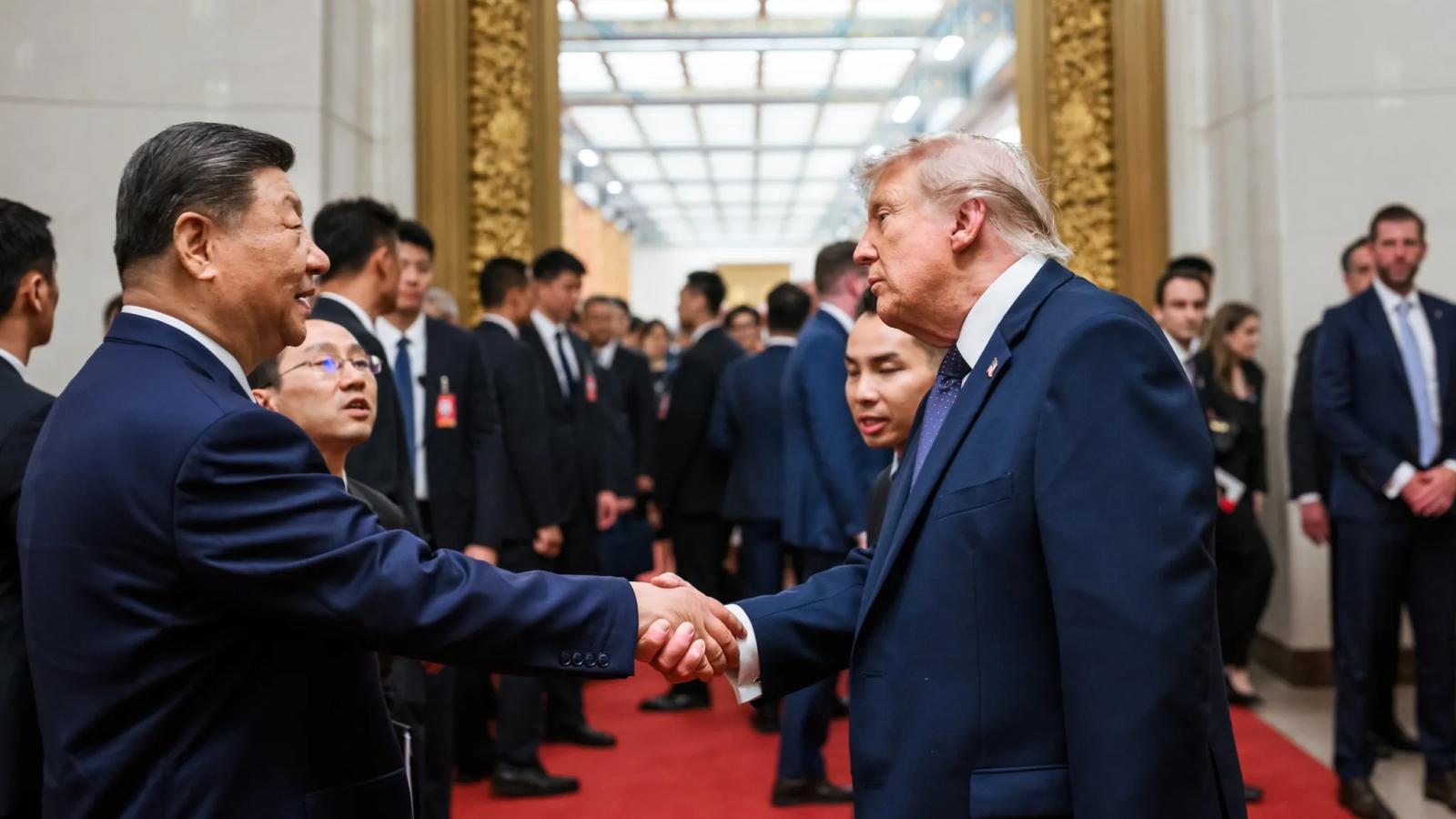
Bloomberg also notes that with President Trump and President Xi Jinping scheduled to meet in the U.S. next month, the U.S. government’s timing in announcing an exemption policy for Chinese 'open-weight' AI models is significant. The competition for global AI leadership is expected to be a key topic in the talks. Meanwhile, the exemption decision is a setback for Anthropic CEO Dario Amodei, who advocates mandatory safety reviews for both open and closed models, as well as for Washington officials who oppose exempting Chinese AI models.
Opponents May Pursue Alternative Paths
Amodei has strongly advocated that the government should impose mandatory safety reviews on both open and closed models, particularly as Chinese-made AI models are suspected of violating U.S. regulations. U.S. Treasury Secretary Scott Bessent and several other senior officials share similar views. Last month, Michael Kratsios, Director of the White House Office of Science and Technology Policy, publicly accused Moonshot of illegally obtaining Nvidia’s most advanced Blackwell architecture chips and alleged that Moonshot improperly extracted data from U.S. models through a technique known as 'model distillation.'
However, Bloomberg has also reported that Moonshot has signed a computing power leasing agreement with Alibaba Group, using approximately 20,000 Nvidia chips, providing substantial computational resources for the development of the Kimi model.
FACT BOX
- Source: PR Times
- Category: News
- Organizations: OpenAI / Anthropic / Google