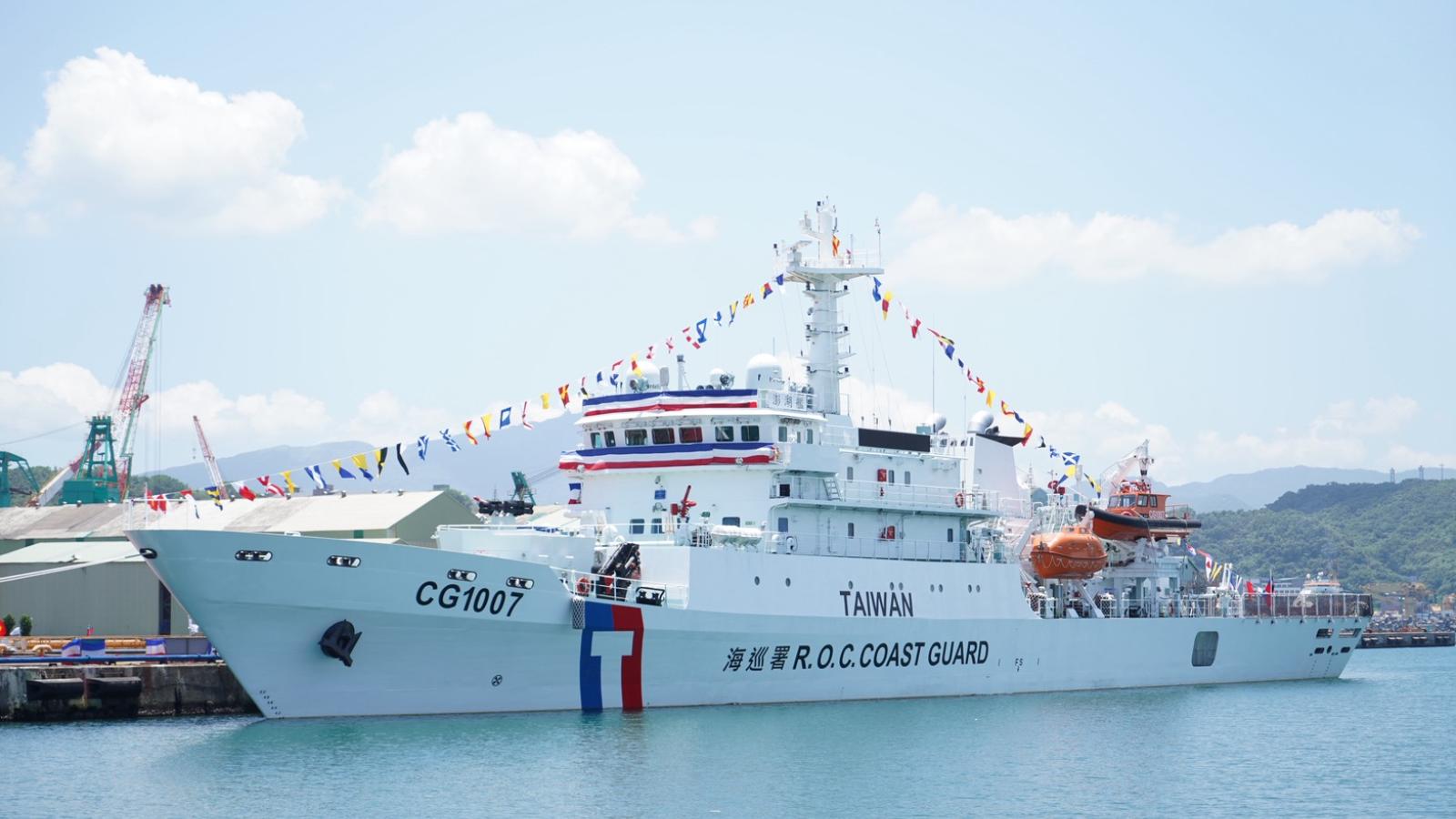
Taiwan's Han Kuang 42 military exercise will run from August 5 to August 14, lasting 10 days and 9 nights. In the past, Chinese military drills imposing blockades around Taiwan have posed serious challenges for both Taiwan and the international community. This year, a particularly notable feature is the special 'anti-blockade escort' training.
A Ministry of National Defense (MND) official stated that while the exact number of forces involved in the escort mission cannot be disclosed, the Navy and Coast Guard will operate jointly. As China's gray-zone provocations against Taiwan have reached extreme levels and pressure continues to intensify, Taiwan must prepare for the possibility that Beijing could shift from so-called 'law enforcement' operations to full-scale military actions.
The MND official emphasized, 'Taiwan is an island nation, and we rely heavily on imported supplies. In prolonged conflict, supply lines become lifelines. Supplies such as natural gas, food, and essential goods cannot be interrupted. Most of our logistics come through the Western Pacific, making it a critically important maritime lifeline. Therefore, the anti-blockade escort drills will take place in the Western Pacific.'
The official added that anti-blockade escort is the most crucial operational subject for safeguarding Taiwan's survival, which is why not only the Navy but also the Coast Guard will participate in maritime escort missions. A key focus of this year's exercise is how the roles of the Navy and Coast Guard can be linked and transitioned—from responding to gray-zone incursions to operating under maximum pressure in quasi-war conditions.
The MND official explained that the Han Kuang exercise is part of a year-long preparation cycle. In April, a computer-assisted command post exercise was conducted, allowing senior officers to practice command and decision-making. In June, immediate readiness drills were carried out. Given that the Chinese military continues to probe Taiwan's red lines through gray-zone harassment and maximum pressure, Taiwan's response—immediate readiness drills—sends a clear message to the PLA: 'We are prepared,' while also providing accountability to the public.
In July, ground and tri-service units began mobilizing, conducting war-readiness exercises. The process was likened to 'tightening screws'—finalizing operational plans, conducting live drills, and ensuring troops understand the battlefield environment. The official noted, 'Whoever occupies the battlefield first holds the advantage, but we must always prepare for situations where plans fail to keep up with reality.' In the formal August exercise, scenarios will unfold without time limits or scripts, testing troops' ability to respond when everything goes off-plan.
Another key focus this year is 'Total Defense,' which addresses how the entire population and the nation should respond to war after military preparations are complete. The establishment of the Whole-of-Society Resilience Committee and urban resilience drills aim to help citizens understand how to respond during wartime—first ensuring self-protection, then identifying ways to support the military.
The official gave an example: 'During war, both civilians and military forces need roads, leading to competition for access. How military and civilian populations understand and support each other becomes a major challenge.' The MND official stressed, 'In past wars, the military was the main actor, but civilian survival and public morale are now increasingly critical. Focusing on this ensures national resilience and sustained operations.'
Additionally, medical readiness is a major component of this year's exercise. The official stated, 'On the battlefield, a soldier killed instantly by artillery makes no sound, but a wounded soldier screaming in pain affects morale and public sentiment. Therefore, casualty treatment and follow-up medical care are extremely important.'
From overall medical capacity and mass casualty response to precise triage classification for every soldier, automated and AI-driven systems have already been implemented. Medical resources will support both military operations and disaster relief, with accurate triage ensuring resources are used effectively and not wasted.
Additional exclusive reports from Wind Media: · Han Kuang Exercise: Reserve units mobilize a record 5,000 personnel, aiming to achieve combat readiness within 14 days · Han Kuang Exercise: 'Swarm drone' leads complex attacks, forming kill chains
FACT BOX
- Source: PR Times
- Category: Event