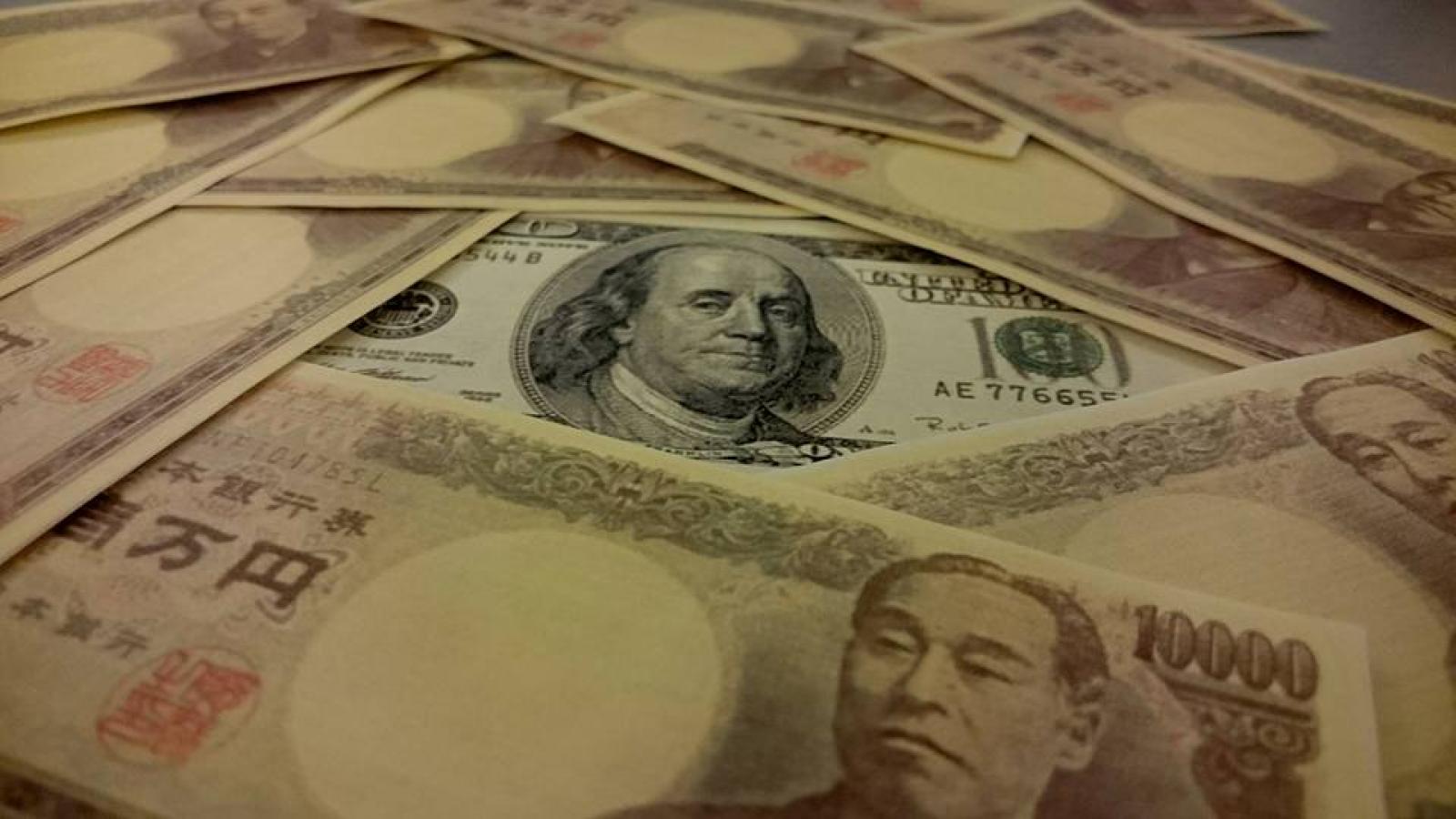
The United States and Japan have recently taken the rare step of jointly intervening in foreign exchange markets to address the weakening yen, drawing significant market attention.
On the May 5 episode of the program "Financial Road to Success," finance professor Zhu Yuezhong outlined three reasons cited by media for why the U.S. decided to intervene:
First, the U.S. fears that Japan might sell off U.S. Treasury bonds. Second, it worries that investors may begin selling U.S. bonds to buy Japanese government bonds. Third, it is concerned that Japanese corporations will withdraw their funds held in the U.S. and bring them back to Japan.
Therefore, according to Zhu, the U.S. is not genuinely trying to assist Japan—it is acting to save itself.
Zhu noted that while the yen has temporarily stabilized, market expectations still suggest further potential for appreciation. The key factor lies in the high likelihood of another interest rate hike by the Bank of Japan in September.
He emphasized that joint U.S.-Japan interventions only produce short-term effects. The fundamental question remains: Why is the yen so weak?
The answer lies in widespread carry trading.
Why is the yen the primary target?
Because interest rates in Japan are extremely low. Although Japan raised rates once this year, the Bank of Japan's benchmark rate remains at just 0.1%, the lowest among the G7 nations.
Naturally, investors borrow the cheapest currency—the yen—and many have maintained bearish positions on the yen over extended periods.
What Is Carry Trade?
In simple terms, carry trade involves borrowing money at a low interest rate and investing it in higher-yielding assets to profit from the interest rate differential.
Among international carry trades, the most classic and largest in scale is the "yen carry trade."
Why Was This Intervention Effective?
Zhu explained that the Bank of Japan has already intervened twice this year. The first intervention occurred in April and May, injecting over $70 billion. The second was the recent one, which again poured more than $70 billion into the market.
This time, the U.S. contributed approximately $5 to $10 billion.
Why did it work in the short term?
The main reason is that "the U.S. spoke up." If only Japan had acted, the money spent would likely have been wasted. But with the U.S. joining in—combined with expectations of a rate hike by the Bank of Japan—the message sent to the market was clear: continuing to short the yen could lead to severe losses.
Why Did the U.S. Help Japan?
Zhu pointed out that media have summarized several reasons behind the U.S. decision to act:
First, fear of Japan selling U.S. Treasuries. Japan is the largest foreign holder of U.S. debt, owning over $1.1 trillion. Recently, Japan has indeed been selling U.S. bonds to defend the yen, contributing to the weakening of the U.S. bond market. Thus, the U.S. had no choice but to contribute funds to support Japan.
Second, rising yields on Japanese government bonds. For example, the yield spread between 30-year Japanese and U.S. government bonds has narrowed to less than 1.2%. If investors anticipate further rate hikes and yen appreciation in Japan, some who currently hold U.S. bonds may switch to Japanese bonds. For Japan, raising interest rates is almost the only way to strengthen the weak yen and deter carry traders—interest rates must rise closer to those of other countries.
Another concern is that Japanese corporations hold $3.6 trillion in overseas funds. Over the past decades, Japan’s low or even negative interest rates meant this money stayed abroad. If the yen strengthens, these companies may bring their funds back home. But where will they pull this money from? A large portion would come from the U.S.—putting the U.S. in serious trouble.
Conservatively, Japanese corporate funds in the U.S. amount to hundreds of billions of dollars. While not all will return at once, even a significant outflow could severely impact the U.S. economy. Therefore, the U.S. isn’t helping Japan out of goodwill—it’s protecting itself.
Exclusive Insights from Feng Media:
· If the Fed raises rates in September, will the U.S.-Japan joint intervention be in vain? Central bank insights on key currency market trends
· Should you wait before exchanging yen? Latest yen exchange rates after intervention and cost calculations for ramen, shopping, and Disney trips
· Why did the U.S. and Japan jointly intervene in the yen exchange rate? Shi Junji reveals the hidden motive: Successfully defusing the global stock market’s "carry trade bomb"
FACT BOX
- Source: PR Times
- Category: News