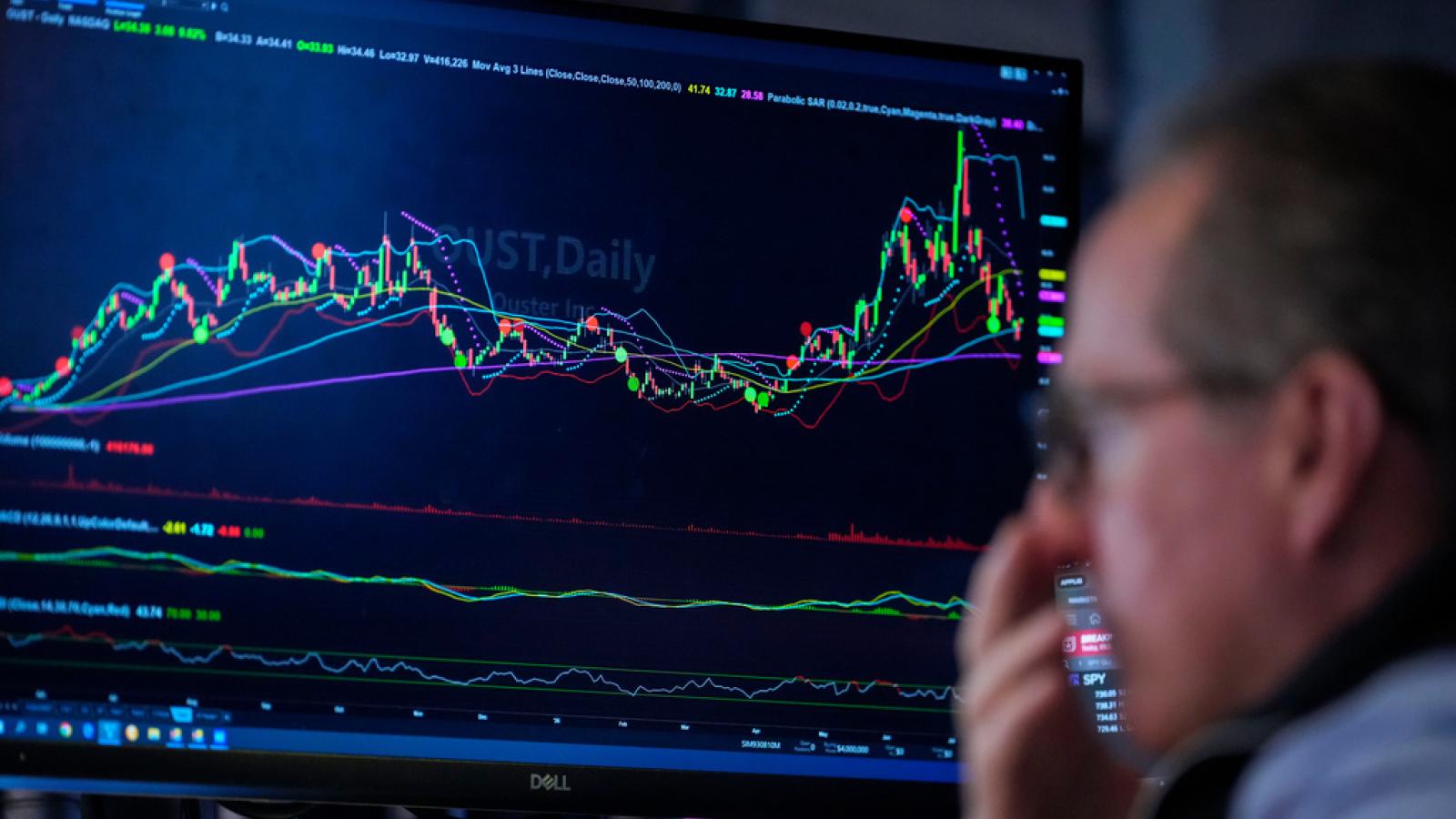
The U.S. stock market, including the Dow Jones Industrial Average and the S&P 500 index, has once again hit record highs, with the technology-focused Nasdaq also rebounding significantly. However, as the traditionally difficult season approaches, investors are beginning to consider whether it's time to lock in profits.
Research firm Ned Davis Research (NDR) points out that U.S. equities are indeed entering one of the most volatile periods of the year, but currently, there is insufficient evidence to justify a fully bearish outlook on the market.
According to NDR’s historical data, the months from August to October have consistently been the weakest three-month stretch for the S&P 500. When combining annual seasonal cycles, the four-year U.S. presidential election cycle, and the 10-year business cycle into a composite model, markets have historically shown a higher probability of consolidation or correction from mid-August through early October.
Recently, the S&P 500 quickly recovered its losses and reset a new record closing high. This has sparked debate over whether investors should reduce equity exposure at these elevated levels. However, NDR emphasizes that seasonality is just one of many variables influencing the market, and other key indicators have not yet signaled a broad shift to bearish territory.
Investor Caution Remains—Paradoxically Supporting the Market
NDR maintains its stance of “moderate overweight” on U.S. stocks, recommending an asset allocation of 70% equities, 20% bonds, and 10% cash—higher than its baseline portfolio of 55% equities, 35% bonds, and 10% cash. This reflects a relatively positive outlook on future market performance, primarily due to the fact that investor sentiment remains cautious.
NDR’s short-term market sentiment indicator dipped into the “pessimistic zone” in early August and only recently returned to near-neutral levels following the latest rally. This suggests that even as major indices reach new highs, most investors have not fully regained confidence.
Notably, NDR’s daily trading sentiment composite index briefly fell into the “extreme pessimism” range and has now risen to 44.44, slightly above the neutral threshold. The index reads below 41.5 as extreme pessimism and above 62.5 as excessive optimism.
Pessimism as a Contrarian Signal Favoring Equities
NDR highlights that market sentiment often acts as a contrarian indicator. When pessimism is widespread, many investors have already sold their holdings, limiting further downside pressure. If the market continues to rise, sidelined capital may re-enter, providing fresh momentum for equities.
In other words, if bullish momentum persists over the coming weeks and investor sentiment gradually shifts from pessimistic to optimistic, the positive impact of this sentiment recovery could potentially offset the typically unfavorable seasonal factors from August to October.
Broadening Rally Beyond Tech—Improved Market Health
Beyond sentiment, another significant development noted by NDR is the improving market breadth. More sectors and individual stocks are participating in the rally, rather than just a few large-cap tech stocks driving the market—a sign of a healthier market structure.
NDR’s “Fab Five Composite” indicator, which tracks overall market health, has improved from a bearish tilt to neutral this week—the best level since late April. The biggest improvement came from the “Tape Component,” which measures how many U.S. sectors and global markets are in uptrends.
Analysts note that capital has not been exiting the stock market en masse but is rotating across different industries and investment styles. While short-term fund flows have shifted, overall market breadth remains stable, and long-term indicators have not weakened.
Cooling AI Trade—Growth Stocks Now ‘Oversold’
Another key shift in recent markets is the rapid cooling of the AI-themed rally.
At the end of May, market enthusiasm for AI pushed growth stocks’ relative performance against value stocks to over two standard deviations—an extreme level. However, as AI hype fades and the AI-focused hedge fund Situational Awareness recently collapsed, triggering sharp corrections in related holdings, this trade has clearly reversed.
Currently, growth stocks relative to value stocks have fallen into the “oversold” zone—over two standard deviations below the mean.
Although NDR’s long-term model shows value stocks now have their largest relative advantage in nearly five years, the strategy team does not recommend investors immediately chase value stocks. Instead, they maintain a neutral stance, waiting for growth stocks to complete their oversold rebound before seeking better entry points.
NDR states that the current market’s defining feature is not a broad withdrawal of capital, but rather rapid rotation among different investment themes. Therefore, even as U.S. stocks enter what is historically the weakest seasonal period, as long as sentiment remains unheated and capital stays invested, the extent of any short-term correction may be limited.
FACT BOX
- Source: PR Times
- Category: Survey
- Organizations: Ned Davis Research / Situational Awareness