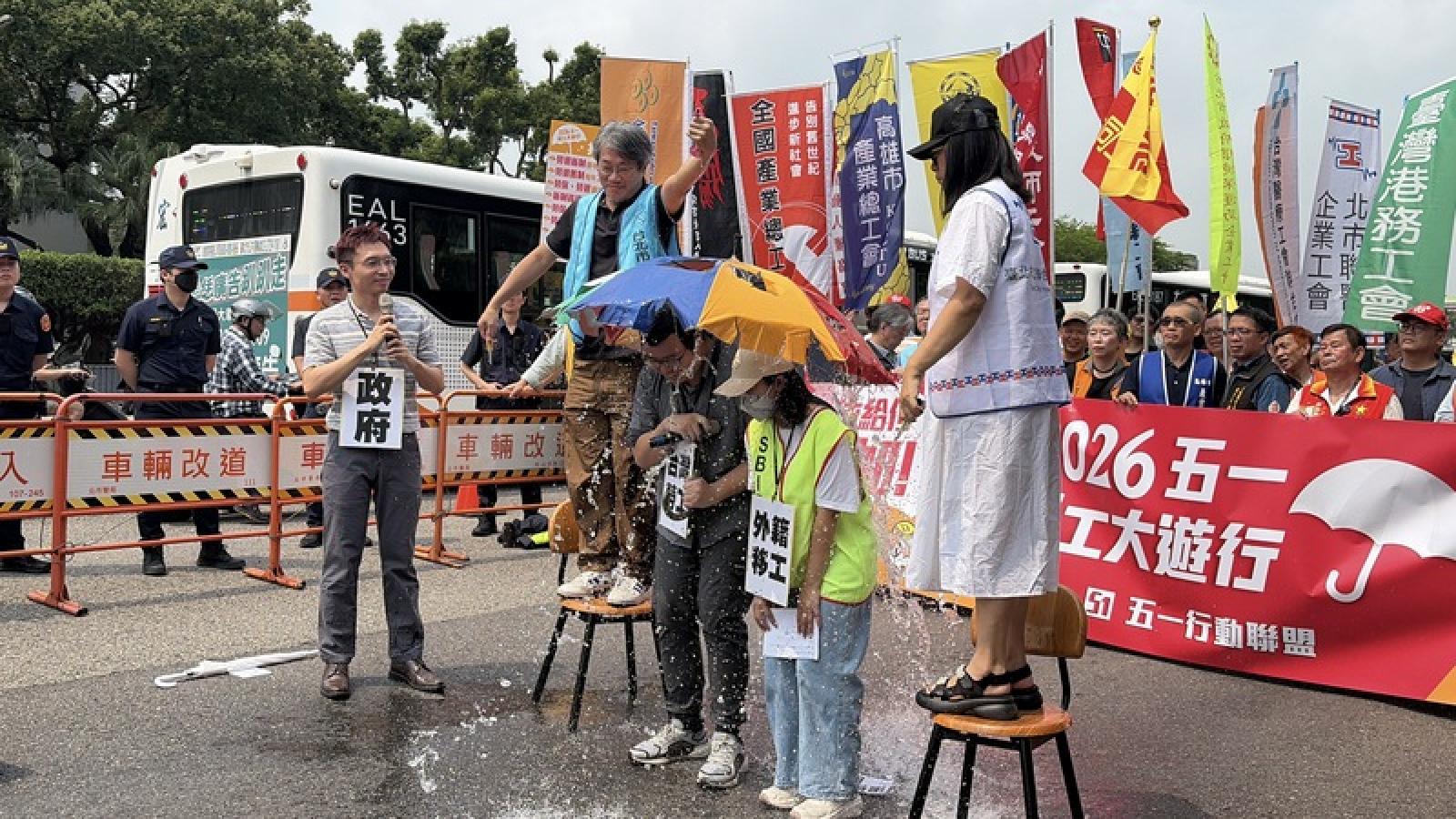
When labor groups propose legal reforms to increase employer contribution rates under the new labor retirement system, familiar arguments immediately emerge: corporate costs will rise, investment willingness will decline, and small and medium-sized enterprises (SMEs) may struggle to cope. Yet, whenever labor rights reforms are discussed, people are quick to calculate corporate costs, but rarely do they consider the post-retirement lives of nearly eight million workers under the new system.
When cost becomes the sole metric, what's truly overlooked is the economic value accumulated by workers through decades of hard labor, as well as the most basic security for their later years. The purpose of the labor retirement system has never been to reduce corporate personnel costs, but to ensure workers' livelihoods after they lose their ability to work, preventing them from falling into poverty or becoming dependent on the state. Raising employer contribution rates today should not be seen as an additional corporate burden, but as a necessary correction to long-standing inadequate retirement protection, and a crucial step toward achieving labor rights justice and rebalancing economic gains.
Protecting workers' retirement rights should not always remain at the minimum standard. Taiwanese workers have long faced a triple crisis of low wages, long working hours, and insufficient retirement security. Since the implementation of the new retirement system, employers have been legally required to contribute 6% of salaries, establishing individual retirement accounts. However, after more than two decades of inflation, stagnant wages, and population aging, a 6% contribution rate can no longer support workers' living needs for 20 to 30 years after retirement.
Many workers spend their lives working hard, only to discover upon retirement that their account balances are insufficient to cover medical care, long-term care, housing, and basic living expenses. This is not due to personal lack of effort, but rather a systemic flaw in the design that fails to provide adequate protection. Yet, whenever discussions about raising contribution rates arise, opposition voices emphasize increased corporate burdens, while rarely addressing the social costs of inadequate retirement income. When large numbers of retirees face income shortfalls, they ultimately rely on government subsidies, social assistance, and family support—merely shifting responsibilities that businesses should bear today onto taxpayers and future generations.
Retirement security is not a welfare handout or a favor; it is an extended reward for decades of labor. The profits companies enjoy today are built on the daily value created by workers. Therefore, ensuring workers have a basic standard of living in old age is a fundamental labor right. Raising employer contribution rates is not a punishment for businesses, but a return to the original purpose of the system: protecting workers.
Sharing economic gains means companies cannot enjoy profits while ignoring worker protections. In recent years, government officials have frequently cited impressive economic data to highlight their achievements. Taiwan's economy continues to grow, with many companies reporting record revenues, exports, and profits. Listed and OTC companies regularly announce strong financial results, and shareholder dividends have reached historic highs. Yet, have economic gains been fairly distributed? The answer is likely no.
Companies can increase shareholder dividends, raise executive compensation, and expand capital investments, but when it comes to raising retirement contribution rates for workers, they immediately cite increased costs as a reason to oppose. This logic reflects Taiwan's long-standing imbalance in income distribution: companies are willing to share profits with shareholders but reluctant to share gains with workers.
Without workers, there is no corporate productivity; without frontline employees, there is no corporate competitiveness. Corporate profits are not created by capital alone—they result from the joint efforts of labor and management. When businesses benefit from economic growth, they should naturally also take responsibility for improving workers' retirement security.
International labor rights trends now view employee benefits, retirement security, and talent retention as core competitive advantages—not cost burdens. While raising contribution rates may increase personnel expenses in the short term, in the long run, it enhances employee loyalty, reduces turnover, stabilizes labor-management relations, and strengthens corporate social image. Therefore, increasing retirement contribution rates is not only a matter of social justice, but also a vital investment in sustainable corporate development.
Raising contribution rates is not only legal, but also aligns with social fairness and institutional justice. From a legal perspective, the labor retirement system is designed to require employers to bear a certain percentage of retirement contributions. Contribution rates are not fixed numbers; they can be adjusted through democratic processes based on socioeconomic changes, demographic shifts, and retirement needs. Thus, raising contribution rates is not only legally justified, but also consistent with constitutional principles that protect citizens' rights to survival, work, and social security.
For years, businesses have benefited from globalization, technological progress, and improved productivity, while workers' income growth has lagged far behind. For example, companies set annual performance targets for employees and demand growth, yet salaries, benefits, and retirement protections have not kept pace. Maintaining contribution rates at their original levels is equivalent to using 20-year-old standards to address today's entirely different economic realities.
A truly rational system should evolve with societal development, rather than forcing workers to bear the risks of inflation, aging, and retirement poverty alone. Of course, some worry that higher contribution rates will weaken corporate competitiveness. But true competitiveness is not determined by suppressing labor protections—it lies in innovation, technological upgrading, management efficiency, and talent development. If a company's competitiveness depends on sacrificing workers' retirement rights, the problem lies not in the contribution rate, but in the business model itself.
In conclusion, an advanced nation should not treat labor protection and economic development as a zero-sum game, but should create systems that enable labor and capital to grow together. Only by establishing a reasonable, fair, and forward-looking retirement system can we build a truly sustainable economy and a stable society.
Governments and businesses should view retirement security as an investment, not a cost. Raising employer contribution rates under the new labor retirement system is not about increasing corporate burdens, but about necessary repairs to workers' retirement rights. It is not a punishment for businesses, but a correction of long-standing income imbalances. It is not an obstacle to economic development, but a foundational step toward building social trust and sustainable competitiveness.
What we should truly worry about is not a few percentage points more in corporate contributions, but millions of workers who spend their lives working hard, only to find they cannot maintain a basic standard of living in retirement. If the system fails to protect the dignity of workers in old age, then even the highest economic growth figures represent prosperity for only a few.
Therefore, this article urges the government to boldly advance reforms and implement comprehensive supporting measures to strengthen retirement security. First, gradually increase the statutory employer contribution rate with a clear timeline, giving businesses sufficient time to adapt and allowing workers to see hope for improved retirement protection. Second, provide phased guidance and tax incentives for SMEs to help them transition, rather than supporting businesses solely by cutting labor rights. Third, establish a regular review mechanism based on indicators such as wage growth, inflation, population aging, and retirement income replacement rates, ensuring retirement protection evolves with society rather than remaining trapped in outdated frameworks.
Retirement security is not a cost—it is a measure of social civilization. Raising employer contribution rates is not just institutional reform; it is a fundamental promise from the state to every worker who has labored for decades. This article calls for a future where economic gains are truly shared by labor and capital, and retirement life is free from anxiety—so Taiwan can move toward a sustainable future that balances competitiveness with social equity.
In 2016, former President Tsai Ing-wen, facing protests from labor groups and society over amendments to the Labor Standards Act, firmly stated that workers are the softest spot in the DPP's heart. Today, nearly eight million workers under the new system are testing the DPP government's attitude and determination toward labor policy—an ideal moment to fulfill that promise.
*Author: Independent journalist, labor rights blogger
FACT BOX
- Source: PR Times
- Category: News