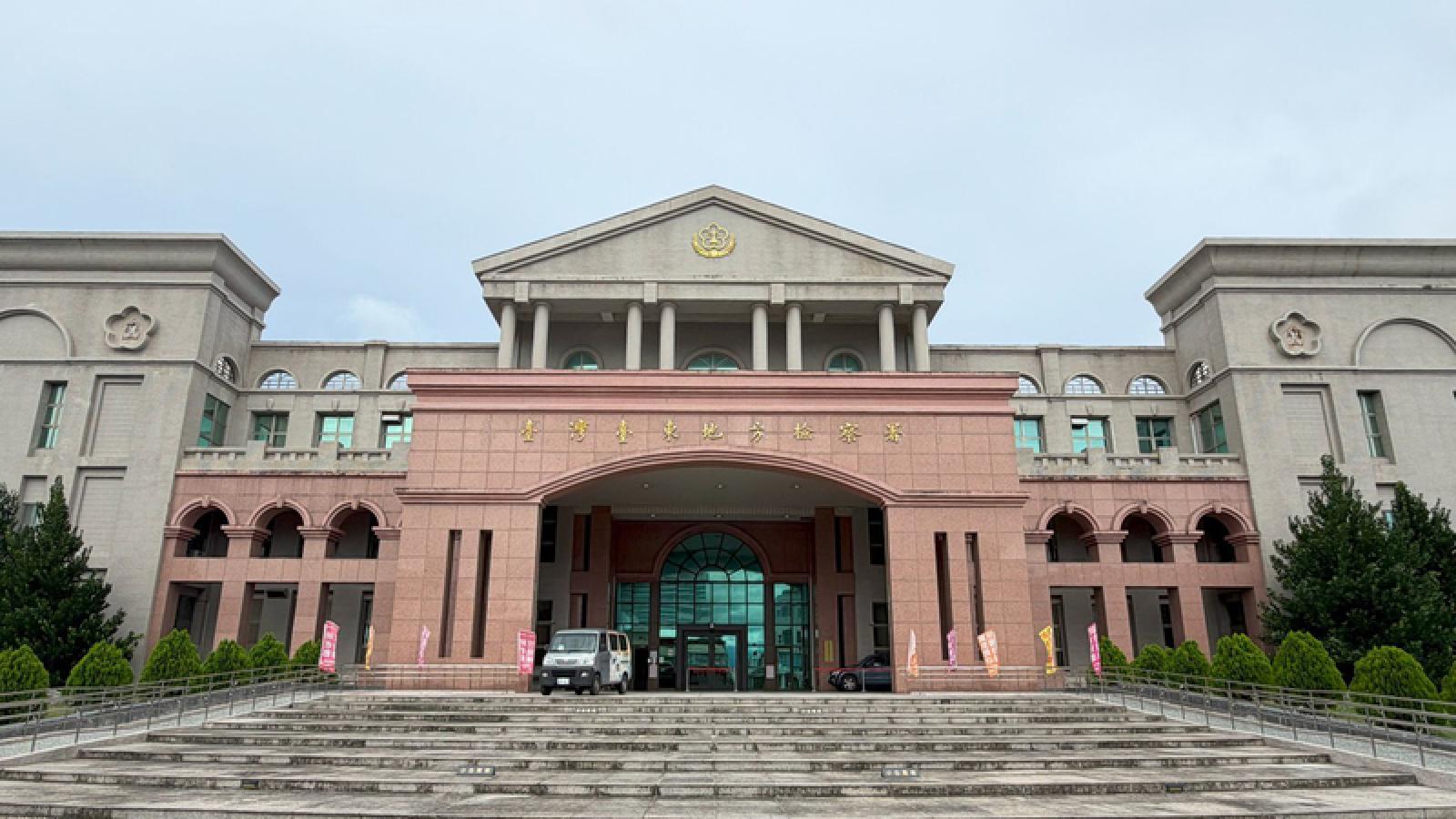
According to recent media reports, South Korea's National Assembly passed a bill stripping prosecutors of their investigative authority, removing them as the primary investigative body and thereby ending their ability to command police investigations. What Taiwan should pay most attention to is not merely how much investigative power is transferred from prosecutors to police, but that South Korea has finally begun to confront a long-suppressed question obscured by judicial authority: When prosecutors can investigate, command police, and ultimately decide whether to indict, is this arrangement a matter of judicial professionalism—or a package of unchecked power?
Whether South Korea's reform will withstand future challenges remains to be seen. But at least the country has acknowledged that the prosecutor-police relationship is not an untouchable ancestral tablet—just because a system has existed for decades does not mean it should never be questioned or reformed. In contrast, Taiwan still retains the "Regulation on the Dispatch of Judicial Police," as if merely printing a solemn-sounding legal title could automatically make a half-century-old power structure applicable in today’s era of AI scams, cryptocurrency money laundering, and transnational crime.
It must be noted that prosecutors directing or requesting police assistance in investigations is not unique to Taiwan. Japan’s Code of Criminal Procedure, Article 193, still allows prosecutors to issue general instructions to judicial police and request investigative cooperation, and in necessary cases, to order assistance in specific investigations. Judicial police who fail to comply without just cause may even face disciplinary action or removal. Germany’s Code of Criminal Procedure also stipulates that prosecutors may conduct investigations independently or through police agencies. France explicitly defines that judicial police perform duties under the direction of public prosecutors.
However, what makes Taiwan particularly unique and worthy of reflection is that most major rule-of-law countries incorporate the prosecutor-police relationship into the overall framework of criminal procedure law, whereas Taiwan has the rare distinction of establishing a separate special law titled the "Regulation on the Dispatch of Judicial Police." The current regulation is fundamentally structured around prosecutors "dispatching" judicial police. The very name of the law reveals an archaic power imagination: prosecutors are the central investigative authority, while police are treated like personnel, vehicles, and equipment—resources to be allocated at the superior's discretion.
The term "dispatch" literally means arrangement or allocation. It is perfectly acceptable when used to schedule police deployments or vehicle shifts. But when applied to define the relationship between two legally mandated professional agencies responsible for criminal investigation, problems arise: Are police investigative bodies with professional judgment and statutory duties, or are they merely human resources that prosecutors can summon at will?
What is especially absurd is that in today’s criminal justice practice, it is the police who first receive reports, rush to crime scenes, review surveillance footage, trace financial flows, analyze communication records, conduct digital forensics, and exchange intelligence across borders. In many cases, by the time they are transferred to the prosecutor’s office, the facts of the crime, the suspect’s identity, and key evidence have already been preliminarily established by the police.
Yet, when one opens the law, prosecutors are still defined as the investigative authority. When one watches the news, all responsibility for public safety falls squarely on the police. When fraud increases, the head of the National Police Agency must explain. When shootings occur, police chiefs resign. When drugs infiltrate schools, frontline officers are told to intensify crackdowns. Meanwhile, the prosecutorial system—legally empowered to lead investigations and hold indictment authority—often sits like a VIP in a judicial private box: if a case is solved, it’s due to the prosecutor’s effective command; if public safety deteriorates, it’s because the police failed to prevent it.
The brilliance of this system lies precisely in its clean separation of power and responsibility. Power is centralized upward, while responsibility is delegated downward. Prosecutors enjoy the title of command, while police bear the burden of public safety. As a result, Taiwan’s criminal justice system presents a bizarre spectacle: those actually on the ground often cannot determine the investigative direction, while the legal investigative authority avoids equivalent public accountability for overall public safety outcomes.
Of course, we cannot argue that all investigative power should be handed to police without checks, simply because they are on the front lines. Investigative authority involves searches, seizures, detentions, and restrictions on personal freedom, which inherently require oversight by courts, prosecutors, and external mechanisms. But "needing oversight" does not equate to "must be dispatched"; procedural checks should not mean institutional subordination.
A truly modern prosecutor-police relationship should be based on professional division of labor, not judicial hierarchy. Police should independently conduct general criminal investigations under the law, while prosecutors focus on indictment decisions, procedural legality oversight, supplementary investigations, and coordination in major cases. For coercive measures, courts should conduct warrant reviews. This ensures both checks and balances and alignment of authority with responsibility.
Therefore, the continued independent existence of the "Regulation on the Dispatch of Judicial Police" warrants comprehensive review. A reasonable path forward is not to delete all provisions overnight, but to reintegrate necessary provisions on prosecutor-police collaboration, case referrals, supplementary investigations, and coordination in major crimes into the Code of Criminal Procedure, replacing "dispatch" with "collaboration" and transforming "obedience" into "statutory division of labor."
More importantly, public safety should not be solely the police’s report card. The quality of fraud prosecutions, reasons for non-prosecution, efficiency in evidence correction, investigation duration in major cases, and protection of victims’ rights should all be included in joint prosecutor-police governance evaluations. Since prosecutors are legally the investigative authority, they cannot enjoy the authority of the principal role while perpetually behaving like passive subjects when it comes to responsibility.
South Korea’s reform may not be directly transplantable to Taiwan, but it at least reminds us that the dignity of a system lies not in its age, but in its ability to solve today’s problems. If a law’s primary function is merely to repeatedly remind police, "You are the party being dispatched," without improving investigative efficiency, clarifying public safety responsibility, or fostering truly equal prosecutor-police cooperation, then what it protects is not public safety—but merely the internal status hierarchy within the judicial system.
After all, criminal organizations won’t turn themselves in just because prosecutors hold higher rank, and fraud cases won’t decline simply because police are dispatched more politely. What the public truly cares about is who solves cases, who is accountable, and whether anyone bears responsibility when the system fails.
If the final answer remains: "The investigative authority lies with prosecutors, but primary responsibility for public safety rests with police"; "Power is exercised from above, responsibility borne from below"—then what Taiwan most urgently needs to "dispatch" may not be judicial police, but the outdated judicial mindset that has long failed to keep pace with the reality of crime!
*The author is an adjunct professor at a university.
FACT BOX
- Source: PR Times
- Category: News