Since the party transition in 2000, the Democratic Progressive Party (DPP) has had three presidents, from Tsai Ing-wen to Lai Qingde. 'Continuous governance' has acted like a 'virus of power,' distorting the DPP beyond recognition. From major to minor issues, reflexive responses of rebuttal and blame-shifting have become habitual, with no ability to identify problems or find solutions. The benzopyrene scandal remained unresolved for over a month—truly, 'foolish deception'!
The Central Union carcinogenic oil incident has now lasted nearly a month and a week, yet the source of benzopyrene contamination remains unidentified. Is it a raw material issue or a manufacturing process flaw? Information is being released toothpaste-style—squeezed out bit by bit. A month later, the public discovers that the Central Union manufacturer attended four Ministry of Health and Welfare meetings. Can anyone remain calm? After a full month of criticism, with the opposition even calling for a vote of no confidence, Premier Cho Jung-tai remains unshaken, showing no embarrassment. Relevant cabinet ministers either follow his lead or become 'stone guardians,' shielding Cho from demands to resign.
When Central Union failed to report or delayed reporting problematic oil, DPP figures turned around and blamed Nanhua. Then, when it emerged that Taisugar had detected benzopyrene超标 in Central Union's oil as early as May but also failed to report, the DPP shifted the narrative to debate whether the law imposes a 'duty to report.' Although the Food Safety Management Act and local self-governance regulations mandate 'mandatory reporting within 24 hours,' they continue to ignore it, let alone enforce penalties. As a state-owned enterprise, Taisugar is merely urged to bear greater 'social responsibility.' But what responsibility can Taisugar bear? Don't forget, Taisugar still carries a 170-million-dollar debt owed by DPP figure Wu Nai-jen—money that cannot be recovered, and the person cannot be prosecuted. Who can Taisugar demand payment from? As a state-owned enterprise, Taisugar bears not social responsibility, but hundreds of millions in 'bad debt.'
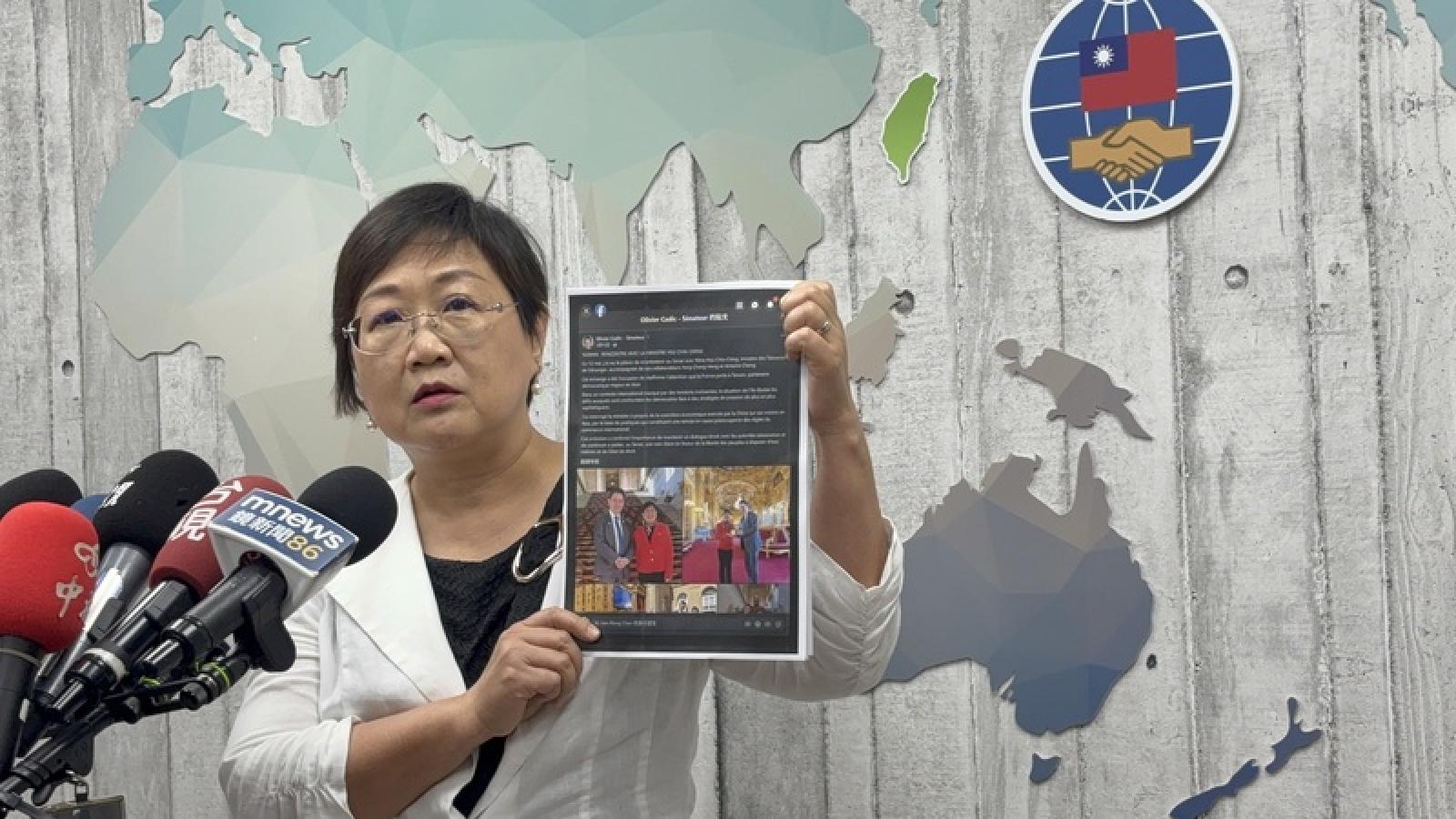
If the Central Union oil issue is a major scandal, then Overseas Compatriot Affairs Commission (OCAC) Chairperson Hsu Chia-ching's 47 overseas trips over five years, costing nearly 24 million NT dollars, and her 'privilege' in securing her son's spot in the Dongsha Youth Experience Camp, might seem like a 'little finger' issue. The reasoning is simple: OCAC serves 'global overseas compatriots,' so overseas travel is an essential part of a commissioner's duties—just like Foreign Minister Joseph Wu, who could appear in any non-diplomatic country at any time, meeting key figures and handling critical matters.
Yet Hsu's 'overseas inspections' have drawn scrutiny, and she only has herself to blame. First, OCAC is not the Ministry of Foreign Affairs—what 'secrets' could it possibly have? Joseph Wu's 'non-diplomatic country diplomacy' is far more transparent than Hsu's 'overseas affairs inspections.' Despite being elusive, Wu reports back to the public after each trip, posting on social media even without legislative questioning. Hsu's 'overseas affairs' may be busy and important, but they cannot surpass the Foreign Minister's duties, nor can they claim the same level of secrecy as the Ministry of Foreign Affairs. If Wu can be transparent, why does Hsu classify her 'inspection reports' as 'confidential,' withholding them from legislators? Isn't that absurd?
Second, even if Hsu enjoys traveling abroad, when questioned, she invoked the example of Chang Chao-hung (James C. M. Wang) over 30 years ago, claiming commissioners then stayed in star-rated hotels, traveled with staff, and brought their spouses. But did Chang's 'overseas affairs trips' focus on tourist spots or community outreach? One thing is certain: Chang never made 9–10 overseas trips a year. Bringing a spouse is a diplomatic norm, and having staff reduces the likelihood of turning official inspections into sightseeing. Back then, such abuse would have triggered not telegrams, but 'secret reports.'
Third, when legislators criticized Hsu's inspection report as only five pages, she defiantly claimed there was a 'concise version' for public posting and a 'detailed version' for legislators, continuing to cite Ma Ying-jeou's administration as precedent. Frankly, a leader's overseas trip differs from a regular civil servant's 'overseas inspection.' For civil servants, such trips combine duty and leisure, a perk of the job, but they must write their own reports. A leader's trip is purely official, with no vacation element, and they typically don't write reports themselves—unless it involves highly sensitive matters. If a leader does write a report, it wouldn't be posted online but sent directly to superiors, possibly archived. While OCAC may have rare 'sensitive matters' to report directly to the president or premier, they are extremely few. Legislators requesting data are simply trying to prevent this 'patronage agency' from overspending.
Fourth, calling OCAC a 'patronage agency' may offend Hsu, but her career speaks volumes. A party veteran whose every statement sparks controversy, she rose from Vice Chair to Chair of OCAC under both Tsai and Lai. Even if the agency isn't inherently patronage-based, the chairperson is undeniably a 'patronage appointment.' Had she been low-key, perhaps no issues would have arisen. But Hsu acts entitled, seizing every chance to travel abroad proudly, and when questioned, she lashes back. A 'little finger' issue swells into a 'thumb-sized' scandal.
Fifth, Hsu exemplifies the DPP's ruling attitude. She travels overseas frequently on public funds without shame and even used OCAC and the Ocean Affairs Council's jointly-run Dongsha Youth Experience Camp to insert her son—who is clearly not an 'overseas student.' This act, more egregious than her 47 trips costing 24 million, raises a critical question: How can DPP members abuse privilege for their children? How could Hsu do it? How could both agencies agree?
This time, the Control Yuan finally showed a glimmer of function. The Anti-Corruption Committee ruled that Hsu violated the 'Act on the Avoidance of Interest Conflicts by Public Officials' and 'will be punished according to law.' The irony? Hsu retorts, 'I haven't received the official document,' while the Control Yuan has been in a 'commissioner-less' state since August, rendering the Anti-Corruption Committee inoperable. Thus, 'punishment according to law' may be lawful but not necessarily enforced—just like Taisugar's unrecoverable debt from DPP figures. A minor issue, blown into a major one by Hsu.
DPP governance wasn't always this 'shameless.' Under Chen Shui-bian, any official 'in trouble' would resign. Under Tsai Ing-wen, Joseph Wu resigned over a major traffic accident. But under Lai's administration for over two years, despite official reshuffles, accountability always comes 'the day after tomorrow'—never an apology or resignation for 'political responsibility.'
If President Lai won't apologize and Premier Cho won't resign, ministers will follow suit. This is the story of the DPP's genetic mutation.
FACT BOX
- Source: PR Times
- Category: News