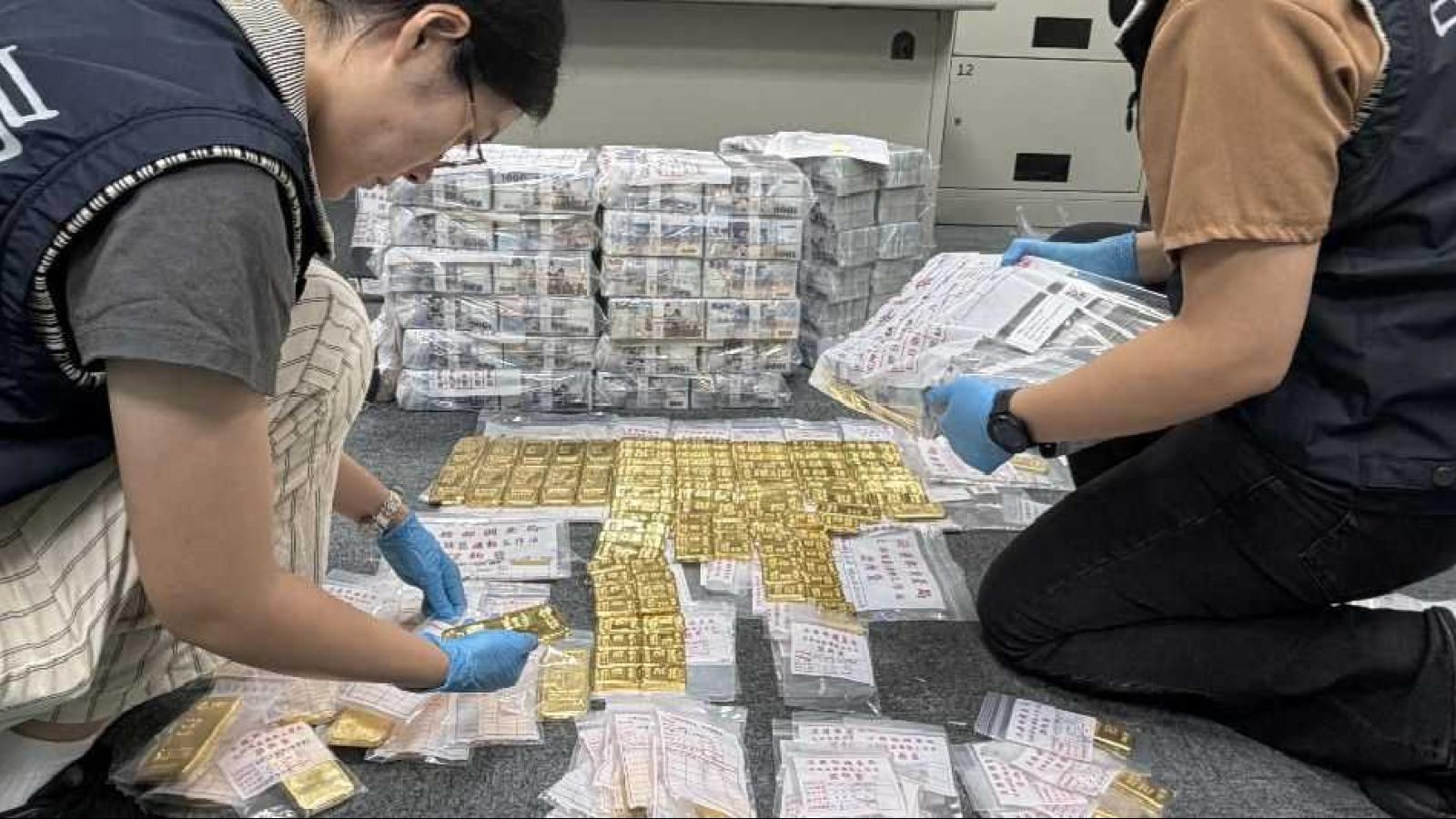
Taiwan truly lives up to its reputation as the 'kingdom of scams'—fraud cases now start at the billion-dollar mark, and even the largest religious charity, Tzu Chi, has fallen victim. The Taichung District Prosecutors Office has concluded an investigation into a money laundering, fraud, and embezzlement case, indicting 17 people and issuing an arrest warrant for one. The shocking revelation is that the target of this fraud was Tzu Chi—the same organization that, five years ago during the peak of the pandemic, funded the purchase of 5 million doses of BNT vaccines. Even more astonishing is that Tzu Chi, defrauded of NT$1.06 billion, did not file a police report. According to its statement, had prosecutors not concluded and announced the indictment, Tzu Chi might never have realized its NT$1.06 billion had vanished into thin air.
The double blow to Tzu Chi—internal control failure over charitable funds
The case is so convoluted, spanning religion, society, and politics, it could be turned into a movie. According to prosecutors, the ringleader is Chen Yu-hsuan, former president of the Changhua Bar Association. The NT$1.06 billion 'service fee' (or commission?) from Tzu Chi flowed into her company. Co-conspirator Lee Yi-ju claimed to have a BNT vaccine procurement channel, asserting that even Foxconn and TSMC had acquired vaccines this way. However, testimony provided by Terry Gou to prosecutors confirmed that Foxconn had its own channels and did not go through Lee.
Lee’s parents founded a religious group called 'Hu Tao,' claiming to teach the Tao Te Ching. They allegedly did so to prevent Lee from squandering the fraudulently obtained money. On the advice of a 'professional lawyer'—Chen Yu-hsuan—the funds were split into multiple transfers to two companies under Chen’s name, then withdrawn in installments and used to issue dozens of invoices to evade taxes. During searches, prosecutors seized nearly 160 kilograms of gold bars and over NT$90 million in cash hidden beneath the floorboards of their luxury mansion. The mansion served as both a money laundering hub and an investment asset.
Chen Yu-hsuan even claimed to possess a 'letter of intent' for a NT$70 billion investment from Terry Gou, attempting to defraud Hong Kong investor Ma Ting-hai of funds for the 'Sky Tower' project in Taipei. Ironically, Ma swindled Chen out of NT$200 million instead. Ma had returned to Hong Kong seven years ago and never re-entered Taiwan; the Taipei District Prosecutors Office issued an arrest warrant last year.
This single case has unraveled countless threads: a Hong Kong businessman who defrauds and vanishes; a lawyer who commits fraud yet continues teaching 'legal ethics' at universities; a preacher of the Tao Te Ching—teaching 'the highest virtue is like water'—who still manages to deceive. Billions flow in and out, and luxury mansions serve as both criminal hideouts and laundering assets. The real question is: why was Tzu Chi so easily deceived? Was it merely because Chen prostrated herself before the founder? Prosecutors cited this act as a method to gain trust, but in reality, bowing before the founder is common practice—almost routine. The founder does not require kneeling; a simple bow with palms together suffices for those uncomfortable with prostration. The issue is not the ritual, but the procedures Tzu Chi used to verify Chen and Lee’s credibility and ensure safe disbursement. In short, Tzu Chi being defrauded is the first injury; the public’s renewed doubt in Tzu Chi’s internal controls is the second.
Being scammed isn’t shameful—Taiwan has both scamming geniuses and being-scammed geniuses
According to Tzu Chi’s statement, it learned about the involvement of personnel in the fraud from media reports. The organization insists the vaccine procurement followed market prices, funds were strictly managed, and both total cost and unit price were publicly disclosed. The procurement costs were audited by accounting firms, published in financial reports, and reviewed by the Ministry of Health and Welfare.
Back then, TSMC, Foxconn, and Tzu Chi each donated funds for 5 million doses of vaccines. According to the Ministry’s press release, the total of over 15 million doses (including an extra 207,600) arrived in 17 batches between September 2, 2021, and January 27, 2022. The total cost was approximately USD 450 million (around NT$12–13 billion), with each party contributing about NT$40 billion. Given this, Tzu Chi’s payment of NT$1.06 billion in 'service fees'—even if labeled a 'commission'—seems excessively high.
The key question is: were these NT$1.06 billion classified as procurement costs or administrative expenses? Were they audited alongside the vaccine procurement? Did they pass the Ministry’s review? Tzu Chi stated it will cooperate with judicial investigations and take necessary actions to protect the foundation and donors. It’s puzzling, however, that during the investigation, prosecutors obtained testimony from Foxconn, which was not defrauded—why didn’t they question Tzu Chi about whether the money was actually paid and whether the vaccines were truly procured through Chen and Lee? If the subsequent procurement had nothing to do with Chen and Lee, why didn’t Tzu Chi report the fraud? Was it due to a sense of shame, or a belief that no one would dare deceive a Buddhist organization?
Tzu Chi’s subsequent cooperation with authorities may require internal housecleaning. Incidentally, being scammed isn’t shameful. Highly educated individuals are frequently deceived—former President Chen Shui-bian was famously duped by a tarot card reader. The Papua New Guinea diplomatic fraud case cost the Foreign Ministry NT$1 billion. Taiwan has no shortage of scamming geniuses—unfortunately, it also has many being-scammed geniuses. Reporting fraud is essential.
Chen Shih-chung’s warning about brokers and government interference in vaccine procurement are separate issues
The vaccine procurement controversy once sparked a major political storm. With this case now public, the Green Camp (DPP) is celebrating, mocking the KMT for a 'massive crash' after previously accusing the government of blocking private vaccine purchases. They praise former Health Minister Chen Shih-chung, who had warned against being deceived by 'international scammers,' hailing his warning as prophetic and asking, 'Shouldn’t we restore justice for Chen Shih-chung?'
The Green Camp’s jubilation over Tzu Chi’s victimhood is baffling. First, Tzu Chi is a victim—driven by goodwill. Second, whether Tzu Chi was scammed is unrelated to whether the government obstructed private vaccine procurement. Third, during the pandemic, BNT vaccines were under emergency use authorization; the manufacturer required a government-backed 'liability waiver' to finalize deals. This is precisely why the donations from the three parties were ultimately delivered through the government’s centralized distribution system. In short, without government approval, private procurement was impossible. Fourth, the government’s priority was always the domestic Medigen vaccine. Only after Medigen received EUA approval did the government allow the private donations from TSMC, Foxconn, and Tzu Chi to proceed. Whether this constituted 'obstruction' remains a sore point for the public. Moreover, Medigen’s stock price surged from NT$30 to NT$350 due to government favoritism, only to fall back to NT$40–50.
Chen Shih-chung’s 'warning' was not wrong. Medigen continues R&D on enterovirus and flu vaccines post-pandemic and is not a short-term speculative company—both commendable. But this shouldn’t erase the fact that the government could have done better during the pandemic. Regrettably, the 'favoritism policies' in masks, rapid tests, and vaccines only amplified public anxiety. If the Lai administration and DPP remain unconvinced, they should 'change commanders'—let Chen run for Taipei mayor again, or appoint him as campaign manager for Shen Po-yang (currently vacant)—and test public support in practice. Mockery and insults won’t restore Chen’s reputation.
FACT BOX
- Source: PR Times
- Category: News
- Organizations: TSMC