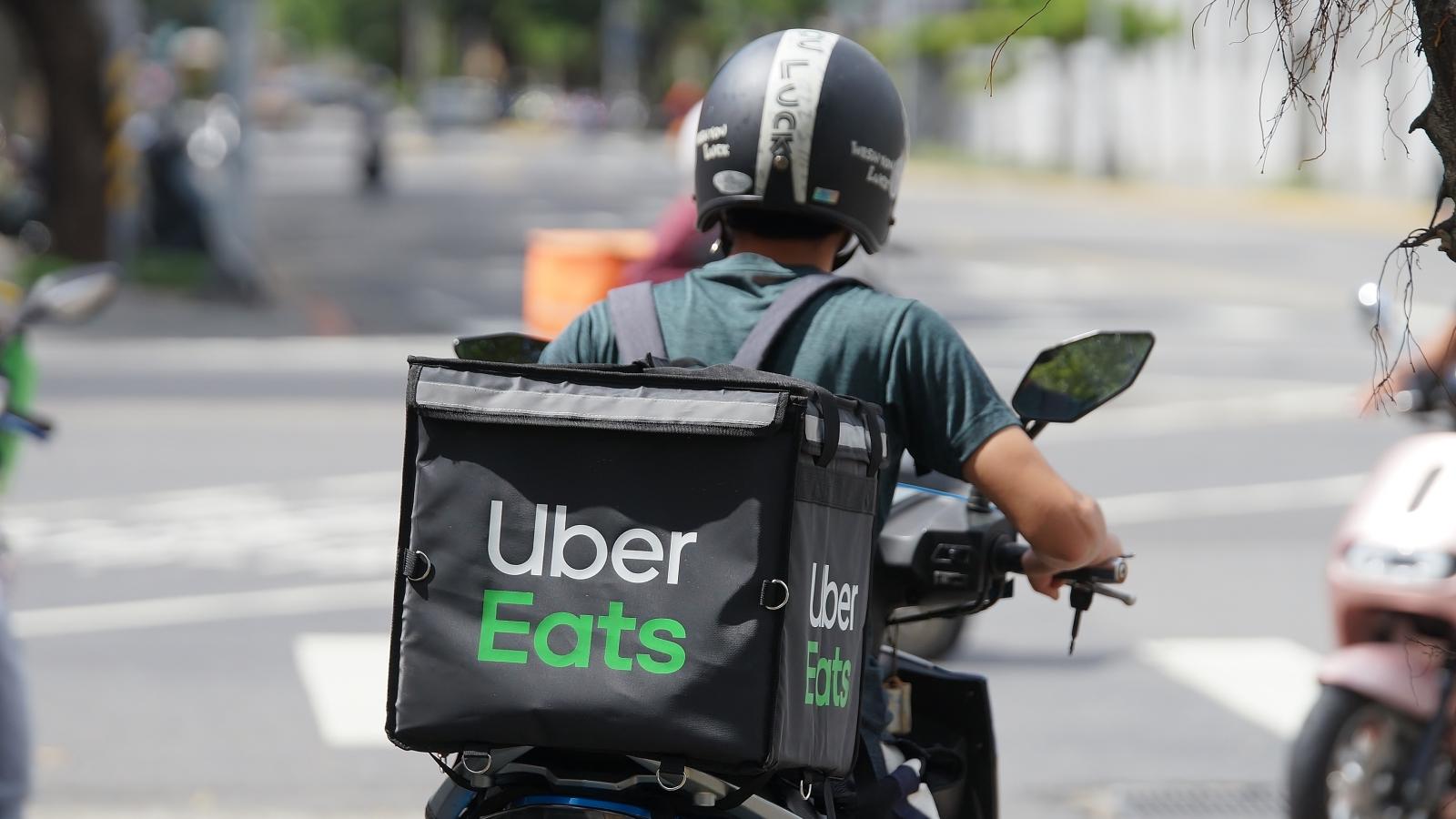
The 'Delivery Workers Protection and Delivery Platform Management Act (shortened as Delivery-Specific Law)' officially took effect on July 21, but disputes over pay calculations have emerged following the release of initial payout statements. Today (6th), the Taiwan Delivery Alliance General Union Preparatory Committee accused Uber Eats of shortening the calculated service time per order by averaging overlapping service durations across multiple orders during stacked deliveries, which they claim violates the law’s spirit of 'calculating each order separately.'
In response, Uber Eats stated that payouts for stacked orders are based on the delivery partner’s 'actual total service time invested,' and while overlapping time is evenly distributed, the 'total service time remains unaffected.'
How Is a 32-Minute Stacked Order Calculated? Union Flags 'Dividing Overlap Time by Two'
The union pointed out that according to Uber Eats’ published calculation example, a stacked order involving two deliveries totaling 32 minutes includes 25 minutes where both orders were handled simultaneously. The platform averages this overlapping 25-minute period—allocating 12.5 minutes to the first order, and adding the subsequent 7 minutes of solo delivery to the second order, resulting in 19.5 minutes.
The union expressed dissatisfaction, stating, 'The delivery rider’s workload hasn’t been halved, responsibilities haven’t been halved, and risks certainly haven’t been halved—how can Uber Eats cut working hours in half and take away earnings rightfully belonging to riders?' They criticized the platform for first shortening the calculated time per order and then calculating pay differences based on the reduced time, calling it not protection, but 'using the Delivery-Specific Law as a cover to openly steal riders’ blood money.'
What Does the Delivery-Specific Law Say? Labor Ministry Mandates 'Separate Calculation Per Order'
According to the Labor Ministry’s 'Key Points on Delivery Worker Rights Protection' under the Delivery-Specific Law, the delivery service period for each order should be calculated from the moment the rider accepts the order until completion. Even when arranging stacked orders, combined dispatches, or route-optimized deliveries, 'each order must have its service time and base pay calculated separately; multiple orders must not be treated as a single charge.'
Based on this, the union argues that Uber Eats’ method of averaging overlapping time violates the law. They demand that the platform conduct a comprehensive review of all stacked, sandwiched, and combined orders since July 21, recalculate payouts on a per-order basis, and compensate for any underpaid amounts. They also urge the Labor Ministry and local labor authorities to intervene and investigate.
What Does Uber Eats Say? 'Overlapping Time Averaged, Total Time Unaffected'
Uber Eats explained that payouts for stacked orders are calculated based on the 'actual total service time invested' by delivery partners. When multiple trips are conducted simultaneously, overlapping time is evenly shared among concurrent trips. Once only one trip remains, that duration is fully attributed to that single trip.
Uber Eats emphasized that each trip within a stacked order still qualifies for full minimum pay protection—no trip falls below NT$45, and hourly service time remains no less than NT$245 per hour. The company also stated it will continue explaining its operational model to regulatory authorities and review and adjust related procedures based on future guidance.
Will the Labor Ministry Take Action? Hung Shen-Han Previously Stated: 'Penalties Will Be Imposed If Warranted'
Notably, disputes over payout disclosures for stacked orders arose even during the early days of the Delivery-Specific Law. On July 24, Labor Minister Hung Shen-Han clearly stated in an interview that the administrative branch’s responsibility is to enforce the law, emphasizing, 'We will strongly require delivery platforms to comply with regulations, and if violations occur, penalties will be imposed as warranted.'
More Exclusive Insights from Feng Media:
· Delivery-Specific Law Fails Immediately? Platforms Allegedly Ignore New Rules and Cut Payouts—People Party Slams Labor Ministry: 'Failing to Scrutinize Businesses While Still Shielding Them'
· Delivery-Specific Law Takes Effect Today—Will Wait Times Increase? Wang Shih-Chien Reveals the Tragic Case of Grab Merging with foodpanda: Guess Who the Major Shareholder Is
FACT BOX
- Source: PR Times
- Category: News
- Organizations: Uber Eats