A recent report indicating that China has begun mass-producing AI-specific chips sent shockwaves through global financial markets, causing other chip manufacturers' market capitalizations to evaporate by over $1 trillion within days. Almost simultaneously, the U.S. Federal Communications Commission (FCC) announced a ban on importing Chinese humanoid robots, closing the door on national security grounds. Meanwhile, Chinese open-source models such as Kimi K3 from Moonshot AI have quietly become everyday tools for millions of developers worldwide and have surpassed U.S. models in download numbers for the first time. These three events occurring together are no coincidence—they collectively depict a situation that unsettles Silicon Valley and complicates matters for the White House.
For years, the narrative battlefield of technological competition has been dominated by the United States. The strategy of AI chip bans, export controls, and technological containment rests on one assumption: that by restricting computing power, China can be contained. This assumption is now being steadily eroded by reality. While Huawei's Ascend series still lags behind Nvidia's latest products in single-chip performance, its overall computing power has reached acceptable performance thresholds in certain application scenarios by linking multiple chips into high-density clusters. More critically, Chinese chipmakers like SMIC are accelerating production, and a self-reliant supply chain independent of external sources is beginning to take shape. The loopholes in computing power blockades are becoming increasingly difficult to patch.
The rise of open-source models represents another path that undermines regulatory strategies. According to data from the Hugging Face platform, Chinese open-source models accounted for 41% of global downloads in the spring of this year, surpassing the U.S. for the first time. The number of derivative models based on Alibaba's Qwen series has exceeded 100,000, overtaking Meta's Llama to become the largest model ecosystem on the platform. These models are free, can be deployed locally, and do not require expensive API usage fees—making them far more attractive to resource-constrained small and medium-sized enterprises and emerging market governments than costly subscription-based U.S. closed models. Ironically, nearly 80% of U.S.-based AI startups are using Chinese open-source models at the foundational technology level, creating the absurd scenario of 'building startups on Chinese technology under the banner of anti-China.'
Faced with this situation, Silicon Valley companies hold divergent positions. Nvidia, Microsoft, Meta, and Palantir jointly sent a letter to Congress opposing restrictions on the circulation of open-source models. Nvidia CEO Jensen Huang personally visited Capitol Hill to lobby bipartisan lawmakers, urging them not to cut off the pipeline of open-source AI. Their stance is pragmatic: Chinese open-source models are driving global AI usage, which translates into greater demand for computing power—ultimately benefiting Nvidia's GPU sales. The more open-source thrives, the more profitable chipmakers become. In contrast, OpenAI and Anthropic operate on a fundamentally different business model based on paid subscriptions for closed models. The emergence of free Chinese models directly threatens their profitability, leading them to argue that open-source models pose security risks and should be regulated or even banned. Both positions are driven by self-interest, resulting in conflicting narratives that leave the White House in a difficult position.
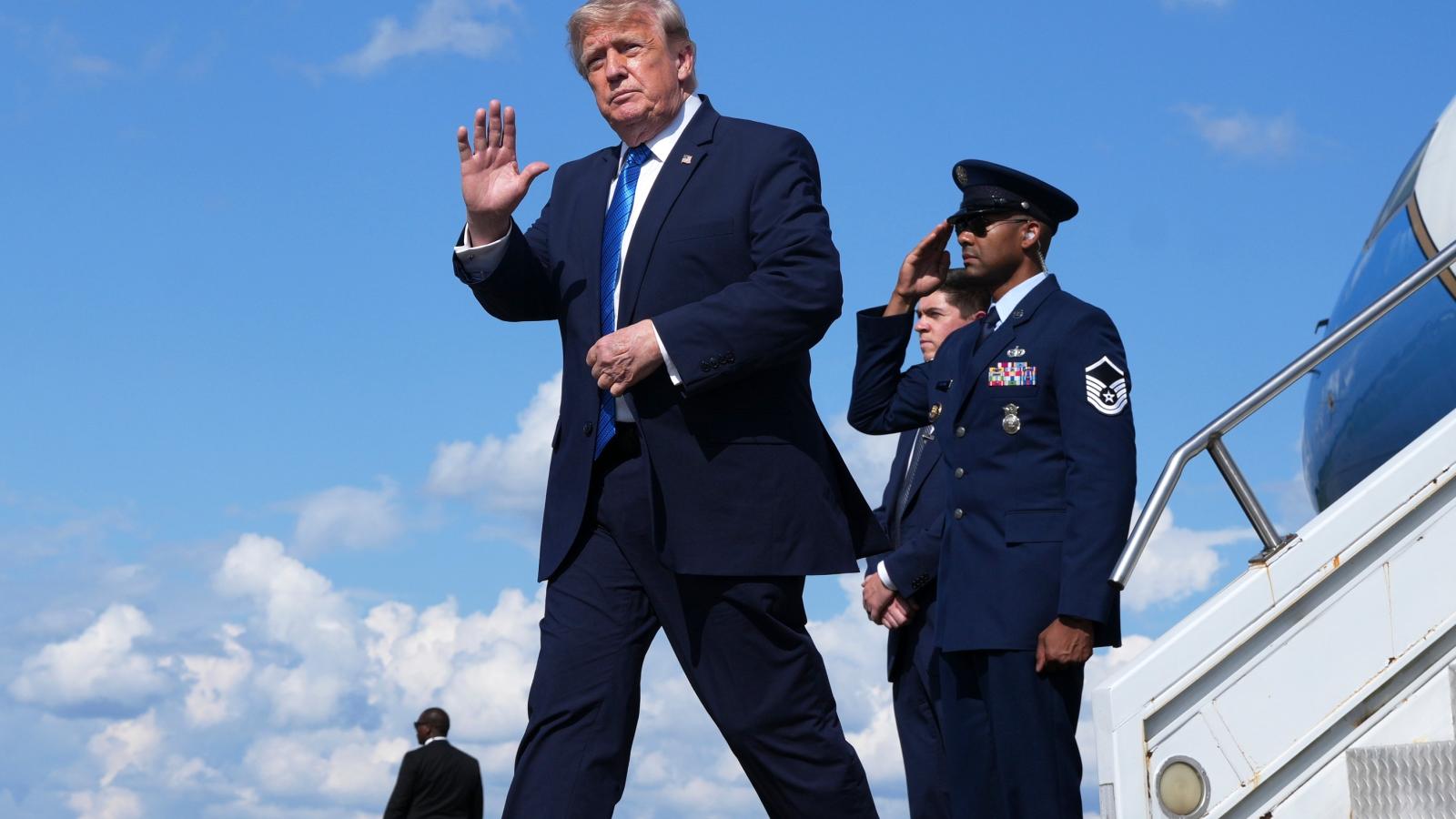
The Trump administration's response reflects the typical contradiction of 'wanting to restrict but fearing falling behind.' Trump stated, 'I don't want us to lose to China, but I also don't want to restrict these people from doing good things.' This statement is almost a perfect illustration of policy vacuum. Treasury Secretary Bessent has signaled consideration of sanctions against Chinese AI companies, while Commerce Secretary Raimondo has received a stack of appeals from tech startups requesting the preservation of access to open-source models. One government, two voices—the likely compromise will be much sound and little fury. Banning humanoid robots may appear tough on posture, but it does nothing to change the fact that Chinese open-source models have already permeated global corporate infrastructure.
The essence of this competition is no longer merely a technical question of 'which model is smarter,' but rather 'which AI system becomes the world's default infrastructure.' America's advantage lies in cutting-edge computing power and advanced research capabilities, while China's strategy is to quietly embed its technical standards into enterprises, factories, robots, and government systems worldwide through low-cost, high-adoption approaches. Once an ecosystem reaches sufficient scale, switching costs rise sharply, making replacement nearly as difficult as changing an electrical grid.
For Taiwan, TSMC remains the world's only mass producer of the most advanced chips. Amid the rivalry between the U.S. and China, Taiwan's semiconductor position makes it a strategic battleground—but this status also brings significant structural vulnerability. China's Ministry of Commerce has recently held intensive talks with Alibaba, ByteDance, and Zhipu, considering whether to restrict the export of the most advanced AI models. If this policy materializes, Taiwanese companies that have long relied on low-cost Chinese open-source models will face supply disruption risks. Building sufficient flexibility and redundancy between the two competing technological standards has become a task Taiwan's tech industry can no longer delay.
This AI race will not end quickly, nor will either side achieve a decisive victory through a single ban. The real test lies in which side can more rapidly find a sustainable integration path across chips, models, applications, and governance—not just in who speaks the loudest. From Silicon Valley and the White House to Beijing, everyone is calculating. No one knows what the future holds.
*The author is a Distinguished Lecturer at Taipei University of Business.
FACT BOX
- Source: PR Times
- Category: News
- Organizations: Moonshot AI / Meta / Hugging Face
- Products / services: Kimi K3